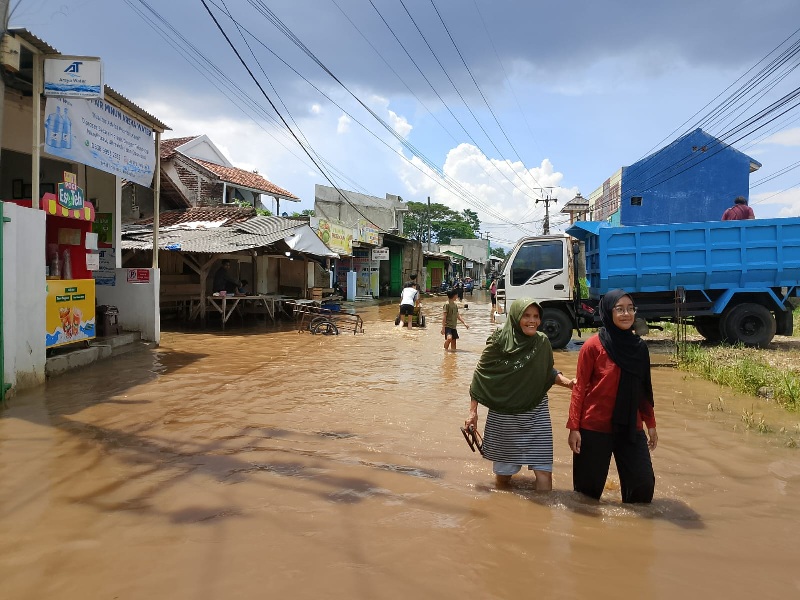
Recurring floods and landslides in Bandung Regency are no longer seen as just the impact of extreme weather. The Indonesian Forum for the Environment (WALHI) West Java considers weak environmental mitigation and massive land-use conversion as the main causes of disasters that continue to threaten several areas in Bandung Regency.
The Executive Director of WALHI West Java stated that the Bandung Regency Government has failed to build a mitigation system capable of anticipating the impacts of development and damage to water catchment areas.
According to him, the issue of floods and landslides cannot be viewed solely as a natural factor, but is closely related to environmental damage and poor spatial governance.
“This disaster is not just a natural factor, but a direct impact of damaged river ecosystems and poor drainage systems,” he said on Thursday, May 28, 2026.
He explained that damage to upstream areas, land-use conversion, and ongoing development in water catchment areas are worsening environmental conditions in Bandung Regency.
He assessed that the local government has not been able to anticipate the impacts of development occurring in upstream river areas and disaster-prone zones.
“The flooding that submerged the Dayeuhkolot to Sapan Cikeruh areas is evidence of weak environmental mitigation in Bandung Regency,” he stated.
In addition to floods, landslides have also occurred in several areas such as Kertasari, Pacet, and Pangalengan. The soil conditions in these areas are said to be increasingly vulnerable due to ongoing changes in land use.
“Previously, in Majalaya District, more than 400 households were affected by flooding. Meanwhile, in Pacet District, several residents’ homes were damaged, forcing residents to evacuate,” he said.
WALHI West Java is urging the Bandung Regency Government to conduct a thorough evaluation of development and spatial planning policies to prevent environmental damage from spreading further.
According to him, disaster management is not enough if only carried out after floods and landslides occur, but must be accompanied by serious and sustainable preventive measures.
“Disaster management is not enough if only carried out after floods and landslides occur, but must be accompanied by serious preventive measures against damage to upstream areas and land-use conversion,” he emphasized.
Ciparay area
The Ciparay area is a district located in the Bandung Regency of West Java, Indonesia, known for its agricultural landscape and traditional Sundanese culture. Historically, the region developed as a rural settlement during the Dutch colonial era, with its fertile lands supporting tea and rice plantations. Today, Ciparay remains a quiet, suburban area that offers a glimpse into local Javanese life and natural scenery.
Bandung Regency
Bandung Regency is a region in West Java, Indonesia, known for its cool climate and scenic highland landscapes. Historically, it was part of the Dutch colonial administration’s development of tea plantations and hill stations in the 19th and early 20th centuries. Today, it features cultural sites such as the Tangkuban Perahu volcano and traditional Sundanese villages.
Dayeuhkolot
Dayeuhkolot is a historic district in Bandung Regency, West Java, Indonesia, known for its role as a former administrative center during the Dutch colonial era. It was once the capital of the Bandung regency before the city of Bandung itself grew in prominence, and it retains several colonial-era buildings and a traditional market that reflect its past. Today, it is a bustling suburban area, blending historical heritage with modern development.
<div class="my-4 p-4 rounded-lg shadow-md bg-blue
Ciparay
Ciparay is a district in the West Java province of Indonesia, located south of Bandung. Historically, it was part of the colonial-era plantation belt, known for its tea and rubber estates established by Dutch settlers. Today, Ciparay serves as a suburban area with a mix of agriculture and small industries, reflecting both its agricultural past and modern development.
Bandung Regency
Bandung Regency is a regency in West Java, Indonesia, surrounding the city of Bandung but excluding the city itself. Historically, the area was part of the ancient Sunda Kingdom and later became a key colonial administrative region under the Dutch East Indies, known for its tea plantations and cool mountain climate. Today, it is known for its natural attractions like the Tangkuban Perahu volcano and the scenic highlands of Lembang.
Dayeuhkolot
Dayeuhkolot is a district in Bandung Regency, West Java, Indonesia, historically known as the site of the old capital of the Bandung regency before it moved to Soreang. The area played a significant role during the colonial era as a center for government and trade, particularly due to its location along the Citarum River. Today, it is a bustling suburban area, still retaining remnants of its historical past, including the old regent’s office and traditional markets.
Sapan Cikeruh
Sapan Cikeruh is a historic stone bridge located in Sumedang, West Java, Indonesia, believed to date back to the Dutch colonial era. Originally built to facilitate transportation and trade routes, the bridge features a distinctive arched design constructed from local volcanic stone. Today, it stands as a cultural heritage site, reflecting the region’s colonial engineering and historical connectivity.
Kertasari
Kertasari is a district in West Java, Indonesia, known for its scenic landscapes and tea plantations in the mountainous region near Mount Papandayan. Historically, the area was developed during the Dutch colonial era as a center for tea cultivation, and it remains a key producer of high-quality tea. Today, Kertasari attracts visitors for its cool climate, lush greenery, and cultural heritage tied to both Sundanese traditions and colonial-era agriculture.
Pacet
Pacet is a district in Mojokerto Regency, East Java, Indonesia, best known for its cool mountain air and scenic tea plantations on the slopes of Mount Welirang. Historically, the area was part of the ancient Majapahit Kingdom’s territory, and today it remains a popular destination for trekking, camping, and visiting natural attractions like the Coban Talun waterfall.
Pangalengan
Pangalengan is a highland area in West Java, Indonesia, known for its cool climate and scenic tea plantations, many of which date back to the Dutch colonial era. Historically, it became a popular retreat for European planters and officials in the 19th century, who developed the region for agriculture and built villas to escape the tropical heat. Today, it remains a key tea-producing region and a tourist destination, offering attractions like the Situ Cileunca lake and natural hot springs.
Majalaya
Majalaya is a town in West Java, Indonesia, historically known as a major center for the textile industry, particularly during the Dutch colonial era. It was once a key hub for weaving and batik production, earning it the nickname “Kota Kain” (City of Cloth). Today, the town continues to have a strong textile manufacturing presence, though it has faced challenges from industrialization and economic shifts.