157 rescued after asylum seeker boat sinks off Indonesia.
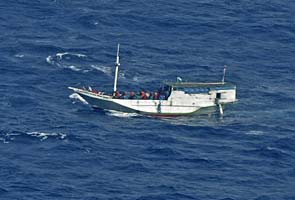
Bandung, Indonesia: Rescuers were searching Wednesday for dozens of asylum seekers still missing after their boat sank in Indonesian waters on the way to Australia. More than 150 survivors were brought to safety and three bodies were recovered.
The incident comes days after Prime Minister Kevin Rudd changed Australia’s refugee policy so that people who arrive by boat will no longer be allowed to settle there. The move was a response to domestic political pressure and the string of accidents involving rickety boats packed with asylum seekers bound for Australia.
Local police spokesman Col. Martinus Sitompul said 157 people have been recovered from the boat that sank Tuesday night about 5 kilometers (3 miles) from shore off the coast of West Java’s Cianjur district.
Among the survivors was a pregnant Sri Lankan woman who was being treated at a health center in the town of Cidaun. A baby boy, a 10-year-old girl and a woman were identified as the dead, he added.
Sitompul said the group was believed to consist of around 204 migrants from Sri Lanka, Iran and Iraq. They departed Tuesday morning from Jayanti, a coastal town in Cianjur, using a smaller boat that was supposed to meet a larger ship at sea to complete the journey to Australia.
Their overloaded boat, built to carry only 150 passengers, sank about nine hours into the trip due to a leak. Some of the migrants scrambled for the lifeboat, while others swam before being rescued, he said citing Akbar.
A search for the 44 migrants believed missing continued Wednesday with police, fishermen and local villagers scouring the waters.
Rochmali, a rescuer at the scene, said the exact number missing remains unclear since some survivors may have fled to avoid authorities.
The asylum seeker issue has been a longstanding dilemma for both Indonesia and Australia.
Last week, Indonesia decided to stop issuing visas on arrival to Iranians because a growing number of them have been caught smuggling drugs or using Indonesia as a transit point for seeking asylum in Australia.
As of last Friday, Australia said all newly arrived refugees would be resettled on the island nation of Papua New Guinea, though their claims for asylum will still be assessed in Australia and at detention camps in Papua New Guinea and the tiny island nation of Nauru.
Australia would help genuine refugees settle in Papua New Guinea. Those who are found not to be genuine refugees could return to their home countries or another country other than Australia.
The move, condemned by refugee and human rights advocates, is an attempt to stem the flood of asylum seekers who travel to Australia from ports in Indonesia and Malaysia. Hundreds have died attempting the journey in recent years.
Indonesia is a popular exit point because its capital, Jakarta, lies just 500 kilometers (310 miles) from Australia’s Christmas Island. More than 15,000 asylum seekers have arrived in Australia by boat this year.
Rudd said the latest boat incident highlights the need for the policy shift.
“Too many innocent people have been lost at sea,” he told reporters in Melbourne on Wednesday.
“The asylum seeker policy we’ve adopted is about sending a very clear message to people smugglers that if you try to come to Australia by boat you will not be settled in Australia. … That is all about destroying the people smugglers’ business model,” Rudd added.
Bandung
Bandung, the capital of West Java, Indonesia, is a city known for its cool climate and colonial-era architecture, earning it the nickname “Paris of Java.” Historically, it was a key site for the 1955 Asia-Africa Conference, which marked a milestone in the struggle of newly independent nations against colonialism. Today, it is a vibrant cultural and creative hub, famous for its art deco buildings, fashion outlets, and culinary scene.
West Java
West Java is a province on the Indonesian island of Java, known for its rich Sundanese culture and dramatic volcanic landscapes, including the famous Tangkuban Perahu volcano. Historically, it was a center of the powerful Sunda Kingdom before coming under Dutch colonial rule in the 17th and 18th centuries. Today, the region is celebrated for its traditional arts, such as angklung music and wayang golek puppetry, as well as its capital, Bandung, a hub of education and creative culture.
Cianjur
Cianjur is a regency in West Java, Indonesia, historically known as a key stop on the Great Post Road between Batavia (Jakarta) and Bandung. It is famous for its scenic rice paddies, tea plantations, and the nearby Mount Gede Pangrango National Park. Culturally, Cianjur is recognized as the birthplace of the traditional Sundanese art form *pencak silat* and the sweet, sticky rice cake *uli cianjur*.
Cidaun
Cidaun is a district in the Cianjur Regency of West Java, Indonesia, known for its scenic coastal and mountainous landscapes. Historically, the area has been part of the region’s agricultural and fishing communities, with its name possibly deriving from local Sundanese terms. Today, Cidaun is recognized for its natural attractions, such as beaches and hot springs, and remains a relatively quiet destination for eco-tourism.
Jayanti
Jayanti is a small village located in the Buxa Tiger Reserve in West Bengal, India, known for its scenic beauty and historical significance. It was once a key stop on the ancient Silk Route and later served as a strategic outpost during British colonial rule, with remnants of old fortifications still visible. Today, it is a popular eco-tourism destination, offering visitors a blend of natural landscapes, wildlife, and a glimpse into its storied past.
Jakarta
Jakarta, the capital of Indonesia, is a sprawling metropolis on the northwest coast of Java with a history dating back to the 4th century as the port city of Sunda Kelapa. It was later renamed Batavia by the Dutch during colonial rule, serving as the center of the Dutch East Indies trade and administration. After Indonesia’s independence, the city was renamed Jakarta and has since grown into a dynamic hub of culture, politics, and commerce, blending modern skyscrapers with historic landmarks like the old port and colonial-era buildings.
Christmas Island
Christmas Island, an Australian territory in the Indian Ocean, is renowned for its annual red crab migration and unique biodiversity. Discovered on Christmas Day in 1643 by Captain William Mynors, the island was later annexed by the British and used for phosphate mining. Today, it is a protected natural reserve, blending a complex colonial history with significant ecological importance.
Melbourne
Melbourne is the coastal capital of the southeastern Australian state of Victoria, founded in 1835 by settlers from Van Diemen’s Land. It experienced a massive population boom during the 1850s Victorian gold rush, transforming it into a major global city. Today, it is renowned for its vibrant arts scene, diverse culinary culture, and iconic landmarks like the Royal Exhibition Building and Flinders Street Station.