There are differences among the various parties in the alliance. However, all parties are united in opposing the policies of the Modi government.
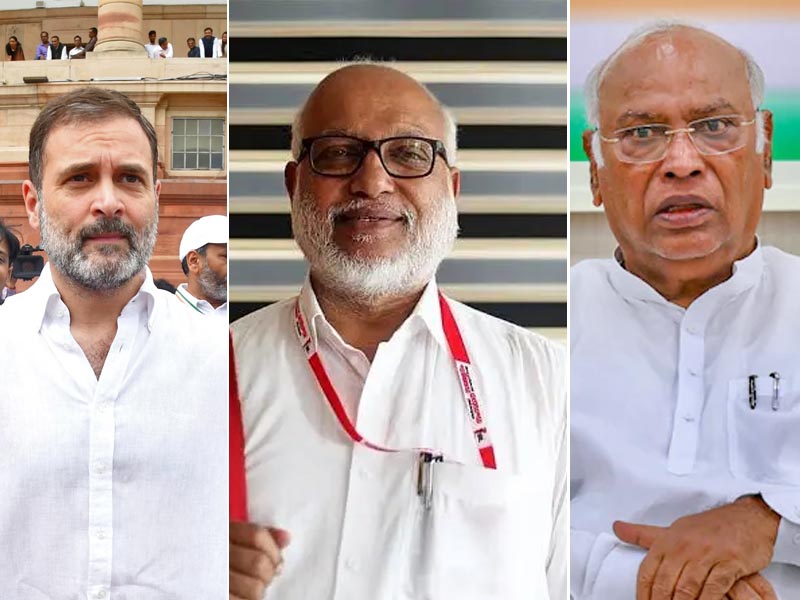
Just before the meeting of the ‘India’ alliance, on Sunday, this claim was made by a senior leader of the Congress party.
On Monday, June 8, the ‘India’ alliance meeting will be held at the Constitution Club in Delhi. The leader said, “Twenty-three political parties have decided to participate in the ‘India’ alliance meeting. Some parties have said they cannot attend. However, they have confirmed their opposition to the Modi government’s policies.”
The leader stated, “All parties are opposing measures like taking away voting rights, daily attacks on the constitution, and unleashing central agencies against opposition political leaders.”
This alliance was formed before the 2024 Lok Sabha elections with a call to protect the country’s constitutional democracy. After the elections, questions have arisen in political circles about the role of this alliance, particularly regarding the role of the Congress party.
Shortly before the meeting, the general secretary of the Communist Party of India (Marxist) strongly objected to the role of the Congress party in the Kerala assembly election campaign.
The CPI(M) general secretary said that in an alliance formed with the goal of fighting the BJP, accusing a partner party of colluding with the BJP is politically unacceptable. In a letter, he clearly stated that before the June 8 India alliance meeting, the Congress leadership must clarify its position on this matter. Otherwise, the very purpose of forming the alliance will be questioned.
The general secretary reiterated that the CPI(M) remains in favor of strengthening opposition unity. The CPI(M) also sent copies of the letter to the other parties of the ‘India’ alliance.
DMK leader M. K. Stalin also expressed anger over the role of the Congress party. He accused the Congress of supporting the TVK party without sufficient consultation with the DMK after the elections in Tamil Nadu. JMM leader Hemant Soren from Jharkhand also stated that the Congress unilaterally announced a candidate for a Rajya Sabha seat without any discussion.
Meanwhile, the Congress leader said, “Just like in India, there is unity in diversity within the ‘India’ alliance.” He said, “All parties continue to take a stand against the Modi government’s economic policies, which attack the common people and cause continuous price rises, or against policies that destroy the future of the youth.”
Meanwhile, special activity is being observed within the Trinamool Congress regarding the ‘India’ alliance meeting. The party is facing disintegration after its electoral defeat in West Bengal. In the past, the Trinamool has stayed away from several programs of the ‘India’ alliance.

Constitution Club

The Constitution Club is a historic social and political club located in New Delhi, India, founded in 1947. It was established for members of the Constituent Assembly, which drafted India’s Constitution, and later became a prestigious venue for parliamentarians, politicians, and diplomats to meet and network. The club remains an important symbol of India’s democratic heritage and political culture.

Delhi

Delhi, the capital of India, is a historic city that has been continuously inhabited for over two millennia, serving as the seat of power for numerous empires, including the Delhi Sultanate and the Mughal Empire. Its rich history is reflected in iconic landmarks like the Red Fort, Qutub Minar, and Humayun’s Tomb, which showcase a blend of Hindu, Islamic, and colonial architecture. Today, Delhi is a bustling metropolis that seamlessly merges its ancient past with modern urban life.

Kerala

Kerala, located on the southwestern coast of India, is known for its lush landscapes, backwaters, and rich cultural heritage. Historically, it was a major center for the spice trade,

Constitution Club

The Constitution Club is a historic private members’ club located in New Delhi, India, originally established in 1947 for members of the Constituent Assembly who drafted the country’s Constitution. It later opened to senior government officials and parliamentarians, serving as a key social and political hub. The club’s name and legacy reflect its deep connection to India’s early post-independence political history.

Delhi

Delhi, the capital of India, is a historic city that has been continuously inhabited for over two millennia, serving as the capital of several ancient and medieval empires, including the Delhi Sultanate and the Mughal Empire. It is a vibrant blend of old and new, featuring iconic landmarks such as the Red Fort, Qutub Minar, and Humayun’s Tomb, alongside modern government buildings and bustling markets. Today, Delhi stands as a major cultural, political, and commercial hub, reflecting India’s rich and diverse heritage.

Kerala

Kerala, located on the southwestern coast of India, is renowned for its lush backwaters, serene beaches, and rich cultural heritage. Historically, it was a major center for the spice trade, attracting ancient traders from Rome, China, and the Middle East, and later became a hub for European colonial powers like the Portuguese, Dutch, and British. Today, it is celebrated for its high literacy rate, unique art forms like Kathakali, and a progressive social development model.

Tamil Nadu

Tamil Nadu, a state in southern India, is renowned for its rich Dravidian culture and ancient history, with roots stretching back over two millennia. It was home to the powerful Chola, Chera, and Pandya dynasties, which left a legacy of magnificent temples, intricate bronze sculptures, and classical Tamil literature. Today, the state is celebrated for its vibrant festivals, classical dance forms like Bharatanatyam, and iconic sites such as the Brihadeeswarar Temple and Meenakshi Amman Temple.

Jharkhand

Jharkhand, located in eastern India, is a state rich in mineral resources and tribal culture, carved out of southern Bihar in 2000 after a long movement for regional identity and autonomy. Historically, the region was part of ancient kingdoms like Magadha and later came under Mughal and British rule, known for the significant Santhal Rebellion (1855-56) against colonial oppression. Today, Jharkhand is celebrated for its dense forests, waterfalls, and vibrant indigenous traditions, with the Chhau dance and Sarna religion being key cultural markers.

West Bengal

West Bengal is a culturally rich state in eastern India, known for its vibrant arts, literature, and historical significance. Its capital, Kolkata, was once the capital of British India and served as a major center for the Indian independence movement. The state is also famous for the Sundarbans mangrove forest and the iconic Darjeeling Himalayan Railway.