-
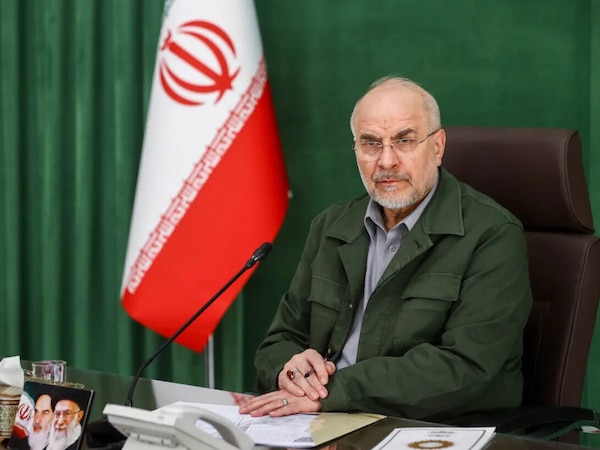
World News: Tensions have persisted in West Asia since the beginning of this year. After the Israel-US attack on Iran in February 2026, the conflict in the region has continued. Despite the ceasefire, there is no sign of the war fully ending. Meanwhile, Iranian Parliament Speaker Mohammad Ghalibaf has said that global tensions are reshaping international dynamics. He clearly stated that the world stands on the brink of a new order.
Is the world heading toward a new world order?
Ghalibaf wrote on his social media platform ‘X’, “The world stands at the cusp of a new order. As President Xi said, ‘The transformation unseen in a century is accelerating across the globe,’ and I emphasize that the Iranian nation’s 70-day resistance has accelerated this transformation. The future belongs to the Global South.”
The world stands at the cusp of a new order.
As President Xi said “The transformation unseen in a century is accelerating across the globe,” and I emphasize that the Iranian nation’s 70-day resistance has accelerated this transformation.
The future belongs to the Global South.
— محمدباقر قالیباف | MB Ghalibaf (@mb_ghalibaf)
Ghalibaf’s comments come after the recent conflict between the US-Israel and Iran. Tensions in the region escalated significantly after the two countries attacked Israel.
Tensions between the US and Iran
A ceasefire was declared between the US and Iran on April 8, 2026. However, tensions remain in the region due to a blockade by the US targeting Iranian ports and transit restrictions imposed by Iran in the Strait of Hormuz. Peace talks were held in Pakistan between the two countries, but no agreement was reached. Iran and the US have not agreed to each other’s peace proposals.
Will Iran be attacked again?
It is noteworthy that US President Donald Trump, after concluding his visit to China, indicated plans to resume American attacks on Iran. According to a report, the US is preparing to launch Operation Epic Fury again against Iran. Trump, speaking to reporters after returning from Beijing, said he had rejected Iran’s peace proposal. He stated, “I saw the proposal, and if I don’t like the first line, I throw it away.”
West Asia
West Asia is a historically rich and culturally diverse region that served as the cradle of some of the world’s earliest civilizations, including Mesopotamia, Persia, and the Levant. It has been a crossroads for trade, religion, and empires for millennia, influencing global history through developments like writing, law, and monotheism. Today, it remains a vibrant area with deep cultural heritage, blending ancient traditions with modern societies.Iran
Iran, historically known as Persia, is a country in West Asia with a rich cultural heritage dating back over 2,500 years to the Achaemenid Empire. It is home to iconic sites like Persepolis, the ceremonial capital of the ancient empire, and the stunning Naqsh-e Jahan Square in Isfahan, a masterpiece of Islamic architecture. Today, Iran’s cultural influence is seen in its poetry, art, and traditions, blending ancient history with a vibrant modern identity.Strait of Hormuz
The Strait of Hormuz is a narrow, strategically vital waterway connecting the Persian Gulf to the Gulf of Oman and the open ocean. Historically, it has been a crucial trade route for centuries, linking civilizations from Mesopotamia to the Indian subcontinent. Today, it is one of the world’s most important chokepoints, through which about 20% of global oil passes, making it a frequent focus of geopolitical tension.Pakistan
Pakistan is a South Asian country with a rich history, home to ancient civilizations like the Indus Valley and a key region along the Silk Road. It gained independence from British rule in 1947, becoming a separate homeland for Muslims of the subcontinent. Today, Pakistan is known for its diverse cultures, languages, and landmarks such as the Badshahi Mosque and the ancient city of Mohenjo-Daro.China
China, officially the People’s Republic of China, is an East Asian country with over 4,000 years of recorded history, making it one of the world’s oldest continuous civilizations. It was unified under the first emperor, Qin Shi Huang, in 221 BCE, and later saw the rise of influential dynasties like the Han, Tang, and Ming, which contributed to major cultural and technological advancements. Today, China is known for iconic sites such as the Great Wall, the Forbidden City, and the Terracotta Army, reflecting its rich heritage and enduring global influence.Beijing
Beijing, the capital of China, is a historic and cultural site with over 3,000 years of history, having served as the nation’s political center for centuries under various dynasties like the Ming and Qing. It is home to iconic landmarks such as the Forbidden City, the Great Wall, and Tiananmen Square, which reflect its imperial past and modern significance. Today, Beijing blends ancient traditions with rapid modernization, making it a vibrant hub of Chinese culture and global influence.