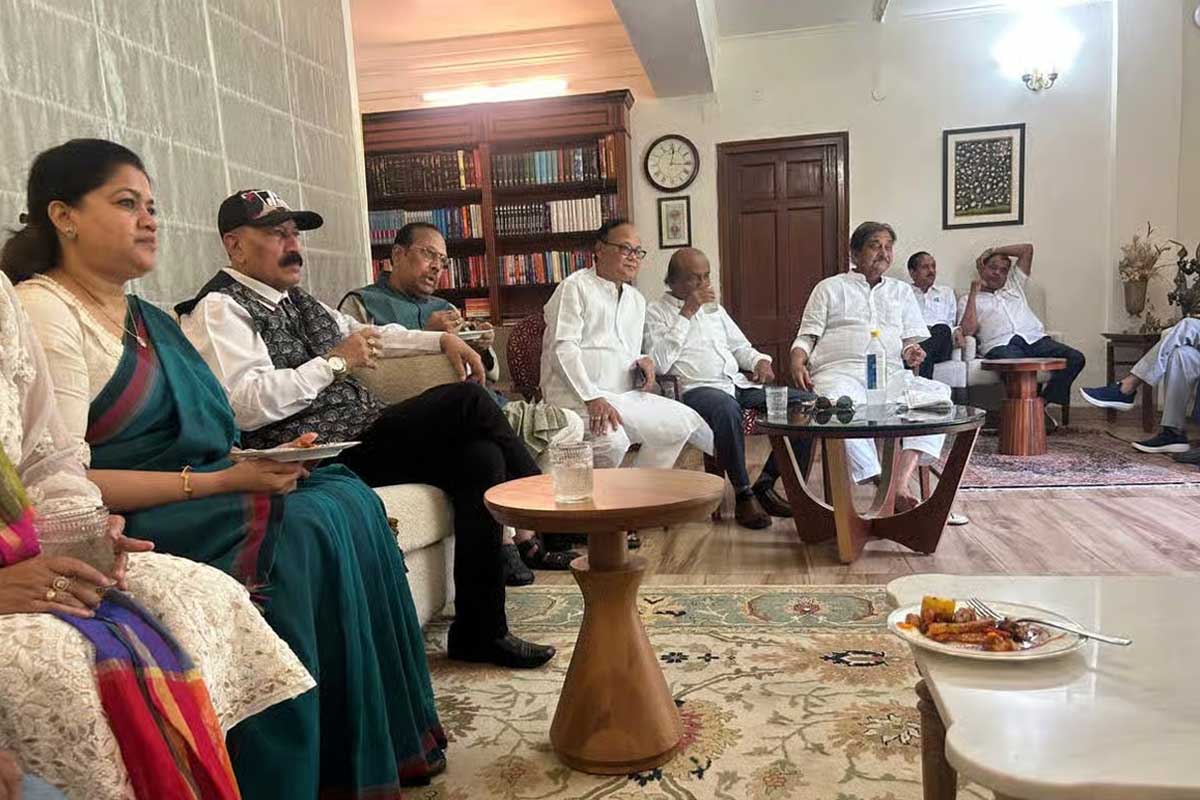
‘New Trinamool’ or directly joining the BJP this time! In the Delhi court, widespread speculation is being heard. And amid this speculation, at least 21 Trinamool MPs are set to join the BJP. And that is today, Monday. To ensure survival, Trinamool supremo Mamata Banerjee reached Delhi on Sunday itself. The India alliance meeting is ongoing. In the midst of this, this party switch may happen, according to sources. Before that, at least 21 rebel Trinamool MPs held a secret meeting in Delhi. Present there were Kakoli Ghosh Dastidar, Shatabdi Roy, Asit Mal, Prasun Banerjee, Arup Chakraborty, Abu Taher, Sukhendu Shekhar, Sharmila Sarkar, Khalilur Rahman, Jagadish Barma Basunia, and several others. And after this meeting, the ‘rebel’ Trinamool MLAs reached the home of BJP leader Bhupendra Yadav. Present there were Chief Minister Shuvendu Adhikari, Biklav Dev, and several other leaders. According to political circles, after the parliamentary party, the legislative party is also set to slip out of Mamata Banerjee’s hands.
More news on this topic
At least 21 rebel Trinamool MPs held a secret meeting in Delhi. Present there were Kakoli Ghosh Dastidar, Shatabdi Roy, Asit Mal, Prasun Banerjee, Arup Chakraborty, Abu Taher, Sukhendu Shekhar, Sharmila Sarkar, Khalilur Rahman, Jagadish Barma Basunia, and several others. And after this meeting, the ‘rebel’ Trinamool MLAs reached the home of BJP leader Bhupendra Yadav.
‘New Trinamool’ has already been formed in the Bengal assembly under the leadership of Ritabrata Banerjee. After this, the tension in the Delhi court has increased. Especially in the last 24 hours, speculation has intensified around the activities of several disgruntled Trinamool Congress MPs in Delhi. It is known that some stayed in small groups at upscale five-star hotels in the capital, while others were at their official residences. According to sources, throughout Sunday, there were multiple rounds of group calls and meetings to discuss the next strategy. On Monday morning, a few more MPs arrived in Delhi and joined this camp. After that, the meeting was held, according to reports.
Meanwhile, speculation about the party switch has intensified around a comment by BJP central observer Sunil Bansal. On Sunday, Bansal said, “It won’t do to say, ‘We won’t take this one, we won’t take that one.’ No Hindu should be left outside the organization. All Hindus must be united, brought under one umbrella.” However, Bansal also said that merely bringing everyone together is not the end of the task. In his words, “Not everyone will come loving the organization. Some may try to join the BJP for their own interests. Whatever their thoughts may be, after coming, as they work with us, it is the responsibility of the BJP to shape them so that they work according to our ideology for the rest of their lives.”
Delhi court
Delhi
<div