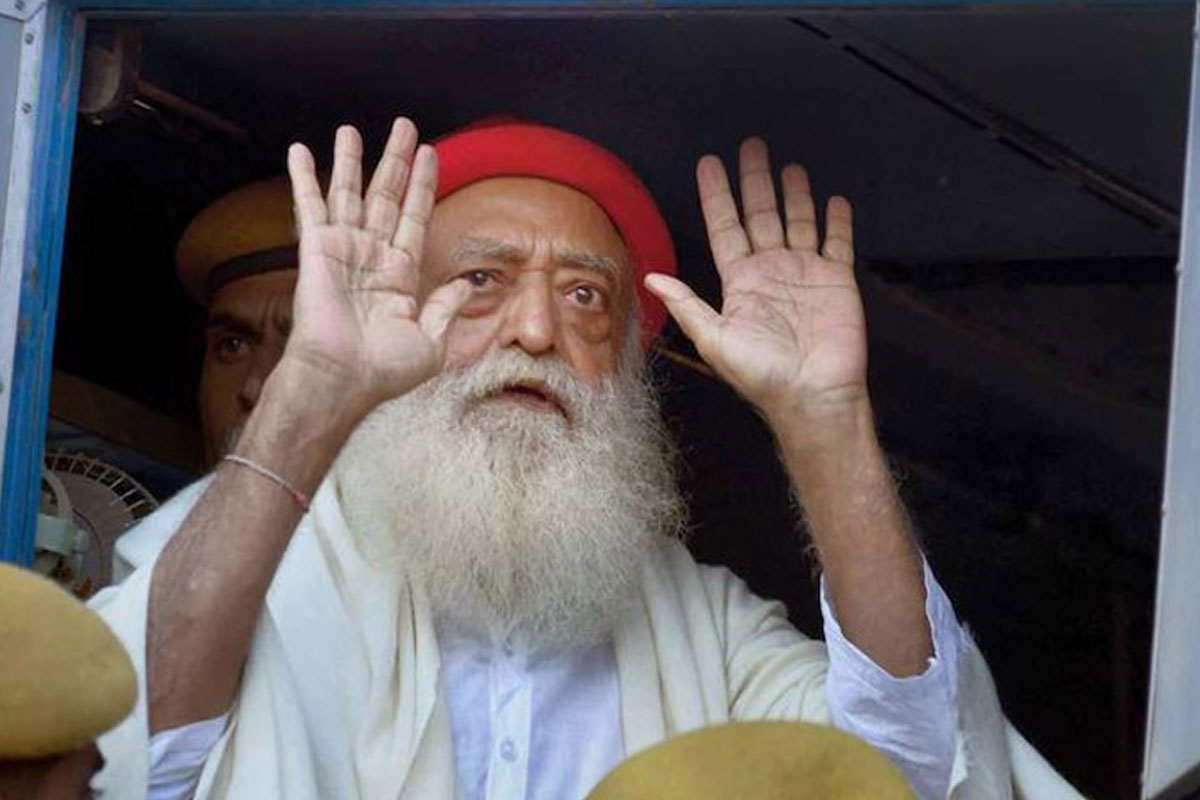
Asaram Bapu surrendered at Jodhpur Central Jail on Thursday evening. The Rajasthan High Court on Wednesday upheld the life imprisonment sentence of the self-proclaimed spiritual guru in a minor rape case. Along with this, the court ordered him to surrender at Jodhpur Central Jail. As a result, Asaram was forced to surrender.
In 2013, allegations were raised against Asaram for raping a 16-year-old minor at his ashram in Jodhpur. Subsequently, in August 2013, he was arrested from Indore. In that case, in 2018, the POCSO court in Jodhpur convicted the spiritual guru. Since then, Asaram was imprisoned in Jodhpur. In this case, the self-proclaimed spiritual guru was sentenced to life imprisonment.
The self-proclaimed spiritual guru had challenged that verdict in the High Court. Citing physical illness, he was also released on interim bail. He was granted bail until July 7. However, on Wednesday, the court ordered the upholding of his life imprisonment. He was also ordered to surrender at Jodhpur Central Jail. Following that order, he surrendered on Thursday evening.
Notably, Asaram had been on bail since October last year. His interim bail period was extended until July 7. During this time, he was at his ashram in Uttarakhand. However, on Wednesday, the Jodhpur bench of the High Court dismissed Asaram’s appeal. As a result, the 85-year-old Asaram Bapu was forced to surrender at Jodhpur jail. Even though convicted of rape and serving time in jail, the self-proclaimed spiritual guru still lacks no followers. On Thursday too, on his way to jail, he greeted and blessed his followers from inside the vehicle.
Jodhpur Central Jail
Jodhpur Central Jail, located in Rajasthan, India, is a historic prison established during the British colonial era in the 19th century. Originally built to house political prisoners and common criminals, it has since been modernized while retaining its distinctive red sandstone architecture. Today, it serves as a high-security correctional facility and is also known for its rehabilitation programs, including vocational training for inmates.
Rajasthan High Court
The Rajasthan High Court, established on August 29, 1949, serves as the highest judicial authority in the Indian state of Rajasthan, originally based at Jodhpur. Its main bench moved to Jaipur in 1958, and it gained a permanent bench at Jodhpur in 1977, reflecting the state’s legal history tied to the former princely states. The court plays a vital role in upholding justice and interpreting laws within Rajasthan’s diverse cultural and administrative framework.
Jodhpur
Jodhpur, often called the “Blue City” for its indigo-painted houses, is a historic city in Rajasthan, India, founded in 1459 by Rao Jodha, a Rajput chief of the Rathore clan. Its most iconic landmark is the imposing Mehrangarh Fort, which sits on a hilltop and offers panoramic views of the city. Known for its rich cultural heritage, Jodhpur was once the capital of the Marwar kingdom and remains a vibrant center for art, music, and cuisine.
Indore
Indore is a
Jodhpur Central Jail
Jodhpur Central Jail, located in the historic city of Jodhpur, Rajasthan, is a high-security prison established during the British colonial era in the 19th century. It has housed numerous notable political prisoners, including Indian independence activists, and is known for its distinctive red sandstone architecture that blends with the region’s heritage. Today, it operates as a modern correctional facility while maintaining its historical significance.
Rajasthan High Court
The Rajasthan High Court is the highest judicial body in the Indian state of Rajasthan, established on August 29, 1949, under the Rajasthan High Court Ordinance, with its principal seat in Jodhpur. It was formed by merging the former High Courts of Jaipur and Jodhpur, which existed in the princely states before India’s independence. The court has jurisdiction over the entire state, with additional benches in Jaipur and, at times, other locations to ensure accessible justice.
Jodhpur
Jodhpur, often called the “Blue City” due to the indigo-painted houses in its old quarter, is a historic city in the Indian state of Rajasthan. Founded in 1459 by Rao Jodha, the city is dominated by the imposing Mehrangarh Fort, which stands on a rocky hill and served as the seat of the Marwar kingdom. Today, Jodhpur is a major tourist destination, blending its rich Rajput heritage with vibrant markets and architecture.
Indore
Indore is a major city in central India, historically serving as the capital of the Holkar dynasty, a Maratha clan, from the 18th century onward. It played a key role in the Maratha Empire and later became a princely state under British rule, known for its architectural landmarks like the Rajwada Palace. Today, Indore is a bustling commercial and educational hub, also famous for its vibrant street food culture.
Mehrangarh Fort
Mehrangarh Fort, located in Jodhpur, Rajasthan, is one of India’s largest and most impressive forts. Built in 1459 by Rao Jodha, the founder of Jodhpur, it stands 400 feet above the city on a rocky hill and has never been conquered. The fort’s expansive palace complex, museums, and intricate carvings offer a glimpse into the region’s rich Rajput history and culture.
Marwar kingdom
The Marwar kingdom, also known as the Kingdom of Jodhpur, was a prominent Rajput state in the Marwar region of present-day Rajasthan, India, established in 1226 by Rao Siha. It rose to prominence under the Rathore dynasty, with its capital at Jodhpur, and played a key role in Rajput resistance against the Mughal Empire before later forming alliances through marriage and military service. The kingdom’s rich cultural legacy is reflected in its grand forts, palaces, and traditions, which remain iconic symbols of Rajput valor and heritage.
Uttarakhand
Uttarakhand is a state in northern India, known for its stunning Himalayan landscapes and spiritual significance. Historically, it was part of the larger Himalayan region referenced in ancient Hindu scriptures, and it was formed in 2000 from the northwestern districts of Uttar Pradesh. The state is home to important pilgrimage sites like Char Dham (Badrinath, Kedarnath, Gangotri, and Yamunotri) and the yoga capital Rishikesh.