)
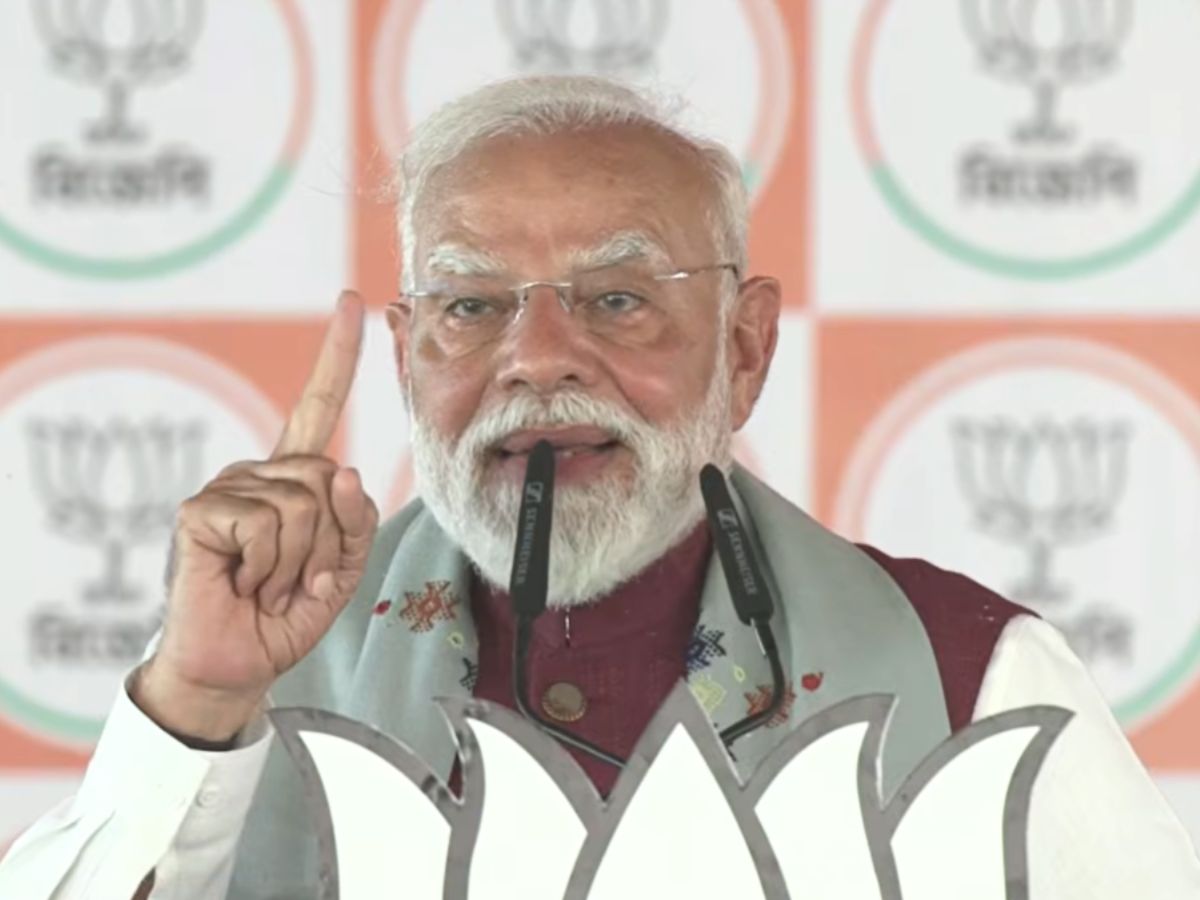
During the first phase of voting in West Bengal, Prime Minister Narendra Modi, while addressing a rally in Krishnanagar, said that this voting is breaking all previous records. He further stated that we have seen before that wherever there has been heavy voter turnout in the country, the BJP has achieved a resounding victory. The lotus is sure to bloom. On May 4, there will be celebrations of BJP’s victory in Bengal as well. Sweets will be distributed, and jhalmuri will also be shared. Taking a dig at TMC, the PM said that by the way, I have heard that jhalmuri has also given a shocking jolt to some people. I ate jhalmuri, but the chili hit TMC.
Modi said that this is the first election in 50 years where violence has been minimal; otherwise, every week someone would be hanged and they would claim it was suicide. There was a reign of hooliganism. The Election Commission has once again established democracy on the soil of Bengal. Addressing the rally around 1 PM, the PM said that information received so far indicates that voting is breaking all previous records.
TMC will not open its account: PM Modi
The PM claimed that there is so much anger here against TMC MLAs, ministers, local leaders, and their syndicate that in many districts, TMC will not even open its account. Fifteen years ago, the people sounded the bugle against the Left. Today, against the jungle raj of Trinamool, the people of Bengal are blowing conch shells in every street and neighborhood. This election is not being fought by Modi nor by my colleagues. This time, the election in Bengal is being fought by the people themselves. The leadership of the election is in the hands of the people of Bengal. Wherever I go, people say one thing: enough is enough.
The PM said that every region and every class in Bengal now wants to give a chance to the trust in BJP. Everyone is saying – Fear Out… Trust In. The identity of TMC’s ruthless government is – lie, deceive. All their promises over 15 years are half-baked. They announced building model residential schools in every block, but the opposite happened; hundreds of schools in Bengal were closed. TMC promised to provide piped water to every home. Though water from taps did not reach every home, the dirty water from waterlogging certainly reached your doorstep.
Whoever is a refugee, Modi stands with you
The PM said that none of our Matua families, Namasudra families, or refugee families need to be afraid of Trinamool. No one can even touch you. Whoever is a refugee… whoever has come to India due to persecution based on religion… Modi stands with them. As soon as the BJP government is formed in Bengal… the process of granting citizenship under CAA will be accelerated.