)
Will the Fall of the Women’s Reservation Bill 2026 Benefit the BJP? The Constitution (131st Amendment) Bill-2026, presented in the Lok Sabha by the government for women’s reservation, has been defeated. 298 MPs voted in favor of the proposal, while 230 votes were cast against it. The bill required a two-thirds majority, i.e., approximately 352 votes, to pass. However, due to not reaching this magic number, the bill fell in the Lok Sabha.
Opposition Elated, Ruling Side Stunned by Bill’s Defeat
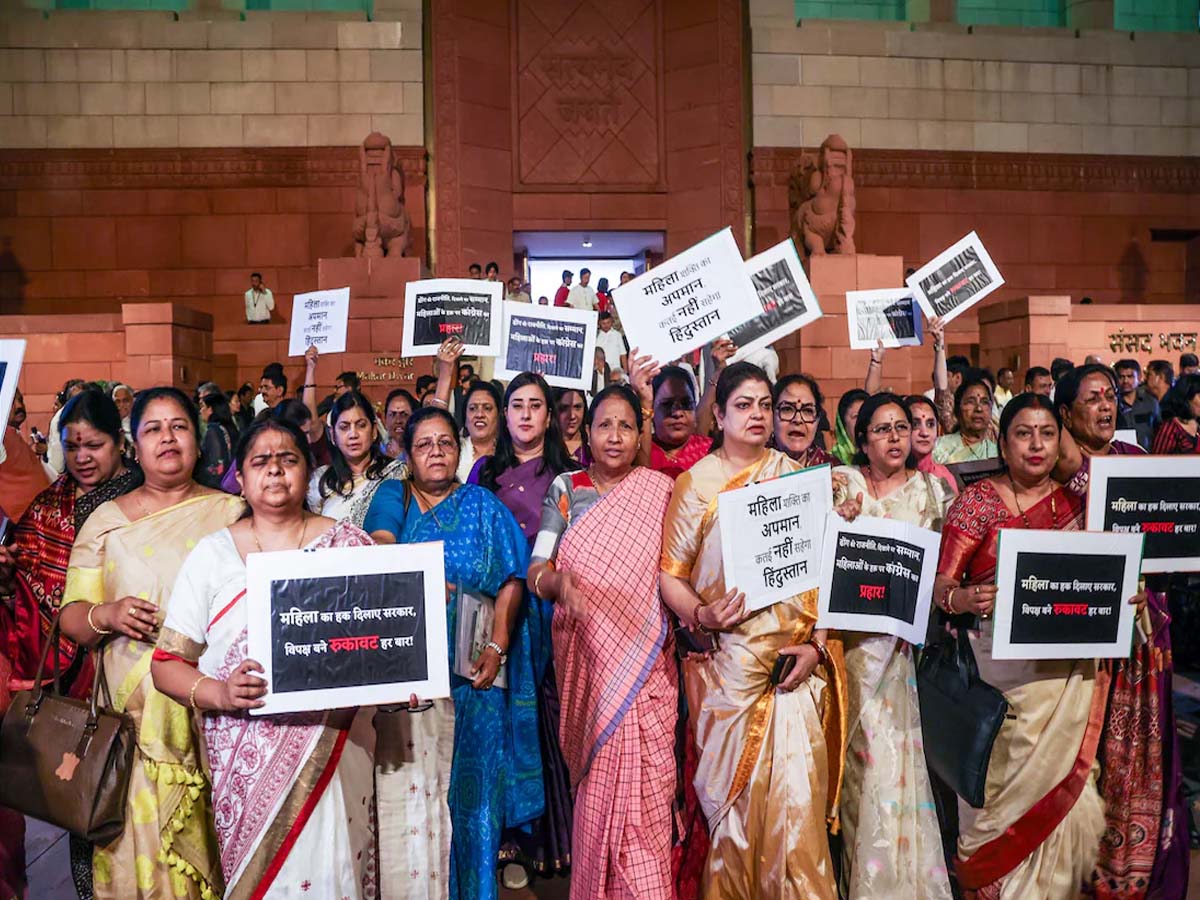
This bill was brought to implement the 2023 Nari Shakti Vandan Act and to increase Lok Sabha seats from 543 to 816. The BJP government was describing this bill as a step to immediately give 33% reservation to women. Meanwhile, the opposition was opposing it, terming it a ‘conspiracy to change the electoral map’. Now, while the opposition is presenting this bill’s failure as its major victory, the ruling side is stunned and is calling it a betrayal of half the country’s population.
The question is, has the BJP won a major political battle despite the bill not passing? If the assessment of political pundits is to be believed, the answer is yes. After the bill fell in the Lok Sabha, the BJP has taken a major decision to capitalize on this issue at the national level. It has launched a nationwide campaign with a strategy to prove the opposition as the ‘enemy of women’. The NDA has decided that now, by taking the struggle to the streets, the entire country will be made aware of the opposition’s true nature.
Has the BJP Won Even After Losing?
The BJP’s argument is that the 2023 law had already been passed, but the opposition lost the chance to implement this law immediately through the amendment. By doing so, it has deprived half the country’s population, i.e., women, of securing their rights. Analysts are describing this strategy as a Chanakya-like tactic of ‘victory in defeat’. They say that an emotional issue like women’s reservation has now come into the BJP’s hands. It can run a vigorous election campaign by linking it to women’s self-respect. It could gain significant advantage from this in West Bengal. It can use this issue in the state as a slogan of ‘the opposition betrayed women’.
On the other hand, the opposition claims that the bill was actually a trap of delimitation. Through it, a conspiracy was being hatched to proportionally reduce seats of South India and opposition-ruled states to cause harm. The Congress, TMC, SP, and DMK argued that the government was going to increase seats based on the 2011 census. Doing so would have benefited northern states more, while reducing the representation of southern states. Opposition leaders, including Rahul Gandhi, called it an ‘attack on democracy’. But this very stance could prove to be a double-edged sword for the opposition.
Has the Opposition Shot Itself in the Foot?
The answer can be given as yes. Women’s reservation is an issue concerning half the country’s population. Now, after the bill’s defeat, the BJP will propagate it across the country as ‘Modi’s guarantee’. It can strongly raise the point that it was going to give women their rights but opposition leaders prevented it. If its strategy succeeds, the opposition may have to face the wrath of women. Discontent could particularly rise among rural and young women, who are already connected to self-help groups and schemes.
Will the Opposition Gain or Lose?
The opposition may suffer losses on this issue. The opposition had framed the bill as a ‘Delhi-South vs North’ issue, emphasizing regional imbalance, but in the Lok Sabha, this bill was presented as the Women’s Reservation Bill. Thus, at the national level, this issue could create an ‘anti-women’ image for the opposition. Even if the BJP’s strategy is not very successful in southern states, the opposition’s women vote bank could be damaged in North India, Central India, and Eastern states.
The Modi government has