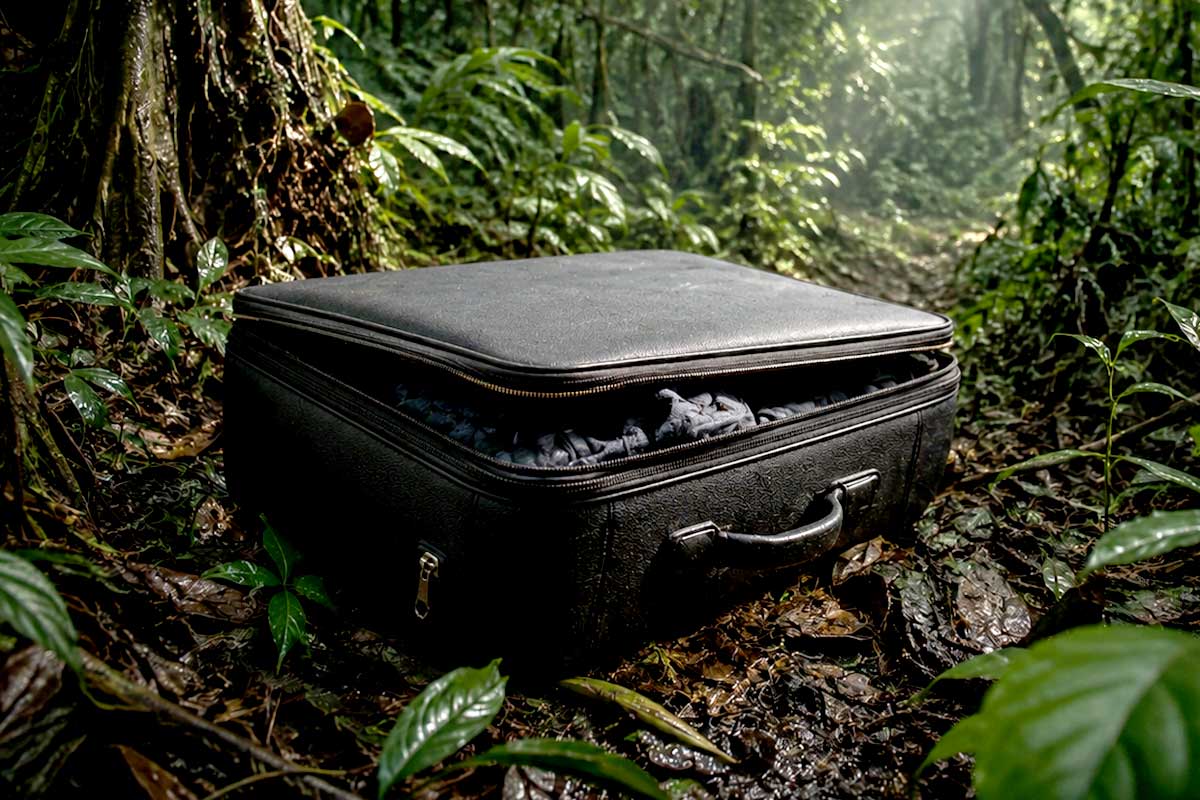
The trolley bag incident in Madhyamgram had shaken almost all of Bengal. A woman’s body was recovered in pieces from a trolley bag at the Ganges ghat in Shobhabazar! Now, the same trolley bag incident has occurred in Amta, Howrah. Inside, the dead body of an elderly man with folded limbs was found. Tension has spread in the area as the news broke. Police have begun investigating the incident.
According to local sources and police, this morning, Sunday, a large black trolley bag was seen lying in the bushes beside OT Road near Ulubaria Goruhat More. Locals spotted it and informed the Ulubaria police station. When police arrived at the scene and opened the bag, people in the area were shocked. Inside, the dead body of an elderly man with folded limbs was found! The unidentified body, packed inside the bag, was recovered and sent to Ulubaria Sharatchandra Medical College Hospital for autopsy.
Is this a murder or something else? That question has arisen. Police suspect the body-filled trolley bag was dumped there under the cover of night. Preliminary estimates suggest the elderly man was around 55 years old. CCTV footage from the area is being collected and examined. Initial investigations indicate no signs of injury or wounds on the body. The person’s face appears extremely emaciated. The individual was of medium height, weighing roughly 35 kg. He was wearing pants and a shirt.
So, did the elderly man die due to illness? Did family members, instead of cremating the body, place it in a trolley bag and dump it there? The incident is shrouded in mystery. Tension and fear have gripped the area since this morning.
Ulubaria Goruhat More
Ulubaria Goruhat More is a notable intersection in Ulubaria, a town in West Bengal, India, serving as a key junction connecting local routes. Historically, the area is tied to the broader cultural and economic landscape of the region, which grew around the Hooghly River and its trade networks during the colonial era. Today, it remains a bustling hub for transportation and commerce, reflecting the town’s ongoing development.
Ganges ghat in Shobhabazar
The Ganges ghat in Shobhabazar, Kolkata, is a historic riverfront landing on the Hooghly River, originally built by the wealthy Bengali aristocracy in the 18th and 19th centuries. It served as a private ghat for the Shobhabazar Raj family, who were prominent patrons of art and culture during the Bengal Renaissance. Today, it remains a significant cultural site, reflecting the area’s rich heritage and its connection to traditional rituals and riverine life.
OT Road
OT Road, located in the southeastern part of the Kathmandu Valley, is one of the oldest roads in Nepal, historically connecting the city of Patan to the ancient trade routes leading to Tibet. Built during the Malla period, it served as a vital commercial and cultural artery, facilitating the exchange of goods like salt and wool. Today, it remains a bustling area in Patan, lined with traditional Newar architecture, shops, and temples.
<h3 class="text-lg font-semibold mb-2 text-blue
Ulubaria Goruhat More
Ulubaria Goruhat More is a notable junction in the Indian state of West Bengal, serving as a key transit point connecting Howrah and other parts of the region. Historically, this area lies within the broader cultural landscape of rural Bengal, known for its local markets and proximity to the Ganges River delta. It reflects the everyday life and connectivity of the region, though it lacks a widely documented major historical event.
Ganges ghat in Shobhabazar
The Ganges ghat in Shobhabazar, located in Kolkata, is a historic riverfront landing along the Hooghly River, a distributary of the Ganges. It was developed during the 18th and 19th centuries by affluent Bengali families, particularly the Shobhabazar Raj family, who built the ghat for religious rituals, bathing, and cremation ceremonies. Today, it remains an active cultural and spiritual site, reflecting the area’s rich heritage and its connection to the river’s sacred traditions.
OT Road
OT Road, located in the central district of Seoul, South Korea, is a lively commercial street near Ewha Womans University. Historically, it developed as a shopping and cultural hub catering to students, featuring affordable fashion, beauty shops, and street food. Today, it remains a popular destination for young people and tourists seeking a vibrant urban experience.