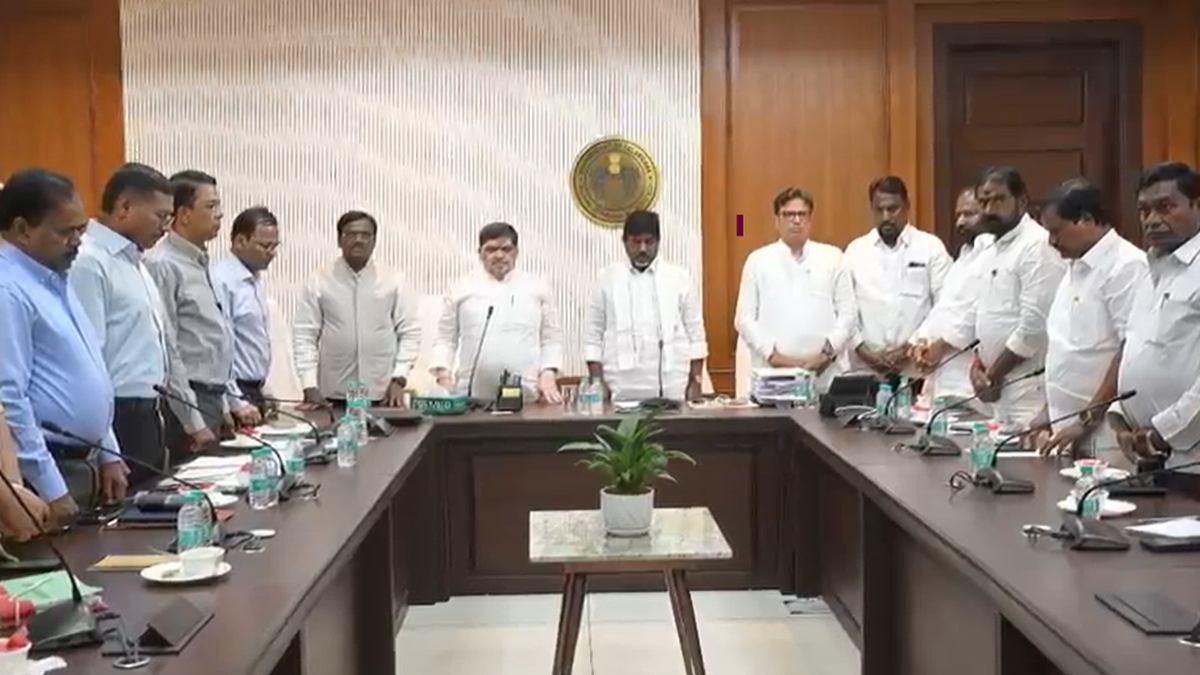

Telangana Government has announced financial assistance of ₹10 lakh, Indiramma Illu and a job to a family member of Shankar Goud, the RTC driver who passed away. Telangana Transport Minister Ponnam Prabhakar appealed to leaders to facilitate the funeral of Shankar Goud.
Tension mounted in Muthojipet near Narasmpet town in Warangal as the Telangana State Road Transport Corporation employees where he worked.
Secretariat
The Secretariat is a prominent building in New Delhi, India, that houses key government ministries. Originally built in the 1910s as part of the British imperial capital’s design by architects Sir Herbert Baker, it features a distinctive red sandstone and brick style. Today, it serves as the administrative hub of the Indian government, symbolizing the country’s political and bureaucratic center.
Muthojipet
Muthojipet is a historic neighborhood located in the city of Vellore, Tamil Nadu, India. Originally established as a planned settlement during the British colonial period, it was named after Muthoji, a former Diwan (prime minister) of the Maratha kingdom of Thanjavur. The area is known for its traditional architecture and cultural heritage, reflecting the region’s rich historical past.
Narasmpet
Narasmpet is a town in the Indian state of Telangana, known for its historical significance as a former zamindari (landed estate) during the British colonial period. It was part of the larger Warangal district and has a history tied to local chieftains who governed the region. Today, it serves as a small commercial center for surrounding agricultural areas.
Warangal
Warangal, located in the Indian state of Telangana, was the historic capital of the Kakatiya dynasty from the 12th to the 14th centuries. It is renowned for its impressive architectural heritage, including the Warangal Fort with its iconic four ornamental gateways (Kirti Toranas) and the Thousand Pillar Temple. The city later came under the rule of the Delhi Sultanate and the Qutb Shahi dynasty, and today it stands as a significant cultural and historical site.
Secretariat
The Secretariat is a historic building in New Delhi, India, designed by British architect Herbert Baker and completed in the 1920s. It originally housed the offices of the British Indian government and later became the administrative headquarters of the Government of India after independence. Flanking the Rashtrapati Bhavan, it symbolizes the country’s colonial past and its evolution into a modern democracy.
<div class="my-4 p-4
Secretariat
The Secretariat, located in the Forbidden City (Beijing), served as the central administrative and decision-making body for the Ming and Qing dynasties. Established in the early 15th century, it was responsible for drafting imperial edicts, managing state affairs, and coordinating government operations under the emperor’s authority. Its historical significance lies in its role as the political nerve center of imperial China for nearly 500 years.
Muthojipet
Muthojipet is a locality in the city of Warangal, Telangana, India, historically known as a center for handloom weaving and textile production. Its name is derived from the Telugu word “Muthoji,” referring to a type of traditional silk or cotton fabric, and the area flourished as a weaving hub during the Kakatiya dynasty and later under the Qutb Shahi and Nizam periods. Today, it remains a notable market area, reflecting its enduring legacy in the region’s textile and cultural heritage.
Narasmpet
Narasampet is a town in the Warangal district of Telangana, India, known for its historical significance as a former zamindari estate. The area was once part of the larger Kakatiya kingdom and later came under the rule of the Qutb Shahi dynasty and the Nizam of Hyderabad. Today, it serves as a local market and administrative center, with its history reflected in the region’s cultural and agricultural traditions.
Warangal
Warangal, located in the Indian state of Telangana, is a historic city known for its rich cultural heritage and was the capital of the Kakatiya dynasty from the 12th to the 14th centuries. It is famous for the Warangal Fort, featuring ornate gateways and a massive stone temple complex, as well as the Thousand Pillar Temple built in 1163 CE. The city also played a significant role in the region’s struggle for independence and is a key center for Telangana’s cultural identity.
Warangal Fort
Warangal Fort, located in the Indian state of Telangana, was the historic capital of the Kakatiya dynasty, built in the 13th century. It is renowned for its massive stone walls, intricately carved gateways (such as the famous “Kakatiya Kala Thoranam”), and the ruins of a grand Shiva temple. The fort withstood invasions from the Delhi Sultanate in the 14th century and later fell under the control of the Bahmani and Vijayanagara empires, leaving behind a rich legacy of medieval South Indian architecture.
Thousand Pillar Temple
The Thousand Pillar Temple, also known as Rudreshwara Temple, is a historic Hindu temple located in Hanamkonda, Telangana, India. Built in 1163 CE by the Kakatiya king Rudra Deva, it is renowned for its exquisite architecture, featuring over 1,000 intricately carved pillars that support the structure without obstructing the view of the main deity. The temple is a masterpiece of Kakatiya art and a significant example of early medieval South Indian temple architecture.