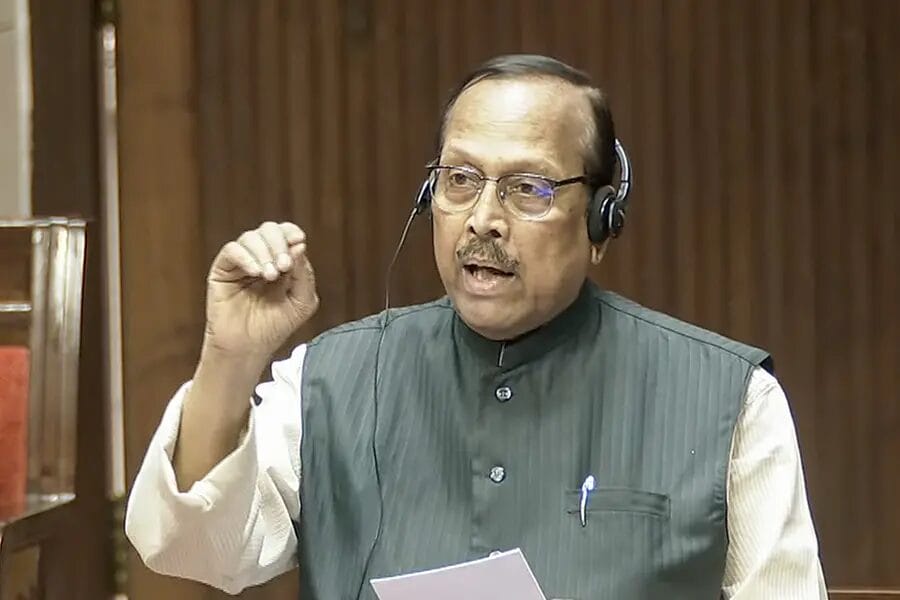
Kolkata/New Delhi, Trinamool Congress suffered a major political blow on Monday when senior party leader and Rajya Sabha member Sukhendu Shekhar Roy resigned from the party’s primary membership and also gave up his membership of the upper house.
Roy’s move, amid long-standing internal discontent within the party led by Mamata Banerjee, signals that the tug-of-war within the organization has now reached the party’s parliamentary wing. Roy, one of the founding members of Trinamool Congress and counted among the party’s most prominent faces in Parliament, announced his resignation in the national capital at a time when the opposition alliance ‘INDIA’ was scheduled to meet just a few hours later. West Bengal Chief Minister Mamata Banerjee and party National General Secretary Abhishek Banerjee also attended this meeting.
Roy targets corruption and leadership
Roy’s resignation comes days after a rebellion in the Trinamool Congress legislative party in West Bengal. 58 party MLAs took a different stance from the leadership line, supporting Ritabrata Banerjee for the post of Leader of Opposition and rejecting the party’s official candidate Shobhandev Chattopadhyay. This rebellion ended with the Assembly Speaker recognizing Ritabrata as the Leader of Opposition. It exposed deep rifts within the organization after the party’s defeat in the assembly elections and fueled fears that this unrest could be seen outside the assembly as well.
In his statement, Roy cited widespread corruption in governance and party organization and said that public anger against the party’s previous term has reached dangerous levels. The senior MP, who had been gradually distancing himself from the party leadership for the past year, also targeted Trinamool’s stance on the RG Kar Hospital rape-murder case and repeatedly expressed disagreement on the issue. In Delhi, Roy told reporters, “I raised my voice openly on the RG Kar Hospital matter. After that, I was gradually isolated in the party. My only mistake was that I demanded a departmental inquiry against some police officers because I believed they played a major role in destroying evidence.”
Roy’s resignation reduces Trinamool’s strength in Rajya Sabha to 12
Roy alleged that attempts were being made to protect the culprits at that time. He said that after that very controversy, he had mentally decided to leave the party. He said, “That was the limit for me. I understood that I would not stay in the party much longer.” Roy also claimed that corruption had become rampant in many areas and public anger against the party had reached such an extent that electoral defeat became certain. He demanded an investigation into the assets of Trinamool leaders holding key positions at the national level and alleged that many honest people in the organization have been marginalized.
Roy said, “Not everyone in the party is dishonest. But many honest people have been sidelined.” Political analysts believe the significance of this development is heightened because it happened in Delhi, while the party’s top leadership was busy consulting with allies at the opposition alliance ‘INDIA’ meeting. After Roy’s resignation, Trinamool’s strength in the Rajya Sabha has reduced to 12.
Roy’s exit increases difficulties for Trinamool leadership
Constitutional expert Roy has been one of Trinamool’s main strategists in Parliament for years and is considered the party’s most effective voice on legislative and constitutional issues. Asked about future plans, Roy said he has not decided to join any other party yet and indicated he might retire from active politics. He said, “I may completely withdraw from politics.”
The Trinamool leadership did not immediately react to Roy’s resignation. With the legislative party rebellion still unresolved, Roy’s resignation will deepen questions about the party’s unity and increase leadership’s concern that the turmoil in the assembly might reach Delhi.