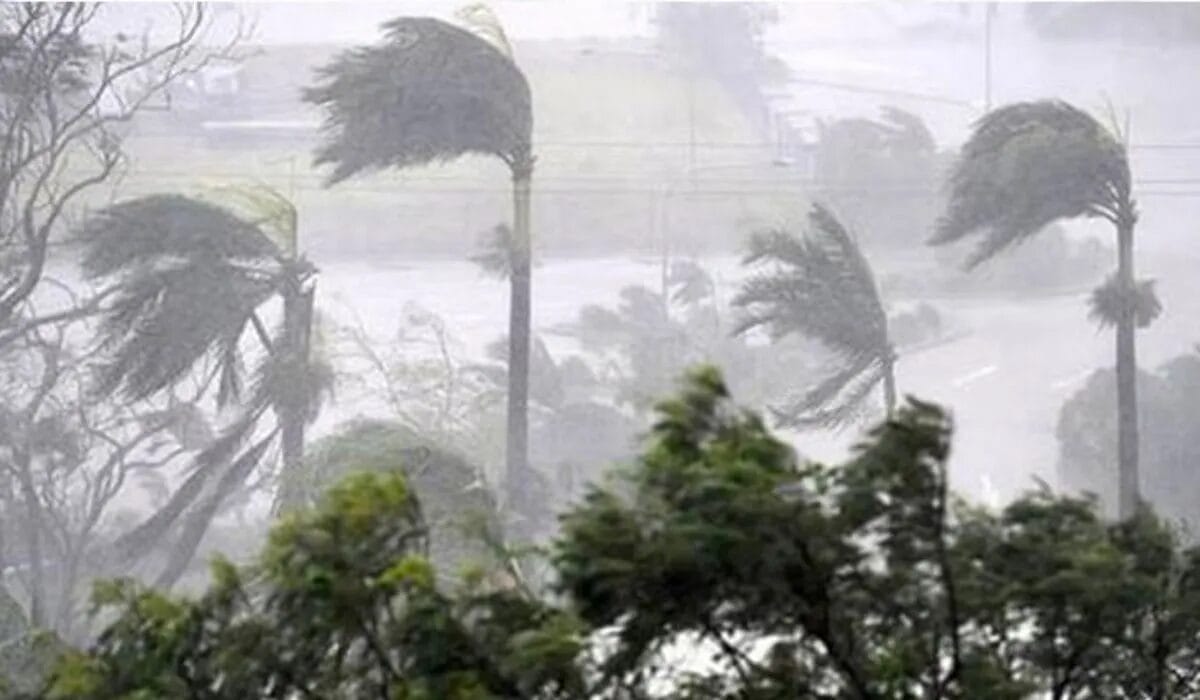
The southwest monsoon is gaining momentum, according to an update from the weather agency.
New Delhi: Although the monsoon did not arrive in Kerala on its expected date of May 26, it has advanced further into some other parts of the southwest and southeast Arabian Sea, the Lakshadweep area, and the Bay of Bengal. The India Meteorological Department (IMD) provided this information on Wednesday.
The IMD had initially predicted that the monsoon would reach Kerala by May 26. However, it noted that the onset could be four days early or delayed. The monsoon typically arrives in Kerala around June 1, marking the beginning of the monsoon rainfall season (June to September) in the country.
According to the IMD, last year the monsoon arrived in Kerala on May 24. In a statement, the department said, “Conditions are favorable for the southwest monsoon to further advance into some more parts of the southwest and southeast Arabian Sea, the Lakshadweep area, the southwest, east-central, and west-central Bay of Bengal, the remaining parts of the southeast Bay of Bengal, and some parts of the northeast Bay of Bengal over the next two to three days.”
Over 70 percent of India’s annual rainfall occurs during the monsoon months, making this season critically important for agriculture, drinking water supply, hydropower generation, and groundwater recharge.
Kerala
Kerala, located on the southwestern coast of India, is known for its rich cultural heritage and natural beauty, including backwaters, beaches, and lush greenery. Historically, it was a major center for the spice trade, attracting traders from ancient Rome, China, and the Middle East, and later became a key site for European colonial influence. Today, Kerala is celebrated for its unique traditions, such as Kathakali dance, Ayurvedic medicine, and its high human development index, which sets it apart within India.
Lakshadweep
Lakshadweep is a group of 36 islands off the southwestern coast of India, known for their pristine beaches, coral reefs, and lagoons. Historically, the islands were inhabited from ancient times and were influenced by Arab traders and later by the Chola dynasty before coming under British colonial rule. Today, it is a Union Territory of India, with its culture reflecting a blend of Malayali and Islamic traditions, and the economy relying on fishing, coconut cultivation, and tourism.
Bay of Bengal
The Bay of Bengal is a vast, northeastern extension of the Indian Ocean, bordered by India, Bangladesh, Myanmar, and several other countries. Historically, it served as a crucial maritime highway for ancient trade routes, connecting the Indian subcontinent with Southeast Asia and beyond. The region was also the site of major historical events, including the rise of powerful port cities like Tamralipti and the devastating 2004 Indian Ocean tsunami.
Arabian Sea
The Arabian Sea is a region of the northern Indian Ocean bordered by the Arabian Peninsula, India, and the Horn of Africa, serving as a vital maritime trade route for centuries. Historically, it connected ancient civilizations like the Indus Valley and Mesopotamia, and later facilitated the spice trade and
Kerala
Kerala, a state on India’s southwestern coast, is known for its rich history as a major spice trading hub that attracted ancient Romans, Arabs, and later European colonial powers. The region was shaped by the Chera dynasty and later became a center of cultural synthesis, with influences from Hinduism, Christianity, and Islam. Today, Kerala is celebrated for its lush backwaters, traditional Kathakali dance, and high human development index.
Lakshadweep
Lakshadweep is a tropical archipelago of 36 islands off the southwestern coast of India, known for its pristine beaches and coral reefs. Historically, the islands have been inhabited for centuries, with early settlers from the Malabar Coast and later influences from Arab traders, who introduced Islam. Today, it is a Union Territory of India, with a unique culture blending indigenous traditions and Islamic heritage.
Bay of Bengal
The Bay of Bengal is a vast body of water in the northeastern Indian Ocean, bordered by countries including India, Bangladesh, Myanmar, and Sri Lanka. Historically, it served as a crucial maritime highway for ancient trade routes, connecting the Indian subcontinent with Southeast Asia and beyond, facilitating the exchange of goods, cultures, and religions. Today, it remains a vital economic and geopolitical region, known for its major ports, rich fisheries, and susceptibility to powerful tropical cyclones.
Arabian Sea
The Arabian Sea is a region of the northern Indian Ocean bordered by the Arabian Peninsula, India, Pakistan, and the Horn of Africa. Historically, it has been a vital maritime trade route for centuries, connecting the Middle East, Africa, and South Asia through the monsoon-driven spice and silk trades. Its strategic importance continues today, with major ports like Mumbai and Karachi facilitating global commerce.