Lucknow, The ‘No PUCC, No Fuel’ system will be enforced in the National Capital Region (NCR) starting October 1. This directive was issued during a high-level review meeting on pollution control and air quality improvement in the NCR, chaired by Chief Secretary SP Goel on Wednesday.
According to a statement from the Uttar Pradesh government, the Chief Secretary stated that the state government aims to reduce air pollution levels in the NCR region by 30 to 35 percent during the year 2026. Goel said that necessary steps are being taken in key areas such as vehicular pollution, industrial emissions, dust, construction and demolition waste, green cover expansion, and stubble management to achieve this objective.
According to the statement, officials informed the Chief Secretary during the meeting that approximately 26.19 lakh ‘end-of-life’ (EOL) vehicles (vehicles older than their prescribed usable lifespan) have been identified in the districts of the NCR, and between January and April 2026, 37,156 vehicles were declared ‘unfit for use’ while 460 vehicles were seized.
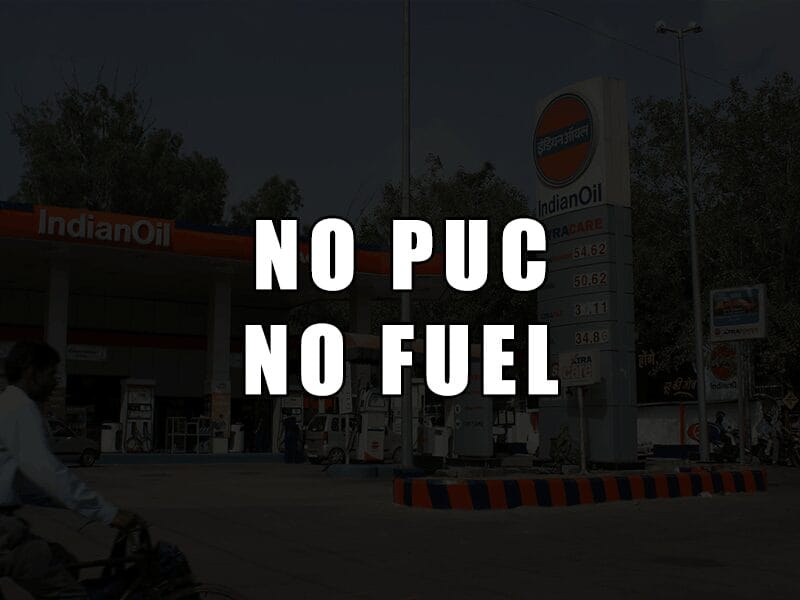
According to the statement, the Chief Secretary directed that the ‘No PUCC, No Fuel’ system will be implemented from October 1, under which ANPR cameras (cameras with automatic number plate recognition capability) will be installed at 1,041 petrol pumps in the NCR. The Pollution Under Control Certificate (PUCC) is an official document certifying that a vehicle’s emissions are within the environmental standards set by the government. This certificate is mandatory for all types of vehicles (two-wheelers, three-wheelers, four-wheelers, or commercial) in India.
Target to Operate 975 E-Buses and Establish 18 New Air Monitoring Stations in NCR
According to the statement, the Chief Secretary directed during the meeting that an integrated network of various portals, mobile applications, GPS tracking systems, and dashboards be developed for digital monitoring of all major activities in the future, enabling real-time monitoring of road cleaning, road redevelopment, greening, construction waste management, and other pollution control measures. It was stated in the meeting that under the ‘Naya Safar’ scheme in the vehicular sector, old and polluting vehicles are being phased out to promote BS-6, CNG, and electric vehicles.
According to the statement, officials informed the meeting that a target has been set to operate a total of 975 electric buses in Ghaziabad, Noida, Greater Noida, and Meerut to make public transport clean and environmentally friendly, while currently, 100 e-buses are operational in these cities. It was stated in the meeting that 18 new continuous ambient air quality monitoring stations are to be established in the NCR-Uttar Pradesh region to strengthen air quality monitoring.