Hyderabad: Officials handed over money to the victims a day before the appearance of Finance Department Principal Secretary Sandeep Sultania. The Telangana High Court had ordered that single women and men displaced during the construction of the Mallanna Sagar and other reservoirs be considered separate families and compensated under the Rehabilitation and Resettlement scheme. The court had also ordered Finance Department Principal Secretary Sandeep Sultania to appear before it for non-compliance of the order.
Just one day before Sandeep Sultania was to appear in court, officials released the financial compensation under the Rehabilitation and Resettlement scheme to the victims, even though this money had not been received despite a seven-year legal battle. Out of 79 petitions filed for rehabilitation by people displaced from Mallanna Sagar, only 55 received compensation, while the remaining 34 people died without receiving any compensation.
Also Read…
Controversy Intensifies Over Rehabilitation of Single Persons
52 people from Vemula Ghat and 27 from Atigadda Kishthapur had filed a petition in the High Court in 2019, demanding that single men and women not be clubbed together in a family and that they be allocated Rs 12.54 lakh in compensation and land to build a house on 250 square yards. The High Court hearing the case specifically identified them and, in November 2023, ruled to give them the money under the Rehabilitation and Resettlement scheme. However, as no action was taken, the petitioners again filed a contempt petition in the court.
The government concluded the hearing on the contempt petitions by assuring the court that payment would be made within six weeks. However, as the payment was not made, the court resumed hearing the contempt petitions. Justice Vakiti Ramakrishna Reddy, the High Court judge hearing the case, issued a notice to Finance Department Principal Secretary Sandeep Sultania, ordering him to appear on the 15th of this month.
When the judge resumed hearing the contempt petitions on Wednesday, the petitioners’ lawyer Ravi argued that each person had been paid Rs 12.54 lakh on Tuesday evening. However, he stated that seven years of interest and the housing plot had not yet been provided. After hearing the arguments, the judge ordered the government to provide clarification on the housing plot and interest payment and adjourned the hearing until April 17.
Telangana High Court
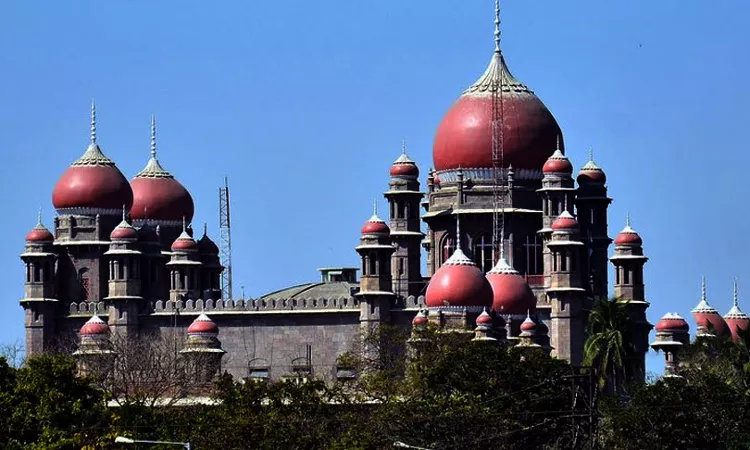
The Telangana High Court is the highest judicial authority in the Indian state of Telangana, established as an independent high court in 2019 following the bifurcation of the state from Andhra Pradesh. It is housed in the historic “Justice City” complex in Hyderabad, a building originally inaugurated in 1920 that once served as the High Court of the erstwhile Hyderabad State and later the Andhra Pradesh High Court.
Mallanna Sagar
Mallanna Sagar is a large reservoir located in the Siddipet district of Telangana, India, completed in 2021. It was constructed as part of the Kaleshwaram Lift Irrigation Project to provide water for irrigation and drinking purposes to the region. The reservoir’s creation involved the submergence of several villages, leading to significant local rehabilitation and resettlement efforts.
Vemula Ghat
Vemula Ghat is a historic bathing ghat located on the banks of the Krishna River in the city of Kurnool, Andhra Pradesh, India. It is believed to have been constructed during the reign of the Vijayanagara Empire in the 16th century, serving as a significant spiritual and social hub for rituals and community gatherings. Today, it remains an important cultural and religious site, particularly during festivals like Maha Shivaratri.
Atigadda Kishthapur
Atigadda Kishthapur is a village in the Indian state of Andhra Pradesh, known for its ancient Sri Lakshmi Narasimha Swamy Temple. The temple is historically significant, believed to have been established by the Vijayanagara Empire rulers, and it attracts pilgrims for its unique deity of Lord Narasimha (a form of Vishnu) in a seated posture. The site represents a centuries-old center of Vaishnavite worship and local cultural heritage.
High Court
The High Court is a prominent judicial institution in many countries, typically serving as the highest court within a state or province, or as a major appellate court below a supreme court. Historically, such courts were often established during the colonial or post-independence era to administer justice and interpret laws, with their architecture and authority symbolizing the rule of law. For example, the High Court of Australia in Canberra, founded in 1903, interprets the constitution, while the iconic High Court building in Kolkata, India, completed in 1872, is a Gothic Revival landmark from the British Raj.
Rehabilitation and Resettlement scheme
The “Rehabilitation and Resettlement scheme” is not a specific cultural site, but a government-led policy framework, most notably in India, designed to address the displacement of people and communities due to large-scale development projects like dams, mines, and industrial zones. Its history is rooted in efforts since the mid-20th century to provide compensation, alternative land, housing, and livelihood support to those affected, though its implementation has often been controversial and criticized for inadequate execution. The scheme represents a significant, ongoing social and administrative challenge in balancing national development with the rights and welfare of displaced populations.
Finance Department
The Finance Department is not a specific cultural site or historical location, but a generic term for a government or corporate division responsible for managing monetary resources. Historically, such departments evolved with modern state and corporate structures to oversee budgeting, taxation, revenue collection, and financial reporting. Their function is administrative rather than tied to a single physical place with a touristic history.
Hyderabad
Hyderabad is a historic city in southern India, founded in 1591 by Muhammad Quli Qutb Shah. It is renowned for landmarks like the Charminar and Golconda Fort, reflecting its rich legacy as the capital of the Qutb Shahi dynasty and later the Nizams of Hyderabad. Today, it is a major technology hub, often called “Cyberabad,” blending its regal past with rapid modern development.