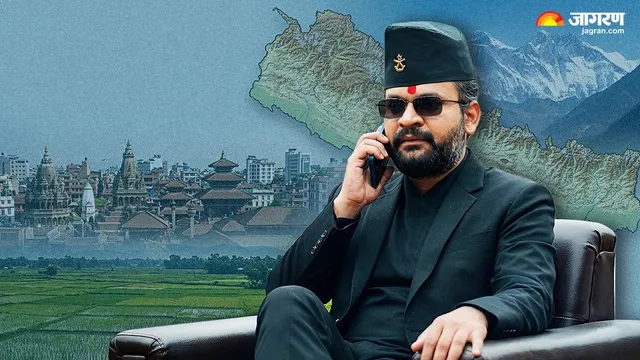
The Nepalese government has implemented a new customs duty rule on purchases over ₹100 from India. Nepalese citizens are protesting this, as it affects the “roti-beti” (bread and daughter) relationship between India and Nepal.
Under the new customs rule by the Nepalese government, a duty is mandatory on purchases exceeding 100 rupees from India. The new government in Nepal has issued this new decree. Now, one can only proceed after paying customs duty on purchases of goods worth more than one hundred rupees from India.
Ignoring this rule can be costly, and your purchased goods may be confiscated. Although the new rule was implemented from Tuesday, no immediate impact is currently seen at the Jogbani border. Nepalese customers are coming and going freely from Jogbani to purchase goods.
Regarding this, Nepalese citizens stated that this rule was also implemented two years ago but could not be sustained and became inactive within a month. This time, the government has implemented this rule again.
People, in protest of this government rule, said that the relationship between India and Nepal is not just that of neighboring countries but an unbreakable bond of “beti-roti” (daughter and bread). In such a situation, this rule will create a rift in the relationship.
According to experts, in a meeting held last week at the Morang Industry Trade Organization, in the presence of the government’s economic secretary and several other officials, issues like smuggling, shopping from markets in Indian areas across the border, and the misuse of the open border causing damage to Nepal’s economy were prominently raised.
(Nepalese customers shopping from Jogbani market)
No Impact of the Rule on Purchases Over One Hundred Rupees
The new rule by the Nepalese government on purchases over one hundred rupees from India is proving ineffective at the Jogbani border. On one hand, the general public is buying goods from Jogbani and going to Nepal, while on the other, open smuggling continues unabated. People currently have no fear of the new rule, nor do the smugglers fear the police and armed forces deployed at the Nepal border.
(Empty retail shops in Nepal)
Meanwhile, the Jogbani market, adjacent to the Nepal border, primarily depends on customers from Nepal. Traders are in a state of confusion due to the new rule by the Nepalese government. Shopkeepers say that if this rule is strictly enforced by the government, it will directly impact the Jogbani market.
According to shopkeepers, this rule will affect the Jogbani market, and its impact will also be felt on markets in Delhi and Patna because the consumption from Jogbani, especially groceries and textiles, is high in Nepal, even if it happens through smuggling. When Nepalese customers decrease here, sales will automatically decline.
Jogbani border
The Jogbani border is a major land crossing point between India and Nepal, connecting the Indian state of Bihar with Nepal’s Province No. 1. Historically, it has long been a vital trade and transit route, with its modern infrastructure and formal checkpoint established to regulate the significant movement of people and goods between the two countries. It remains a crucial economic and cultural link for the communities on both sides of the border.
Jogbani market
Jogbani market is a major border market located in the Araria district of Bihar, India, directly adjacent to the town of Biratnagar in Nepal. Historically, it has served as a vital economic and trade hub for centuries, facilitating the exchange of goods between the two countries. Today, it remains one of the largest and busiest cross-border markets in South Asia, known for its vibrant atmosphere and diverse range of products.
<div class="my-4 p-4 rounded-lg shadow-md bg-blue-50 border-l-4
Jogbani border
The Jogbani border is a major land crossing point between India and Nepal, connecting the Indian state of Bihar with Nepal’s Province No. 1. Historically, it has long been a vital trade and transit route, with its modern infrastructure and formal checkpoint established to regulate the significant movement of people and goods between the two countries.
Jogbani market
Jogbani market is a major border market located in the Araria district of Bihar, India, directly adjacent to the town of Biratnagar in Nepal. Historically, it has served as a vital economic and trade hub for centuries, facilitating the exchange of goods between the two countries. Today, it remains one of the busiest land ports in South Asia, known for its bustling trade in agricultural produce, textiles, and consumer goods.
Delhi
Delhi is India’s capital city, with a history spanning over two millennia, having served as the seat of power for multiple empires including the Delhi Sultanate and the Mughals. Today, it is a vibrant metropolis known for its striking contrasts, where ancient monuments like the Red Fort and Qutub Minar stand alongside modern government buildings and bustling markets. This rich layering of history and culture makes it a central political, economic, and cultural hub of the country.
Patna
Patna is the capital city of Bihar, India, located on the southern bank of the Ganges River. Historically known as Pataliputra, it was a major political, economic, and cultural center of ancient India, serving as the capital of powerful empires like the Maurya and Gupta dynasties. Today, it is a bustling modern city that preserves historical landmarks such as the Golghar granary and remnants of its ancient fortifications.
Morang Industry Trade Organization
The Morang Industry Trade Organization (MITO) is a business association based in Morang, Nepal, established to promote and support local industrial and commercial development. While specific founding details are limited, it operates as a key chamber of commerce for the region, historically facilitating trade, investment, and advocacy for businesses in one of Nepal’s important economic hubs.
Biratnagar
Biratnagar is a major industrial city in southeastern Nepal, near the Indian border, and serves as the capital of Koshi Province. Historically, it was a small village that grew into a significant trade and manufacturing hub in the 20th century, with its modern foundation often attributed to the establishment of the Biratnagar Jute Mills in 1936. Today, it is known as Nepal’s first industrialized city and a key economic center for the eastern region.
Bihar
Bihar is a state in eastern India, historically significant as the heartland of ancient Indian empires like the Magadha, which gave rise to Buddhism and Jainism. It is home to key pilgrimage sites such as Bodh Gaya, where the Buddha attained enlightenment, and the ruins of the ancient Nalanda University, a renowned center of learning. Today, Bihar remains a region rich in archaeological heritage and cultural traditions.
Province No. 1
Province No. 1 is one of the seven federal provinces of Nepal, established by the country’s 2015 constitution. Historically, its territory encompasses parts of the ancient Kirat kingdom and the medieval Limbuwan region, areas with rich cultural histories of indigenous Kirati and Limbu peoples. It is known for its diverse geography, ranging from the Himalayan peaks including Mount Everest in the north to the fertile plains of the Terai in the south.