Another churn brewing in Trinamool? 20 MPs in touch with BJP: Sources
Mamata Banerjee has been battling rebellion in TMC ranks since election defeat
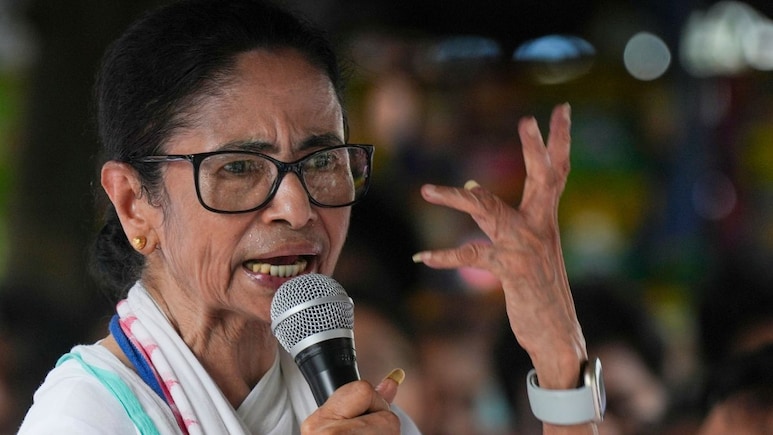
Will the turmoil that has hit the Trinamool Congress in the West Bengal Assembly also affect Mamata Banerjee’s party in Parliament?
At least 20 Trinamool Congress MPs are in touch with the BJP and may be planning to switch sides.
Discussions are ongoing at the highest levels, and the MPs have expressed their interest in changing loyalties.
The Trinamool Congress has a total of 41 MPs across both houses of the Indian Parliament — 28 in the Lok Sabha and 13 in the Rajya Sabha.
If the shift happens, it will be another major blow to Mamata Banerjee, who is facing a rebellion within her ranks since the loss in the Assembly elections.
A split in the Parliamentary group would be a significant setback for Mamata Banerjee. Her party is the second-largest bloc of MPs in the opposition camp, and a rebellion there would severely damage both the TMC and the opposition’s influence in Parliament.
The Trinamool legislature party in Bengal is already divided, with a rebel faction of 60 MLAs led by MLA Ritabrata Banerjee declaring themselves as the “real” Trinamool. This faction has appointed Ritabrata Banerjee as the Leader of the Opposition and has received approval from the Assembly Speaker.
The faction openly revolted against Mamata Banerjee and challenged her choice for Leader of the Opposition in the Assembly.
The rebellion has been growing since the election defeat. Several leaders have criticized the party over issues including corruption and the handling of the RG Kar rape-murder case. Many attended a meeting convened by Chief Minister Suvendu Adhikari last week.
Further splits in the Lok Sabha and Rajya Sabha could follow in the coming days, which would strengthen the breakaway group’s position. Mamata Banerjee’s focus has now shifted to efforts to retain the party’s name and symbol. Drawing from the Maharashtra precedent, this task appears difficult.
The rapid collapse of party structures, the loss of the Leader of the Opposition post, and the resignation of a key figure like Firhad Hakim have placed Mamata Banerjee under significant pressure as she battles to retain control of her political organization.
West Bengal Assembly
The West Bengal Legislative Assembly, located in Kolkata, is the unicameral legislature of the Indian state of West Bengal. Its current building, the historic “Bidhan Sabha Bhavan,” was inaugurated in 1962 and is named after Dr. Bidhan Chandra Roy, a former Chief Minister of the state. The assembly has been a central stage for the region’s political history, including the long tenure of the Left Front government from 1977 to 2011.
Indian Parliament
The Indian Parliament, officially named the Sansad Bhavan, is the supreme legislative body of India, located in New Delhi. The current building, a circular structure designed by British architects Herbert Baker and Edwin Lutyens, was completed in 1927 and originally housed the Imperial Legislative Council. It has since witnessed key historic events, including the adoption of India’s Constitution in 1950, and remains the seat of the Lok Sabha and Rajya Sabha.
Lok Sabha
The Lok Sabha is the lower house of India’s bicameral Parliament, established in 1952 following the country’s first general elections after independence. It is composed of members directly elected by the people, representing various constituencies, and plays a key role in legislation, budget approval, and holding the government accountable. The term “Lok Sabha” translates to “House of the People,” reflecting its democratic foundation.
Rajya Sabha
The Rajya Sabha, or Council of States, is the upper house of India’s bicameral Parliament, established under the Constitution of India in 1952. Unlike the directly elected Lok Sabha, its members are indirectly elected by state legislatures and presidential nominees, representing the states and union territories. It serves as a revising chamber, reviewing legislation passed by the Lok Sabha, and ensures federal representation in the legislative process.
West Bengal Assembly
The West Bengal Legislative Assembly, located in Kolkata, is the unicameral legislature of the Indian state of West Bengal. Its history dates back to 1862 when it was established as the Bengal Legislative Council under British rule, later evolving into the current assembly after India’s independence and the partition of Bengal. The building itself houses significant democratic proceedings and has witnessed key political events in the state’s modern history.
RG Kar
RG Kar is a historic medical institution in Kolkata, India, originally established as the Calcutta Medical College in 1835, making it one of the oldest medical schools in Asia. It was later renamed after Dr. Radha Gobinda Kar, a prominent physician and philanthropist who played a key role in its development. The institution is renowned for its contributions to medical education and healthcare in India.
Maharashtra
Maharashtra is a state in western India known for its rich history, including the Maratha Empire led by Chhatrapati Shivaji Maharaj, and its cultural heritage such as the Ajanta and Ellora caves. It played a key role in India’s independence movement and is home to Mumbai, the country’s financial and entertainment hub. Today, Maharashtra blends ancient traditions with modernity, featuring diverse languages, festivals, and cuisine.