Industry Must Face Challenges with Restraint and Cooperation
The impact of the ongoing war in the Middle East between the US, Israel, and Iran is now beginning to show on India’s industrial sector. The textile and chemical industries in Surat are being directly affected. While there is an atmosphere of concern among people regarding a potential shortage of diesel, petrol, LPG, and CNG, a 25 to 30 percent increase in chemical prices and a reduction in supply have compounded the difficulties for the textile industry. Simultaneously, increases in the prices of yarn and zari are also being recorded. People associated with the industry say that in the current climate of uncertainty, the risk of labor migration could also increase, which raises concerns about a serious impact on production.
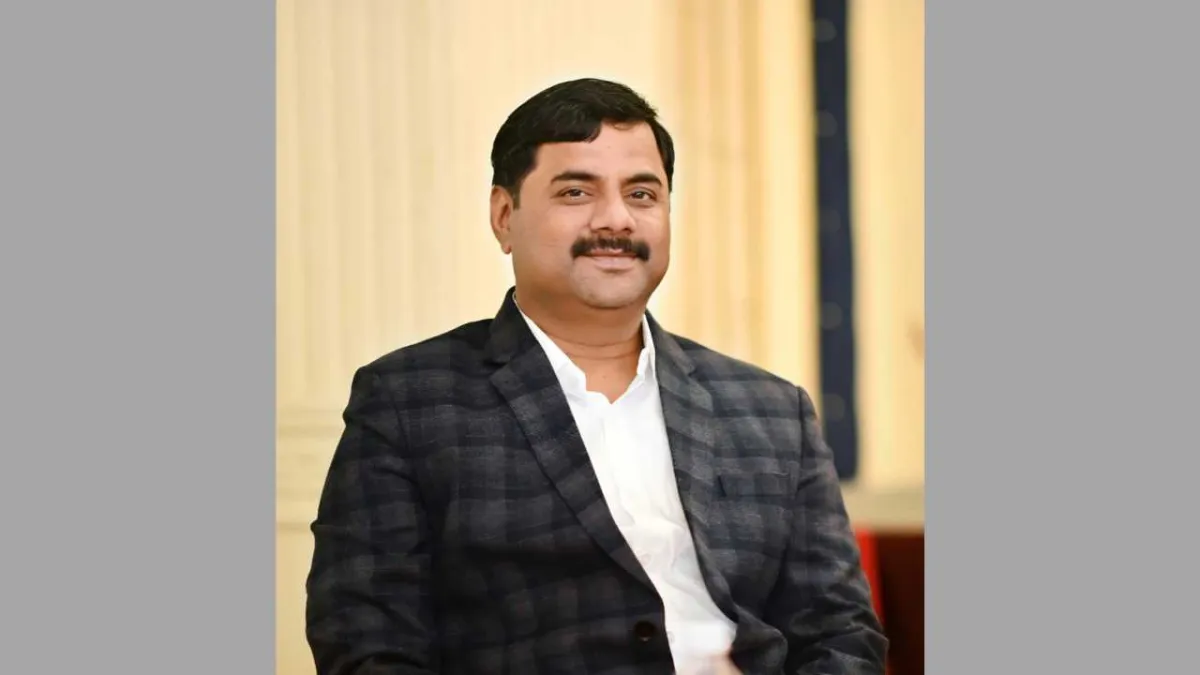
In this context, an industrialist associated with the textile and chemical industry stated that the current situation is quite worrying, but the industry must face these challenges with restraint and cooperation. He said the time has come for all traders connected to the industry to strengthen it through mutual cooperation. At the same time, the government should also formulate effective industrial policies so that industry and trade are not adversely affected.
He reported that in recent days, due to a shortage of commercial LPG cylinders, several small industries have reached a state of near closure. In such times, large industrialists should also consider the interests of small industries. He said that if all traders move forward keeping the collective interest of the industries in mind, the industry’s situation can be prevented from deteriorating.
He also appealed to laborers not to pay attention to any kind of rumors. If they receive any misleading information, they should contact their establishment’s owner or the relevant industrialists to confirm it and trust accurate information rather than rumors.
Surat
Surat is a historic port city in the Indian state of Gujarat, renowned as a major trading hub since the 16th century, particularly for textiles and diamonds. It flourished under the Mughal Empire and later attracted European trading companies like the British and Dutch, earning it the nickname “Gate to Mecca” due to its importance for pilgrims traveling to Arabia. Today, it remains a global center for diamond cutting and polishing while preserving historic landmarks such as the Surat Castle.
Middle East
The Middle East is a transcontinental region centered on Western Asia and Egypt, historically known as the “Cradle of Civilization” for the rise of ancient Mesopotamian and Egyptian cultures. It is the birthplace of major world religions—Judaism, Christianity, and Islam—and has been a strategic crossroads for trade and empires for millennia. Its modern history has been profoundly shaped by the 20th-century discovery of vast petroleum reserves and complex geopolitical developments.
US
The United States is a relatively young nation, founded in 1776 after declaring independence from Great Britain. Its history is defined by westward expansion, waves of immigration, and a civil war that ended slavery, evolving into a global superpower with a diverse cultural landscape shaped by its indigenous peoples and countless immigrant groups.
Israel
Israel is a modern nation-state established in 1948 in the historic region of the Levant, an area with profound significance for Judaism, Christianity, and Islam. Its territory contains numerous ancient cultural and religious sites, such as Jerusalem’s Old City, which has a continuous history spanning thousands of years and has been central to successive civilizations and empires.
Iran
Iran, historically known as Persia, is a country in Western Asia with one of the world’s oldest continuous civilizations, dating back to the Elamite and Achaemenid Empires over 2,500 years ago. It is renowned for its profound cultural heritage, including influential contributions to art, literature, science, and architecture, epitomized by sites like Persepolis and Isfahan’s Naqsh-e Jahan Square. Today, Iran is an Islamic Republic, home to numerous UNESCO World Heritage sites that reflect its layered history from ancient empires through the Islamic Golden Age.
India
India is a vast South Asian country with one of the world’s oldest continuous civilizations, dating back over 5,000 years to the Indus Valley. Its history is marked by the rise of major religions like Hinduism and Buddhism, a succession of powerful empires, and British colonial rule before gaining independence in 1947. Today, it is a vibrant, diverse republic renowned for its rich cultural heritage, numerous UNESCO sites like the Taj Mahal, and deep philosophical traditions.