The Ankleshwar team of the Railway Protection Force has taken significant action to protect railway property, arresting 09 individuals involved in the illegal cutting and theft of trees on railway land.
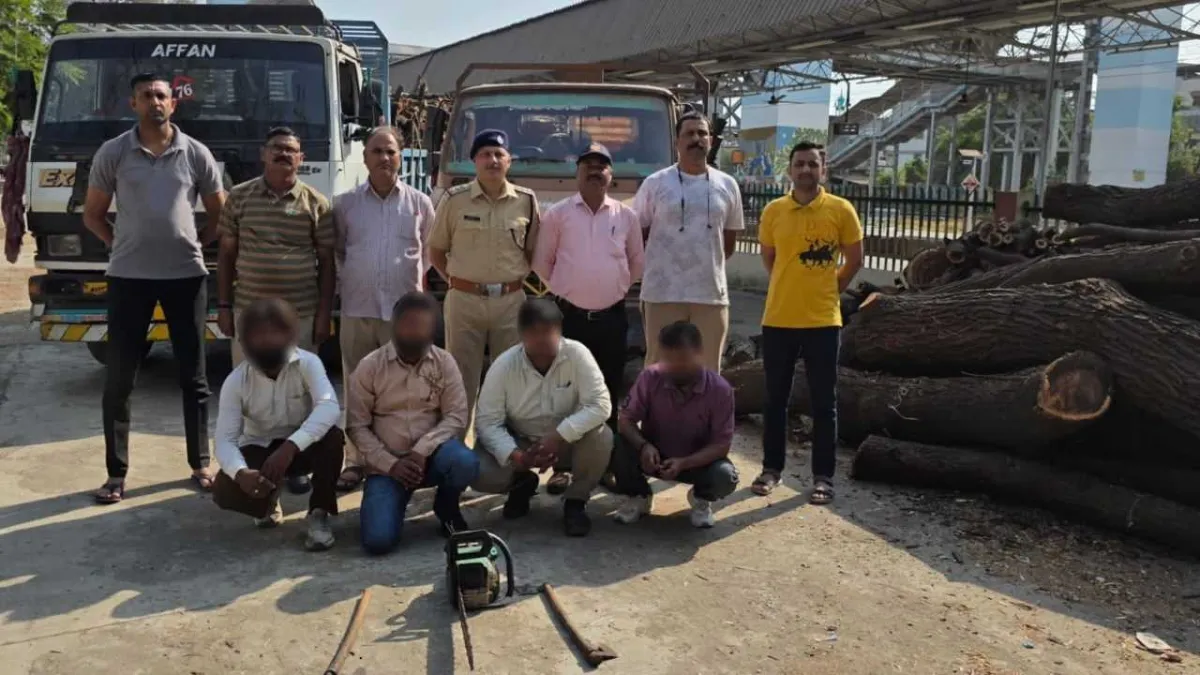
According to a press release, on 18.04.2026, information was received about the cutting and theft of trees from railway land between Kosad and Gothangam railway stations in the Vadodara division. Subsequently, the Railway Protection Force team from Ankleshwar conducted a swift operation and raided the spot, catching 09 accused red-handed.
Wood from railway acacia trees was recovered from the possession of the arrested individuals, with a total weight of 21,985 kilograms and an estimated value of Rs. 1,31,910/-. Additionally, 02 trucks, one electronic cutting machine, and 02 axes used in the theft were seized. A case was registered against the accused on 19.04.2026 under Section 3 of the Railway Property (Unlawful Possession) Act.
The investigation into the case is being conducted by the Railway Protection Force. Of the 09 arrested accused, 02 are currently in judicial custody, while the remaining 07 have been released on bail by the honorable Railway Court. The Railway Protection Force of the Vadodara division will continue strict action against such illegal activities to safeguard railway property.