Prime Minister Modi discusses the Strait of Hormuz dispute with the Dutch Prime Minister.
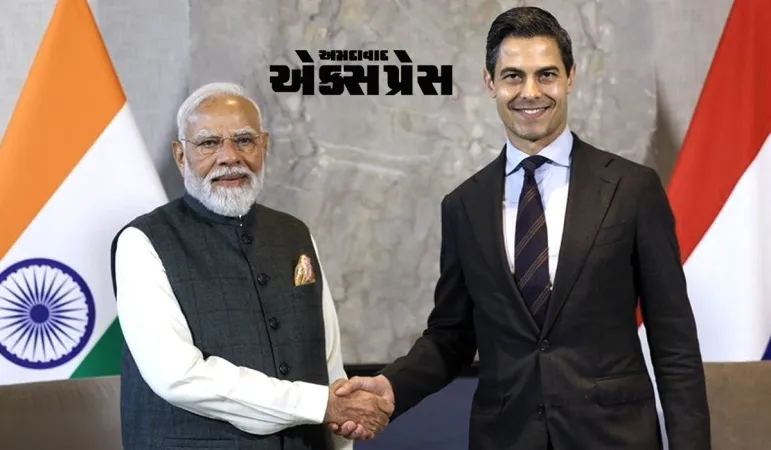
Prime Minister Narendra Modi held a telephone conversation with Dutch Prime Minister Rob Jetten to express concern over the West Asia conflict. This discussion is very important for global trade security.
Discussion between Prime Minister Narendra Modi and Dutch PM Jetten on the Strait of Hormuz dispute
In the global diplomatic arena, a very significant step has been taken by India amid the escalating severe tensions in West Asia. Prime Minister Narendra Modi held a high-level telephone conversation with the newly appointed Prime Minister of the Netherlands, Rob Jetten, on Sunday. Both global leaders discussed in detail the concerns over the potential closure of the Strait of Hormuz and its serious impacts on global supply chains. India has made a strong appeal for an immediate end to this dangerous conflict in West Asia to maintain peace and security in international waterways. This maritime route plays an extremely important role for the global economy.
West Asia conflict and maritime security concerns
It is noteworthy that this specific waterway is considered the most important for the movement of crude oil and commercial ships in the international market. According to sources, Prime Minister Narendra Modi particularly emphasized maintaining freedom of maritime navigation during the conversation. If the West Asia conflict escalates further, it could directly impact bilateral trade between India and Europe. According to a correspondent, the Dutch Prime Minister also openly praised India’s diplomatic efforts and strategy for establishing peace in the region. Both countries have agreed to work together to resolve this crisis.
This development comes at a time when the risk of a complete closure of the Strait of Hormuz looms due to ongoing military tensions among West Asian countries. Prime Minister Narendra Modi has previously given a clear message from global platforms that all international problems should be resolved through diplomacy and dialogue rather than war. According to sources, this telephonic discussion also included positive talks about further strengthening economic ties between the Netherlands and India. It has become imperative to permanently halt this conflict in the interest of global trade.
Strategic alliance with Dutch PM Jetten
It is noteworthy that India and the Netherlands have traditionally shared very strong and close relations. During this high-level negotiation, Prime Minister Narendra Modi extended warm congratulations to Dutch PM Jetten on assuming office and also extended an official invitation to visit India. According to a representative, both leaders reaffirmed their commitment to cooperate with each other at the United Nations and other global forums. A brief review of the free trade agreement between the European Union and India was also conducted during this meeting. This alliance will greatly benefit traders of both countries.
International peace and future strategy
Furthermore, both sides have fully agreed to maintain regular contact at the diplomatic level in the coming times. According to reports, a delegation from the Netherlands will also actively participate in upcoming international conferences scheduled in New Delhi. According to government sources, India is in continuous contact with all influential countries in West Asia in order to avert this maritime crisis as early as possible. Stability can only be achieved by renouncing violence.
Prime Minister Narendra Modi’s global diplomatic initiative could prove to be a major milestone in initiating a peace process among West Asian countries in the future. All powerful nations of the world are closely watching India’s mediation and fair stance. The international community is considering the outcomes of this discussion very positively. Will these joint efforts by India and the Netherlands be able to fully restore the safety of ships in the Hormuz region?
Related News
Strait of Hormuz
The Strait of Hormuz is a narrow, strategically vital waterway connecting the Persian Gulf to the Gulf of Oman and the Arabian Sea. Historically, it has been a key maritime route for oil and trade for centuries, controlled by various empires including the Portuguese, Persians, and British. Today, it remains a critical chokepoint for global energy supplies, with about 20% of the world’s oil passing through it.
West Asia</
Strait of Hormuz
The Strait of Hormuz is a narrow, strategically vital waterway connecting the Persian Gulf to the Gulf of Oman and the Arabian Sea. Historically, it has been a crucial trade route for centuries, controlling the flow of oil and natural gas from the Middle East. Its significance has made it a focal point of geopolitical tensions, particularly during the Iran-Iraq War and in modern disputes over maritime security and energy transit.
West Asia
West Asia, often referred to as the Middle East, is a historically rich region that served as the cradle of some of the world’s earliest civilizations, including Mesopotamia and the Persian Empire. It has been a crossroads for trade, culture, and religion, giving rise to major faiths such as Judaism, Christianity, and Islam. Today, the region is known for its diverse cultural heritage and geopolitical significance.
Netherlands
The Netherlands is a low-lying country in northwestern Europe known for its iconic canals, windmills, tulip fields, and progressive culture. Historically, it was a major maritime power during the Dutch Golden Age in the 17th century, with global trade networks and artistic achievements from painters like Rembrandt and Vermeer. Today, it is a constitutional monarchy and a key player in the European Union, with Amsterdam as its capital.
India
India is a vast and diverse country in South Asia, known for its rich cultural heritage and ancient history dating back to the Indus Valley Civilization (c. 3300–1300 BCE). It has been home to major religions like Hinduism, Buddhism, Jainism, and Sikhism, and was influenced by empires such as the Maurya, Gupta, and Mughal dynasties. After centuries of British colonial rule, India gained independence in 1947 and became the world’s largest democracy, blending ancient traditions with modern progress.
Persian Gulf
The Persian Gulf is a vital body of water in Western Asia, bordered by Iran, the Arabian Peninsula, and several other countries, and has been a crucial maritime route for trade and cultural exchange for millennia. Historically, it was central to ancient civilizations like the Sumerians, Persians, and later the Islamic Golden Age, serving as a key link in the Indian Ocean trade network. Today, it remains geopolitically significant due to its vast oil and natural gas reserves, influencing global energy markets and regional conflicts.
Gulf of Oman
The Gulf of Oman is a body of water connecting the Arabian Sea to the Strait of Hormuz, bordered by Oman, the United Arab Emirates, and Iran. Historically, it has been a vital maritime route for trade and cultural exchange between the Persian Gulf region, India, and East Africa for centuries. Its strategic importance continues today, as it serves as a key passage for global oil shipments and commercial shipping.
Arabian Sea
The Arabian Sea is a region of the northern Indian Ocean, bordered by the Arabian Peninsula, Iran, Pakistan, and India. Historically, it has been a vital maritime trade route for centuries, connecting the Middle East, Africa, and the Indian subcontinent, and facilitating the exchange of goods, cultures, and ideas. Its ports, such as Muscat and Mumbai, played key roles in ancient spice and silk trade networks.
United Nations
The United Nations (UN) is an international organization founded in 1945 after World War II, with the primary goal of maintaining global peace and security, fostering friendly relations among nations, and promoting social progress, better living standards, and human rights. Its headquarters is in New York City, and it was established by the signing of the UN Charter by 51 countries, replacing the ineffective League of Nations. Today, it serves as a vital forum for diplomacy, with 193 member states addressing issues from conflict resolution to climate change.