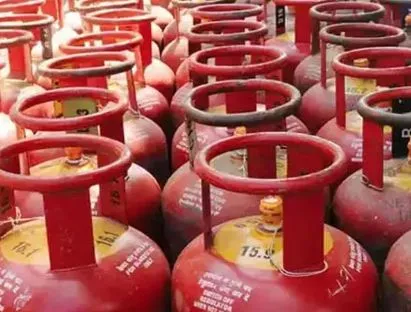
In the last three weeks, three hundred and fifty thousand PNG connections have been activated or newly provided.
On Monday, the Ministry of Petroleum and Natural Gas expressed satisfaction in a daily media briefing that panic booking of LPG has decreased and the government is strictly monitoring those involved in black marketing.
It was stated that crude oil supply remains adequate and refineries are operating normally, ensuring stable retail availability. Supply of PNG and CNG is continuing for priority consumers, while approximately 80 percent of industrial demand is being met.
To promote PNG, approximately 3.5 lakh new domestic and commercial PNG connections have been activated in three weeks through additional LPG allocation and policy support. LPG supply is being monitored, but distribution continues.
Special arrangements have also been made regarding commercial LPG cylinder allocation. “The government has further increased commercial LPG allocation. We are continuously requesting state governments to ensure 50 percent of the total quantity is made available for priority sectors—such as restaurants, hotels, industrial canteens, food processing units, community kitchens, and 5-kilogram cylinders for migrant workers.”
Regarding measures to curb black marketing, it was stated, “So far, 20 states and union territories have lifted approximately 15,800 tonnes, while 15 states have been allocated kerosene.
To prevent black marketing, 32 states and union territories have established monitoring mechanisms, under which more than 37,000 raids, 550 FIRs, and 150 arrests have been made, while oil companies have issued 234 show-cause notices.”
Citizens are urged to avoid panic booking and to use LPG judiciously.
Ministry of Petroleum and Natural Gas
The Ministry of Petroleum and Natural Gas is a branch of the Government of India responsible for the exploration, production, and distribution of oil and gas resources. It was established in 1949, shortly after India’s independence, to manage the nation’s critical energy sector and ensure its security and growth. Today, it oversees key public sector companies and formulates policies central to India’s energy needs and economic development.
state governments
“State governments” refer to the governing bodies of individual states within a federal system, such as in the United States, Australia, or India. Their history in the U.S., for example, dates to the original 13 colonies, with their powers and structures formally established by the U.S. Constitution to share sovereignty with the federal government. They are responsible for a wide range of local matters, including education, transportation, and public safety, operating under their own constitutions and laws.
union territories
“Union territories” are a type of administrative division in India, directly governed by the central government in contrast to states. Historically, they were created for reasons such as strategic importance (e.g., Chandigarh), cultural distinctiveness (e.g., Puducherry), or small size (e.g., Lakshadweep). Their governance structure has evolved, with some, like Delhi and Puducherry, now having their own legislatures.
restaurants
Restaurants, as establishments serving prepared meals to paying customers, have existed in various forms since ancient civilizations, but the modern concept emerged in 18th-century Paris with the rise of dedicated dining spaces for the public. They have since evolved into a central part of global culture, reflecting local cuisine, social customs, and economic trends. Today, they range from casual eateries to fine dining venues, serving as important social hubs and economic drivers in communities worldwide.
hotels
Hotels are establishments that provide paid lodging and accommodations for travelers, with origins dating back to ancient civilizations like the Roman Empire, which built roadside inns called “mansiones.” The modern hotel industry evolved significantly during the 18th and 19th centuries with the rise of grand luxury hotels in Europe and America, catering to growing tourism and business travel. Today, hotels range from budget-friendly chains to boutique and resort-style properties, serving as key hubs in global hospitality and tourism.
industrial canteens
Industrial canteens are workplace cafeterias that emerged prominently during the Industrial Revolution to provide affordable, efficient meals to factory workers, supporting long shifts and boosting productivity. They became institutionalized in the 20th century, often seen as a social welfare benefit or a tool for fostering company loyalty. Today, they continue to serve as communal hubs within workplaces, though their prevalence has declined with changes in industry and work patterns.
food processing units
“Food processing units” are industrial facilities designed to transform raw agricultural products into consumable food items through methods like canning, freezing, or packaging. Their history is tied to the Industrial Revolution, which introduced mechanization and preservation techniques to extend shelf life and enable mass distribution. Today, they are a cornerstone of the global food supply chain, ensuring safety, consistency, and year-round availability of a vast range of food products.
community kitchens
Community kitchens, also known as soup kitchens, are volunteer-run facilities that provide free or low-cost meals to those in need. Their modern history is often traced to the Great Depression of the 1930s, when they became a widespread response to mass unemployment and hunger. Today, they remain a vital social institution in many communities, addressing food insecurity and fostering solidarity.