African economies are experiencing new shocks due to rising global oil prices resulting from the war on Iran, threatening to increase fuel costs, raise inflation rates, and put additional pressure on local currencies. A report indicated that most African countries rely on importing petroleum products, making them directly vulnerable to any disruptions in supplies coming from the region, a pivotal hub for global energy flows.
An analyst explained that Africa is a “net importer of petroleum products,” and therefore any shock in global markets is quickly reflected in its economies.
With global supply tightening, prices are rising while African currencies are depreciating as investors turn to the dollar as a safe haven, doubling the impact of the price surge in import-dependent markets like Kenya and Ghana. South Africa experienced a similar situation following the Russian invasion in 2022, where fuel prices rose by more than 25% within 6 months.
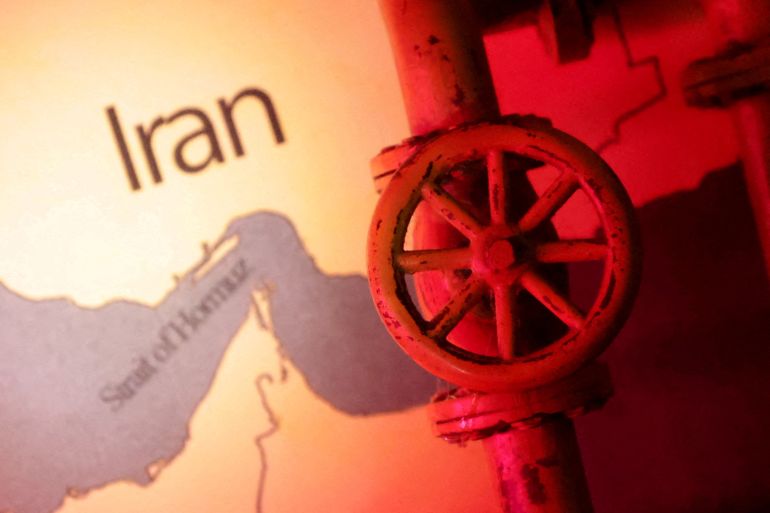
It was clarified that the Strait of Hormuz, through which about 20% of the world’s oil passes, represents a strategic bottleneck, and any disruption there directly raises prices and threatens the stability of African markets.
Varying Impact Between Countries
Countries such as Kenya and Uganda have confirmed that supplies are stable so far, but they are working to ensure continuity. As for Nigeria and Ghana, despite their crude production, they import most refined products, limiting their benefit from rising prices. In contrast, major exporting countries like Angola and Algeria could achieve financial gains if prices stabilize above $100 per barrel, far exceeding the financial estimates set by Nigeria between $64 and $66 per barrel until 2028.
However, it was noted that these gains may be limited, as repeated increases in fuel prices put pressure on citizens and reduce economic benefits.
Impact on Households and Fragile Economies
For the majority of African households, rising oil prices translate directly into increased living costs, as the transport of food and goods depends on road networks. It was emphasized that “rising fuel costs quickly fuel inflation and reduce purchasing power.” Countries under IMF programs may face additional pressures as foreign exchange reserves are depleted.
It was added that these pressures may deepen the fragility of sub-Saharan African economies, which rely heavily on oil imports, making them more vulnerable to external shocks.
The current crisis raises a strategic question again about the necessity of diversifying energy sources and reducing dependence on imports. A researcher stated that “achieving energy security and sovereignty requires balancing short-term financial pressures with long-term investments in clean energy and green manufacturing.”
It was pointed out that solutions lie in accelerating investment in renewable energy, developing local industries, and diversifying energy systems to ensure long-term energy security and economic sovereignty.
While some exporting countries may reap financial gains from high oil prices, the majority of African economies face a dual challenge: accelerating inflation and pressure on local currencies. The crisis may be an opportunity to rethink energy strategies, but it is also a difficult test of governments’ ability to protect their citizens from a new wave of price increases.
Strait of Hormuz
The Strait of Hormuz is a strategically vital maritime chokepoint connecting the Persian Gulf with the Gulf of Oman and the wider Indian Ocean. Historically, it has been a key trade route for centuries, facilitating the movement of goods, cultures, and empires. Today, it is of immense global economic importance as a critical passageway for approximately one-fifth of the world’s oil shipments, making its security a persistent geopolitical concern.
Kenya
Kenya is a country in East Africa renowned for its diverse landscapes, including savannahs, lakes, and the Great Rift Valley, which have made it a world-famous destination for wildlife safaris. Historically, it was a hub for trade routes and later a British colony before gaining independence in 1963. Its rich cultural heritage is shaped by over 40 ethnic groups, such as the Maasai and Kikuyu, and globally significant archaeological sites like Koobi Fora, where some of the earliest human fossils have been discovered.
Ghana
Ghana is a West African nation known for its rich history as the site of several powerful pre-colonial empires, most notably the Ashanti Empire. It gained global significance as a major hub in the transatlantic slave trade, with coastal forts like Cape Coast Castle standing as solemn reminders. In 1957, it became the first sub-Saharan African country to gain independence from colonial rule, setting a powerful precedent for the continent.
South Africa
South Africa is a country at the southern tip of the African continent, renowned for its diverse landscapes, wildlife, and multicultural “Rainbow Nation” identity. Its modern history is profoundly shaped by colonialism and the institutionalized racial segregation of apartheid, which ended in 1994 with the establishment of a democratic government. Today, it is a major cultural and economic hub, with significant historical sites like Robben Island and the Cradle of Humankind, a UNESCO site containing fossils of some of the earliest human ancestors.
Uganda
Uganda is a landlocked East African nation known for its diverse landscapes, including the source of the Nile River and mountain gorilla habitats. Historically, it was home to powerful kingdoms like Buganda before becoming a British protectorate in the late 19th century, gaining independence in 1962. Its rich culture is a tapestry of over 50 distinct ethnic groups, each with its own languages, music, and traditions.
Nigeria
Nigeria is a country in West Africa, known for its rich cultural diversity with over 250 ethnic groups, including the Yoruba, Igbo, and Hausa-Fulani. Historically, it was home to ancient kingdoms like the Nri Kingdom and the Benin Empire before becoming a British colony in the 19th century, gaining independence in 1960. Today, it is Africa’s most populous nation and a major economic power, celebrated for its vibrant arts, music (like Afrobeats), and Nollywood film industry.
Angola
Angola is a country in southwestern Africa, not a single cultural site, with a rich history shaped by powerful pre-colonial kingdoms like Kongo and Ndongo. It endured centuries as a major source for the Portuguese transatlantic slave trade before becoming a formal Portuguese colony, gaining independence only after a long war in 1975. Today, its cultural heritage is reflected in diverse traditions, music like semba and kizomba, and historic sites such as the Fortress of São Miguel in the capital, Luanda.
Algeria
Algeria is a North African nation with a rich history shaped by ancient Berber kingdoms, Roman rule, and centuries as a center of Ottoman influence before becoming a French colony. It gained independence in 1962 after a protracted war, and its cultural heritage is prominently displayed at sites like the Roman ruins of Timgad and the historic Casbah of Algiers, a UNESCO World Heritage site. Today, it is the largest country in Africa, where Arab, Berber (Amazigh), and Mediterranean influences converge.