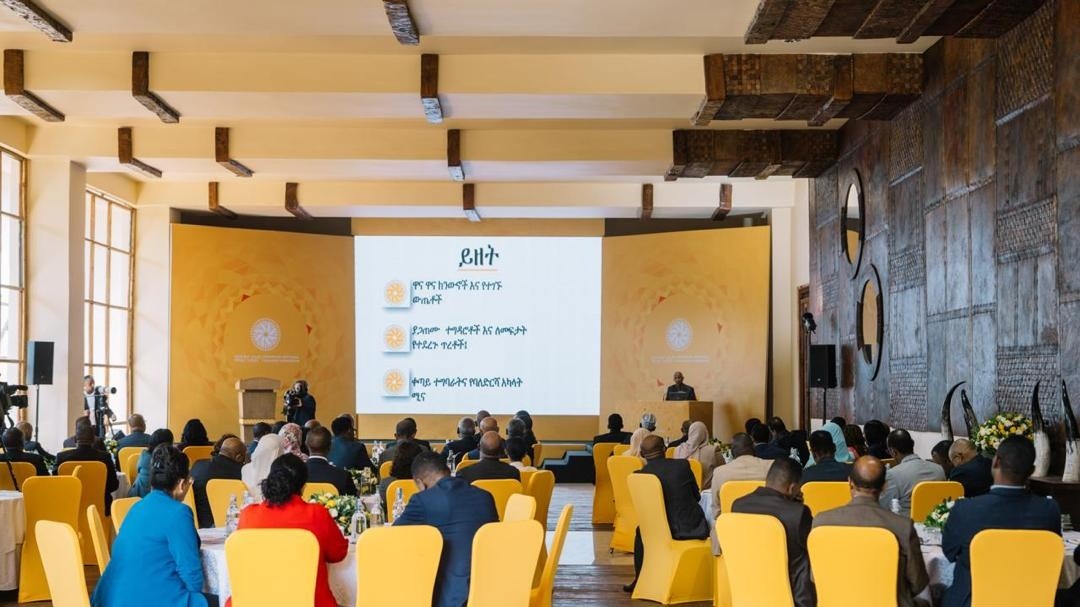
Addis Ababa, May 15, 2026 — The Ethiopian National Dialogue Commission today presented its executive report in the presence of Ethiopian Prime Minister Abiy Ahmed, along with senior officials from the federal and regional governments, and members of the standing committee of the House of Peoples’ Representatives.
The Commission reviewed the key activities it has carried out so far, the challenges encountered during the dialogue process, as well as the solutions and measures adopted to address those challenges. It also outlined the expected roles of various stakeholders to ensure the continuation of the national dialogue process as planned.
The Commission noted that among the achievements so far is the comprehensive and participatory identification of participants in the national dialogue, as well as the collection and identification of dialogue agendas in 1,234 districts, covering approximately 93 percent of Ethiopia.
The Commission explained that despite conducting 22 rounds of consultations with key parties, it was unable to hold dialogue sessions within districts of the Tigray region due to unfavorable conditions.
To address this challenge, the Commission organized the collection and identification of agendas in the capital, Addis Ababa, by gathering representatives and stakeholders from various areas of the region, as well as members of the Tigrayan community residing in multiple parts of the country.
Regarding the next phase of the national dialogue process, the Commission identified several key tasks, including enhancing the participation of political actors, drafting national dialogue agendas, organizing the national dialogue conference, and facilitating the implementation of outcomes and recommendations that will be agreed upon at the national level.
Prime Minister Abiy Ahmed urged all stakeholders to continue their commitment to ensuring long-term peace, unity, and stability as the dialogue enters its next phase.