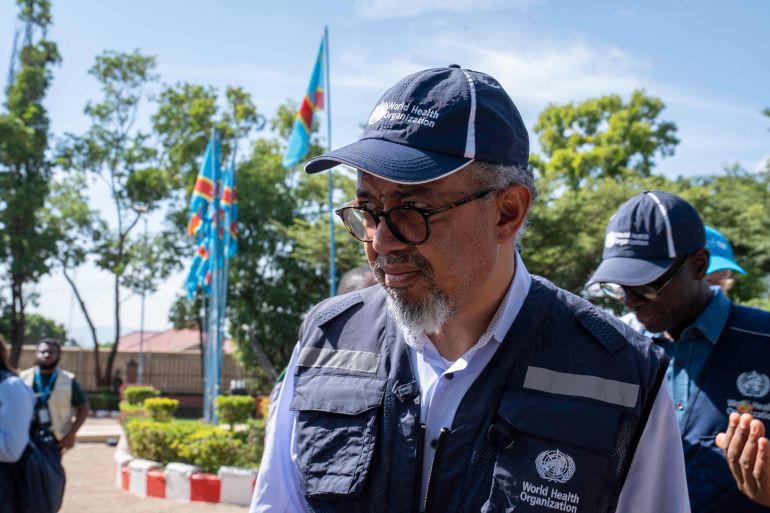
The Director-General renewed his call for local communities in the Republic to play a pivotal role in confronting the Ebola virus outbreak, emphasizing that local residents have a deeper understanding of field challenges and a greater ability to reach effective solutions.
This call came during his visit to the city of Bunia, the capital of Ituri Province, which is the epicenter of the current outbreak, as part of international efforts to coordinate the response and enhance coordination with local authorities.
He arrived in the Democratic Republic of Congo on Thursday, and his plane landed on Saturday at the closed Bunia airport in the east due to the outbreak, following the authorities’ announcement on May 15 of a new Ebola outbreak in this country, which has a population of over 100 million and is among the poorest nations.
This move also comes amid a concerning rise in infection numbers, with the total number of suspected cases reaching 1,028 as of last Friday.
The current outbreak is the seventeenth in the country since the virus was discovered in 1976. However, its speed and pace have led to the declaration of a public health emergency amid growing international concern, with the possibility that actual infection numbers are higher than reported due to limited testing capacity.
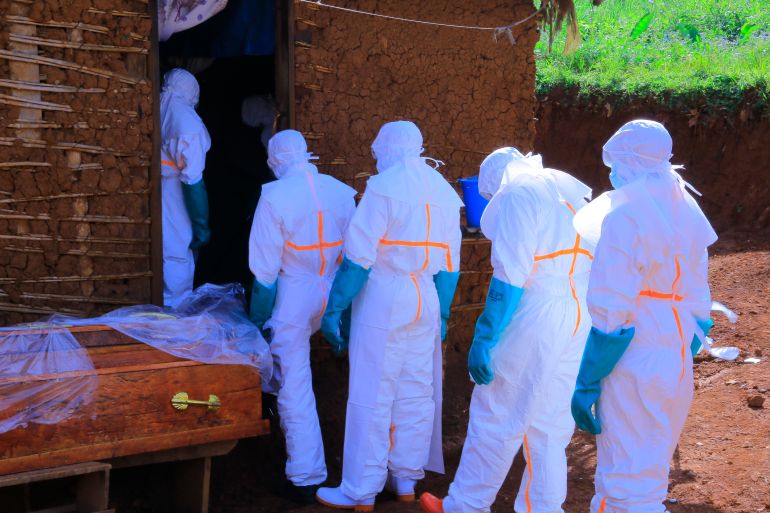
Containment Capabilities
Medical organizations have warned that the outbreak is spreading at an unprecedented pace compared to previous outbreaks, with a large number of cases recorded in a short period.
Experts believe these indicators reflect the widening scope of infection and the difficulty of containing it given the weak health infrastructure in affected areas, increasing fears that the situation could spiral out of control if the response is not urgently strengthened.
Security Challenges
Efforts to combat Ebola are complicated by the overlap of the health crisis with armed conflicts in eastern Congo, where armed groups operate and rural areas experience frequent disruptions.
Mass displacement has also led to overcrowding in refugee camps, creating a fertile environment for disease transmission amid poor sanitation and healthcare services.
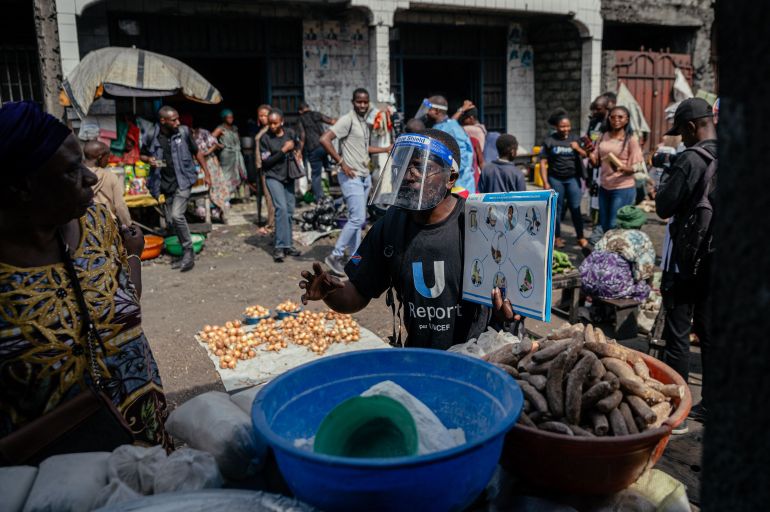
Response teams also face additional challenges, including attacks on some treatment centers, widespread distrust among the population, and the impact of misinformation that hinders awareness campaigns and contact tracing, slowing efforts to control the virus.
Treatment response efforts also face obstacles that impede progress, particularly in the troubled eastern regions of the Democratic Republic of Congo, due to local community distrust of external authorities, which significantly increases the risk of disease transmission.
In recent days, two treatment centers in that region have been set on fire. The area already suffers from violent clashes that have displaced more than 100,000 people.
Funding Shortage
On the international level, the response suffers from a clear lack of resources, as the World Health Organization announced it has received only about a third of the funding needed to combat the outbreak.
The number of specialized medical teams deployed in the field also remains below actual needs, limiting the ability of relevant authorities to expand monitoring and treatment operations.
Spread of Risk
The outbreak has not been limited to Congo, as cases have also been recorded in neighboring countries, raising the regional risk level to high.
The Ebola virus, which causes a highly infectious hemorrhagic fever, has been detected in three provinces of the Democratic Republic of Congo, as well as in neighboring Uganda, where authorities confirmed on Friday the recording of two new cases, bringing the total confirmed infections in this East African country to nine.
Congo has also recorded 246 deaths among more than a thousand suspected cases, according to a tally issued on Thursday by the African Centers for Disease Control and Prevention, affiliated with the African Union.