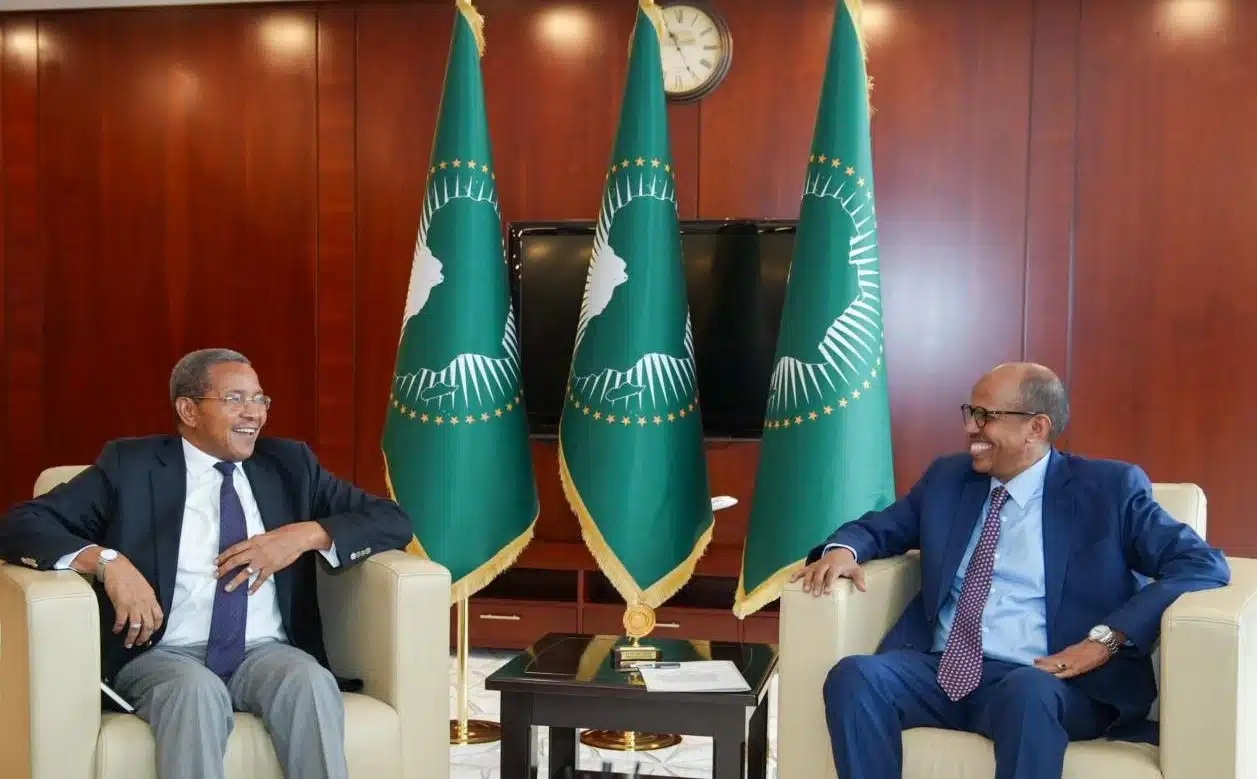
The African Union has appointed former Tanzanian President Jakaya Kikwete as its High Representative for the Horn of Africa and the Red Sea region, a move aimed at bolstering peace and stability efforts.
In a statement, the Chairperson of the AU Commission stated that Kikwete will lead the Union’s efforts in addressing the “complex political and security dynamics” throughout the region.
According to the AU, Kikwete’s mandate will focus on enhancing preventive diplomacy, facilitating inclusive political dialogue, and fostering confidence-building among relevant regional stakeholders.
He is also expected to play a pivotal role in strengthening cooperation mechanisms to establish sustainable peace and long-term stability.
The position will involve close coordination with regional and international partners, including the Intergovernmental Authority on Development (IGAD), the East African Community, the Arab League, and the United Nations.
The AU affirmed that Kikwete’s role will address pressing regional challenges, taking into account their broader implications for global trade and continental security.
The Commission Chairperson expressed confidence in Kikwete’s leadership, highlighting his extensive diplomatic experience and proven track record in conflict resolution as key assets in tackling the region’s current challenges.
Kikwete’s appointment underscores the AU’s renewed focus on the Horn of Africa and the Red Sea region, an area of growing geopolitical importance and persistent security concerns.
African Union
The African Union (AU) is a continental organization established in 2002, succeeding the Organization of African Unity (OAU) founded in 1963. Its primary aims are to promote unity, peace, and socio-economic development across Africa, while advancing democratic governance and human rights. The AU is headquartered in Addis Ababa, Ethiopia, and plays a key role in coordinating pan-African political and economic initiatives.
Horn of Africa
The Horn of Africa is a major peninsula in Northeast Africa, comprising the countries of Somalia, Ethiopia, Eritrea, and Djibouti. It is one of the world’s oldest known inhabited regions, with ancient civilizations like the Land of Punt and the Aksumite Empire shaping its early history. The region has long been a strategic crossroads for trade and culture, but in the modern era has been challenged by political instability and recurring droughts.
Red Sea
The Red Sea is a seawater inlet of the Indian Ocean lying between Africa and Asia, historically one of the world’s most important trade routes since ancient Egyptian times. It is renowned for its unique marine biodiversity, vibrant coral reefs, and its role in the biblical narrative of the Exodus. Today, it remains a critical corridor for global shipping via the Suez Canal and a major destination for tourism and diving.
Intergovernmental Authority on Development (IGAD)
The Intergovernmental Authority on Development (IGAD) is a regional economic community in East Africa, originally founded in 1986 as the Intergovernmental Authority on Drought and Development (IGADD) to combat drought and desertification. It was revitalized in 1996 with an expanded mandate to promote regional cooperation on peace and security, economic integration, and environmental protection among its eight member states.
East African Community
The East African Community (EAC) is an intergovernmental organization of seven partner states in East Africa, founded in 2000 to foster economic, political, social, and cultural integration. It is a revival of a previous cooperative community that had collapsed in 1977, and its history is rooted in the shared colonial infrastructure and post-independence aspirations of Kenya, Tanzania, and Uganda. Today, it aims to establish a common market and eventually a political federation to enhance regional stability and prosperity.
Arab League
The Arab League, officially the League of Arab States, is a regional organization founded in Cairo in 1945 to promote political and economic cooperation among Arab-speaking nations. Its original members were Egypt, Iraq, Jordan, Lebanon, Saudi Arabia, and Syria, with its formation deeply linked to post-World War II decolonization and Arab unity movements. Today, it comprises 22 member states and addresses shared political, economic, cultural, and social issues, though it has often faced challenges in achieving consensus on major regional conflicts.
United Nations
The United Nations (UN) is an international organization founded in 1945 after World War II to promote peace, security, and cooperation among nations. Headquartered in New York City, it replaced the failed League of Nations and now has 193 member states working on global issues like human rights, development, and humanitarian aid.