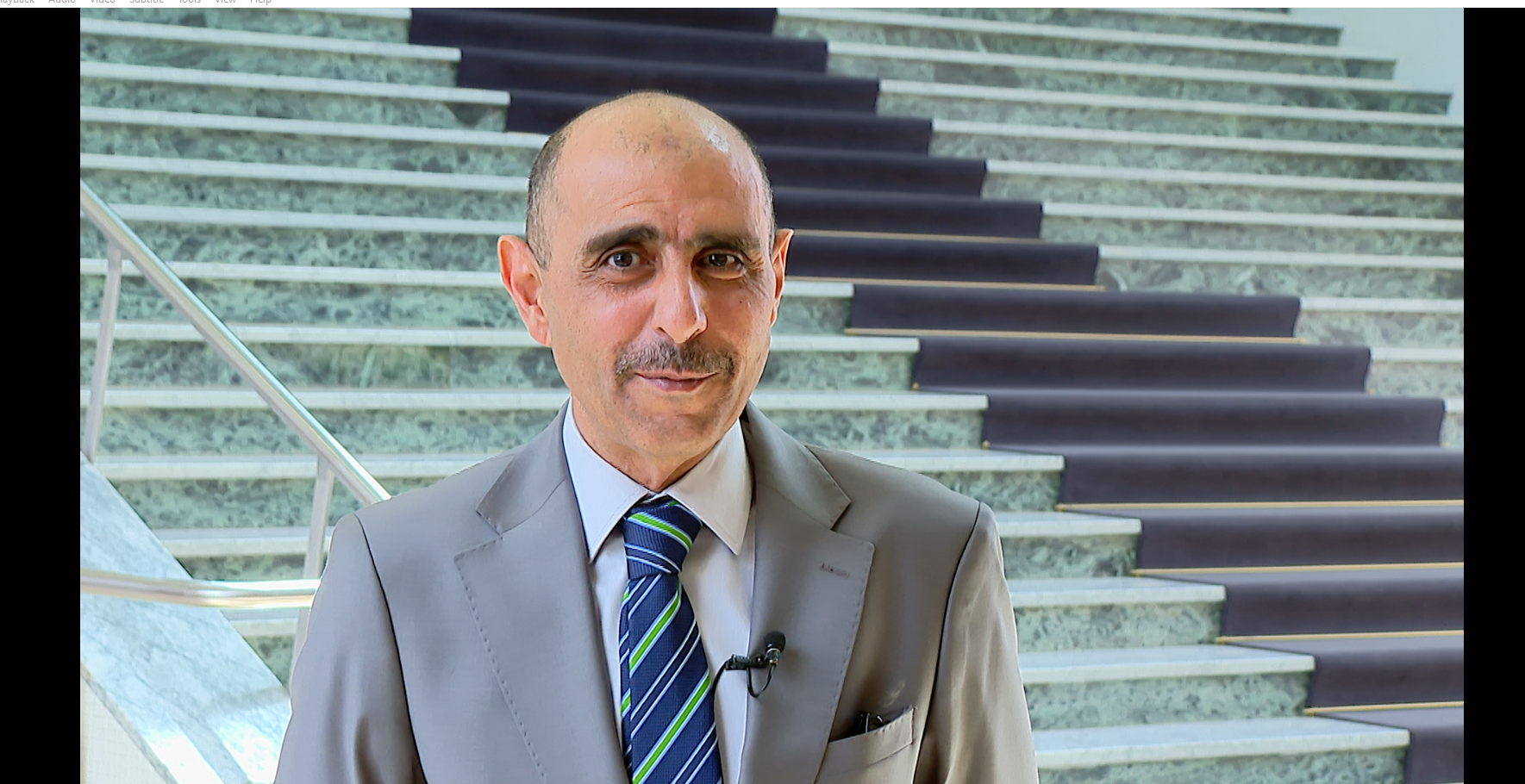
The Chargé d’Affaires of the Iraqi Embassy in Addis Ababa highly valued the significant importance Ethiopia holds on both the African and international levels, particularly in economic and social aspects.
He expressed his happiness at being in the capital, Addis Ababa, describing it as the world’s third diplomatic capital due to the extensive diplomatic activity and dense presence of international missions there. He stated: “We are fortunate to work in Addis Ababa. Life is beautiful, the weather is mild, and diplomatic activity is intense,” noting that this gives diplomatic work a special momentum.
He added that the Iraqi Embassy is currently experiencing increased activity in its communication with foreign missions accredited to Ethiopia, alongside Ethiopian government entities, praising the efforts made by the Ethiopian government in the fields of economic development and comprehensive progress.
The Chargé d’Affaires anticipated that bilateral relations between Iraq and Ethiopia would witness notable development in a number of areas, most prominently the economy, the exchange of agricultural products, and transportation, in addition to cooperation on the African level.
He also expressed his aspiration to develop the aviation and transportation sectors by launching direct flights between Baghdad and Addis Ababa, considering the latter an important gateway for opening up to the African continent.
He revealed that the reopening of the Iraqi Embassy in Addis Ababa would enhance the political and diplomatic relations between Baghdad and Addis Ababa, pushing them towards broader horizons of joint cooperation.
It is noted that Ethiopian-Iraqi bilateral relations date back to the 1970s, and the embassy was opened in March 2025.
Addis Ababa
Addis Ababa is the capital and largest city of Ethiopia, founded in 1886 by Emperor Menelik II. It serves as the political and diplomatic heart of Africa, hosting the headquarters of the African Union and the United Nations Economic Commission for Africa. The city’s history is reflected in sites like the National Museum, home to the famous fossil “Lucy,” and St. George’s Cathedral, built to commemorate Ethiopia’s victory at the Battle of Adwa.
Baghdad
Baghdad is the capital of Iraq, founded in the 8th century by the Abbasid Caliph Al-Mansur. It became a legendary center of learning, culture, and commerce during the Islamic Golden Age, famously known as the “Round City.” Though severely damaged by invasions and modern conflicts, it remains a major historical and cultural hub of the Arab world.
Iraqi Embassy
The Embassy of Iraq serves as the diplomatic mission representing the Republic of Iraq in a host country, facilitating international relations and consular services. Historically, Iraqi embassies have operated through various political changes, from the monarchy established after World War I, through the Republic and later Ba’athist rule, to the present government formed after 2003. These embassies are key institutions for maintaining Iraq’s foreign policy and supporting its citizens abroad.
African continent
The African continent is the world’s second-largest and second-most populous landmass, widely recognized as the birthplace of humanity, with the earliest fossil evidence of Homo sapiens found there. Its history encompasses the rise of powerful ancient civilizations like Egypt and Mali, the profound disruptions of the transatlantic slave trade and colonialism, and its ongoing post-independence development across 54 diverse nations. Today, it is a continent of immense cultural, linguistic, and ecological diversity, facing modern challenges while drawing strength from its deep historical roots.
Ethiopia
Ethiopia is a historically rich nation in the Horn of Africa, widely considered one of the oldest sites of human civilization and home to the ancient Aksumite Kingdom. It is unique in Africa for largely avoiding long-term colonial rule, maintaining its sovereignty, and is the origin of the Ethiopian Orthodox Church, one of the world’s oldest Christian traditions. Its cultural heritage includes rock-hewn churches of Lalibela, medieval castles of Gondar, and the ancient obelisks of Aksum.
Iraq
Iraq, historically known as Mesopotamia, is often called the “Cradle of Civilization” as it was home to ancient empires like Sumer, Babylon, and Assyria, which pioneered writing, law, and urban development. Today, it is a modern nation-state containing globally significant archaeological sites, such as the ruins of Babylon and the ancient city of Ur, though many have faced damage from recent conflicts. Its rich cultural heritage reflects millennia of contributions from diverse peoples, including Arabs, Kurds, and others, within the Tigris-Euphrates river system.