Addis Ababa, May 14, 2026 Prime Minister Abiy Ahmed called for urgent reforms of multilateral institutions, stressing that their legitimacy now depends on their ability to adapt and respond effectively to a rapidly changing global order.
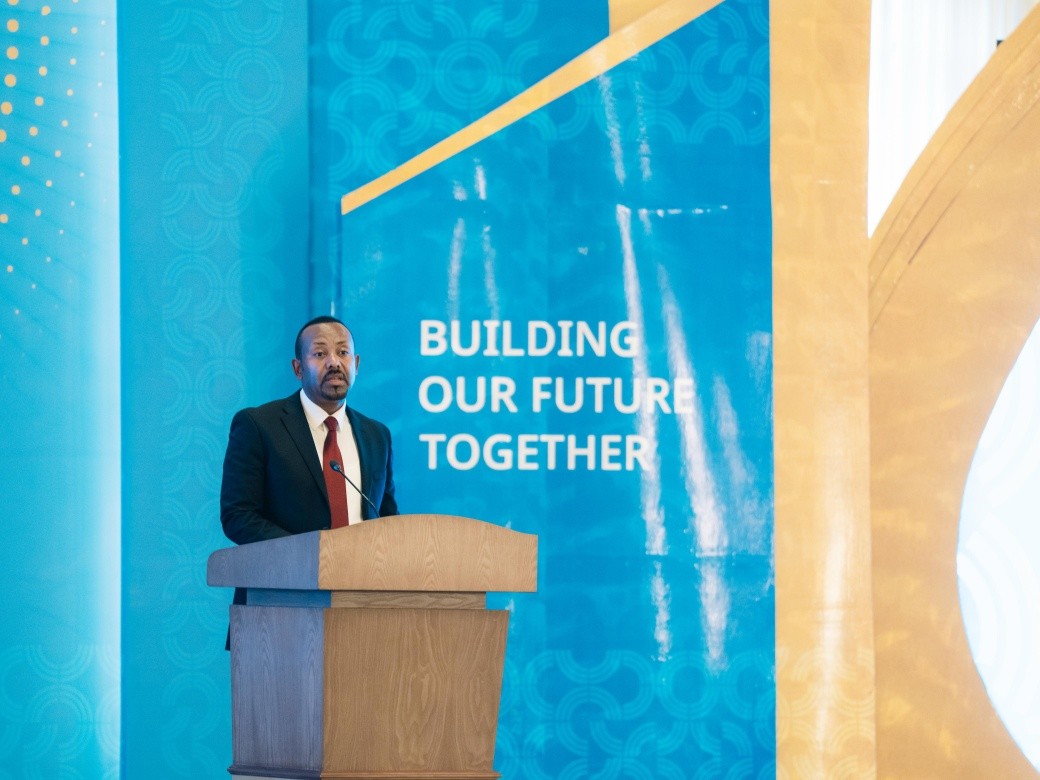
In a speech delivered at the National Palace during events marking the 80th anniversary of the founding of the United Nations, Prime Minister Abiy Ahmed reviewed the historical purpose of this institution, which emerged from the devastation of World War and was founded on the ideals of human dignity, justice, and social progress.
However, he warned that the growing gap between global commitments and on-the-ground implementation undermines these founding principles.
The Prime Minister drew on Ethiopia’s historical experience in international cooperation, recalling the country’s experience with the collapse of the League of Nations system.
He added that African countries are now more prepared to take greater responsibility in shaping a more stable and legitimate international order.
The Prime Minister also urged the international community to move faster to address pressing challenges, including peace and security, climate change, and technological transformation.
He expressed appreciation for the leadership of the United Nations, particularly Secretary-General Antonio Guterres and Deputy Secretary-General Amina Mohammed, praising their engagement with Africa and their commitment to multilateral dialogue.
In conclusion, Prime Minister Abiy reaffirmed Ethiopia’s commitment to an inclusive and effective multilateral system, emphasizing that cooperation remains the best path to achieving global peace and shared progress.