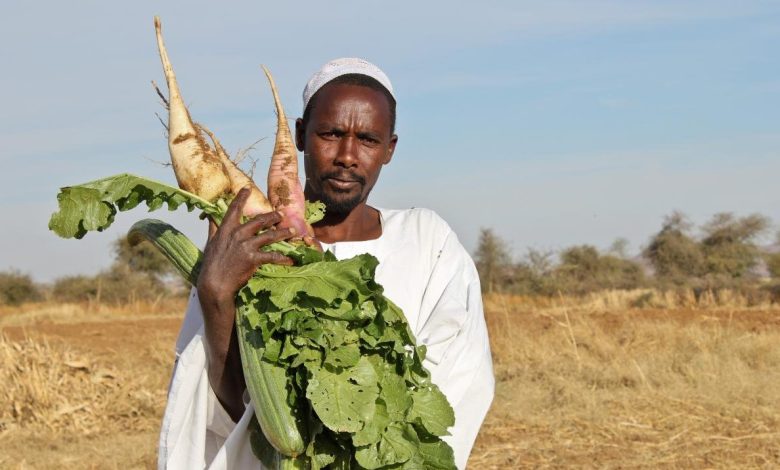
The Food and Agriculture Organization of the United Nations, the World Food Programme, and the United Nations Children’s Fund have warned of the continued severe deterioration of the humanitarian situation in Sudan, confirming that about 19.5 million people, equivalent to two out of every five residents, are facing acute levels of food insecurity across the country.
According to the latest analysis from the Integrated Food Security Phase Classification, about 135,000 people are facing catastrophic food conditions, while 14 areas in Darfur, South Darfur, and South Kordofan are at risk of slipping into famine in the coming months.
The report indicated that more than five million people are living in the emergency food phase, while about 14 million people are facing crisis levels of food insecurity, with expectations of worsening conditions during the lean season extending between June and September.
The UN organizations confirmed that the ongoing conflict in Sudan for the fourth consecutive year, along with violence, widespread displacement, and restrictions on humanitarian aid access, continues to directly impact the living and health conditions of millions of civilians.
On the health front, the organizations stated that Sudan is facing a worsening nutrition crisis, with expectations that about 825,000 children under the age of five will suffer from acute malnutrition during 2026, an increase of seven percent compared to last year, and 25 percent compared to pre-conflict levels.
They added that about 100,000 children received treatment for acute malnutrition between January and March of this year, warning of the continued deterioration of food and health conditions, especially in besieged areas and displacement camps.
The report also indicated that the number of internally displaced people in Sudan reached about nine million by the end of March 2026, at a time when the destruction of markets, health facilities, water networks, and agricultural assets has undermined food production and limited access to basic services.
The organizations mentioned that about 40 percent of health facilities in Sudan are out of service, while about 17 million people lack safe drinking water, and 24 million people suffer from limited sanitation services.
They also warned that outbreaks of diseases such as cholera, measles, malaria, dengue fever, hepatitis, and diphtheria are worsening the nutritional situation, especially among children, pregnant women, and nursing mothers.
The UN organizations confirmed that security challenges, administrative restrictions, and attacks on supply routes continue to hinder the delivery of humanitarian aid, noting that the 2026 humanitarian response plan for Sudan had only received 20 percent of the required funding as of last April.
The Food and Agriculture Organization, the World Food Programme, and the United Nations Children’s Fund called for a cessation of hostilities, ensuring the protection of civilians and civilian infrastructure, providing safe and unimpeded humanitarian access to affected areas, along with increasing international funding for food, nutrition, health, water, and livelihood support programmes.
The Africa Centres for Disease Control and Prevention welcomed the pledge by the South African government to provide $2.5 million to support efforts to combat the Ebola outbreak in the Democratic Republic of the Congo and Uganda, through the Africa Epidemic Fund of the Africa Centres for Disease Control and Prevention.
This pledge followed a letter sent by the Chairperson of the African Union Commission, Mahmoud Ali Youssouf, to African heads of state and government regarding the Ebola outbreak, calling for enhanced continental solidarity and coordination of joint efforts to respond to the health crisis.
The Africa Centres for Disease Control and Prevention expressed its deep appreciation to the people and government of South Africa, and to the country’s President Cyril Ramaphosa, in his capacity as the African Union Champion for Pandemic Prevention, Preparedness, and Response, praising this initiative, which it said embodies the spirit of leadership, solidarity, and commitment to strengthening public health security on the African continent.
The