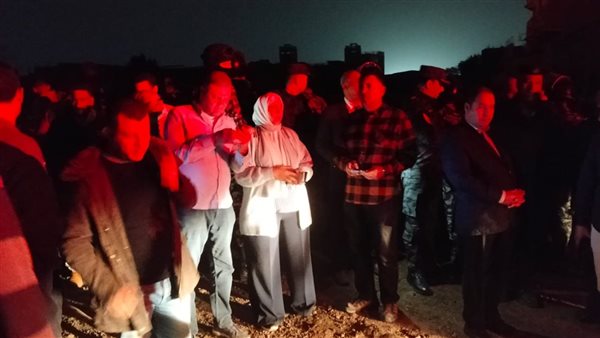
Engineer Dr. Hossam Abdel Fattah, the Governor of Qalyubia, has directed the disbursement of a financial reward for each of the drivers, Awad Moussa and Mohamed Osama, the bulldozer operators in the local unit of the Qanater El-Khairiya city council. This is in appreciation of their role in supporting the civil protection efforts while dealing with a fire at several factories in Ezbet Ali Afandi, in the Arab Mahdi Abu Al-Gheit area affiliated with the Qanater El-Khairiya center.
The two drivers contributed to opening and paving a road for fire trucks to reach the site of the fire by working in difficult and dangerous conditions within the perimeter of the blaze. This enabled the civil protection forces to quickly reach the fire hotspots and helped accelerate the operations to control the fire and limit its spread.
The Governor of Qalyubia confirmed that this honor comes in appreciation of the dedicated examples of workers who actively participate in supporting the efforts of the state and executive agencies during emergency situations.
Cairo
Cairo is the sprawling capital of Egypt, founded in 969 CE by the Fatimid dynasty near ancient sites like the Pyramids of Giza. It is a major cultural and historical hub of the Arab world, famed for landmarks such as the medieval Islamic district, the Egyptian Museum, and the Al-Azhar Mosque, one of the world’s oldest universities. The city’s rich history layers Pharaonic, Coptic Christian, Islamic, and modern influences.
Qalyubia
Qalyubia is a governorate in northern Egypt, situated just north of Cairo within the fertile Nile Delta region. Historically, its name is derived from the Coptic word for “monasteries,” reflecting an early Christian presence, and it has long been a vital agricultural area supplying the capital. Today, it is a densely populated administrative region known for its farming communities and as part of Greater Cairo’s urban expanse.
Qanater El-Khairiya
Qanater El-Khairiya, located north of Cairo, is a historic district named for its key feature: the “Barrages” (or dams) constructed across the Nile in the 19th century. These barrages, initiated under Muhammad Ali Pasha and later expanded by Khedive Ismail, were a major engineering feat designed to regulate the river’s flow and improve irrigation for agriculture throughout the year. Today, the area remains a notable landmark, representing a pivotal development in Egypt’s modern water management and agricultural history.
Ezbet Ali Afandi
Ezbet Ali Afandi is a small, traditional agricultural hamlet located in the Nile Delta region of Egypt. Historically, such *ezbas* were established as farming settlements, often named after local landowners or families, and they reflect the long-standing rural social and economic structure of the area. Today, it remains a quiet community representative of Delta village life.
Arab Mahdi Abu Al-Gheit
“Arab Mahdi Abu Al-Gheit” refers to a prominent Egyptian family, not a specific place or cultural site. The most notable modern figure is **Ahmed Aboul Gheit**, a long-serving Egyptian diplomat and the current Secretary-General of the Arab League since 2016. The family name is historically associated with influence in Egyptian politics and diplomacy, particularly throughout the late 20th and early 21st centuries.