Video丨Watching the Spring Festival Gala Successfully “Planted the Seed” for Yiwu!
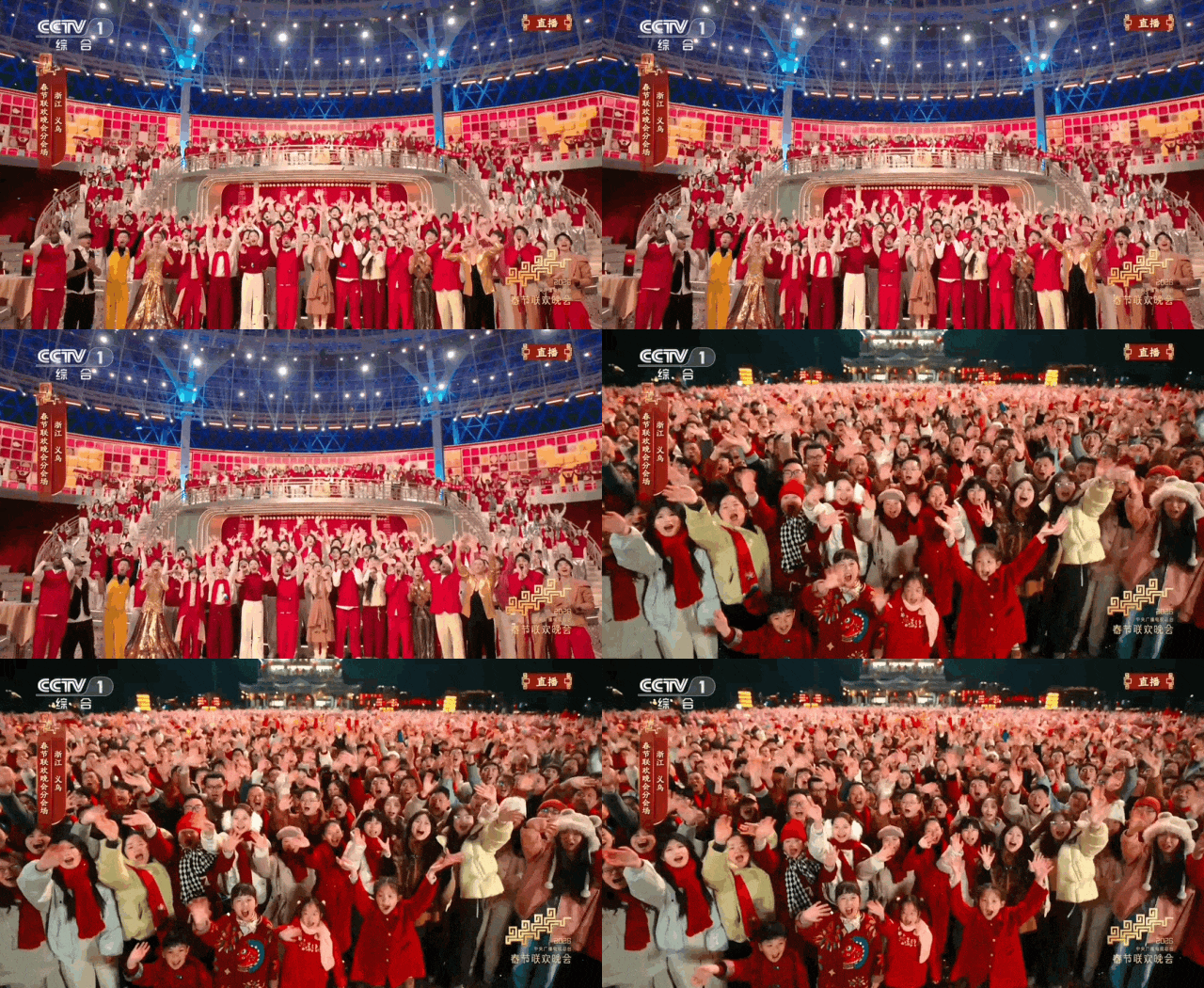
This year’s CCTV Spring Festival Gala
Yiwu, Zhejiang Sub-Venue
stunned audiences and went viral.
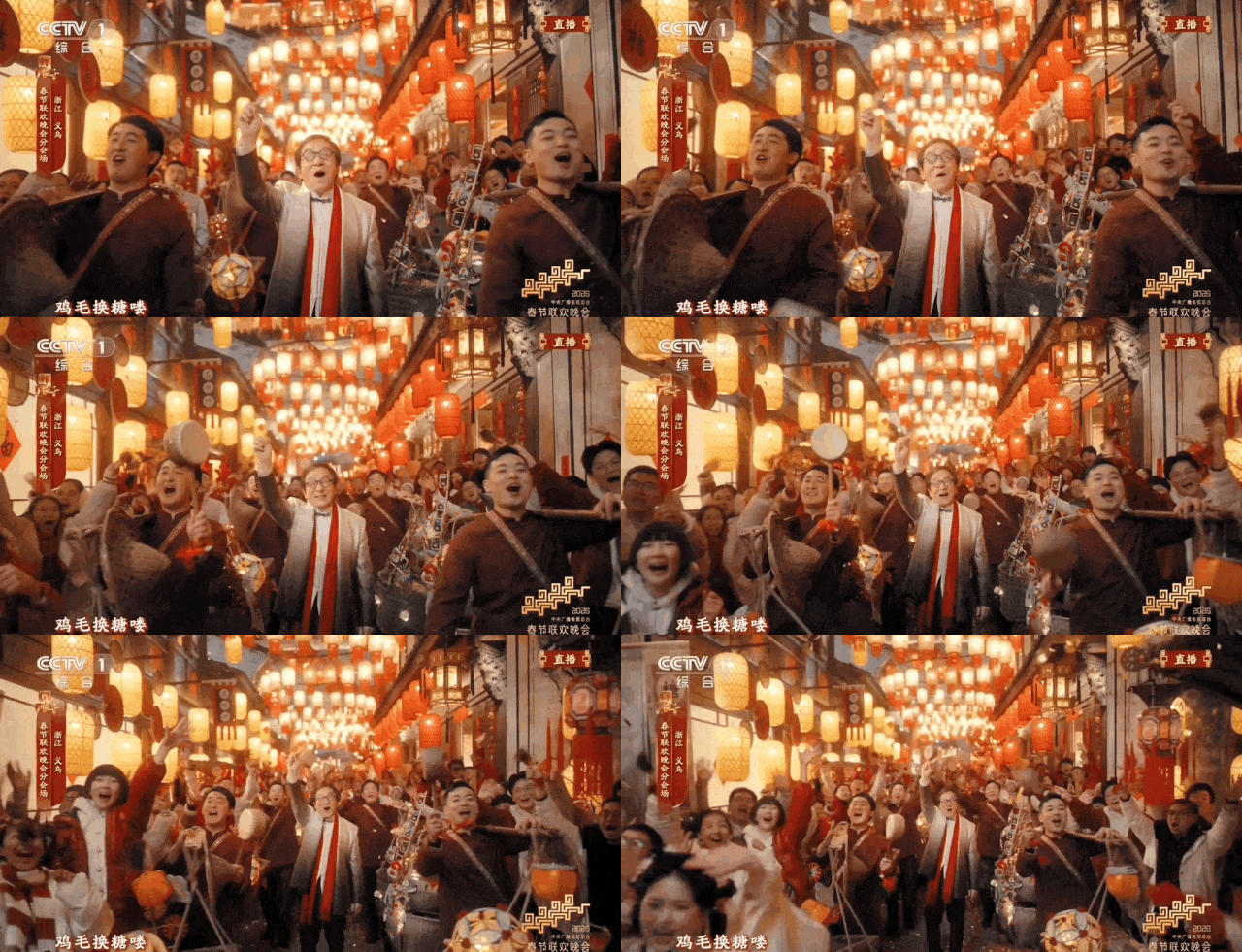
The performance was woven together with elements like “trading sugar for chicken feathers” and “rattle-drums”
unfolding Yiwu’s development journey and its “international flair.”
Here, one could feel the majestic momentum of the Futang Floating Bridge and the oar race.
There was the patriotic fervor of the Qi Family Army wishing for “calm seas and peaceful years.”
There was the prosperous spectacle of the Bench Dragon coiling and dancing.
There was the smart and cool prowess of robots clad in golden armor.
And there was the open-mindedness of the Global Digital Trade Center connecting with the world.
During the Spring Festival holiday, many residents and tourists came to Yiwu to check in and take photos “in the same frame” as the Gala.
By the second day of the Lunar New Year, Yiwu’s cumulative number of tourists across the region reached 2.1797 million, a year-on-year increase of 28.9%.
Centered around the Gala sub-venue location and five main streets, Yiwu linked up with 14 towns and subdistricts across the region, meticulously launching 166 “Follow the Spring Festival Gala to Tour Yiwu” cultural and tourism experience activities. Related landscapes and installations were preserved to the greatest extent, allowing the Gala’s “highlight moments” to blend into the city’s streets and alleys.
As the first county-level city sub-venue in the history of the Spring Festival Gala, Yiwu truly pulled out all the stops this time.
As the scroll of “Dwelling in the Fuchun Mountains” gently unfurled, the镜头 shifted to Futang Ancient Town, where a single “chicken feather” drifted towards the Yiwu River.
With a cry of “Trade sugar for chicken feathers!”, Yiwu’s story began to unfold.
Yiwu’s legend started with “trading sugar for chicken feathers.” In an era of material scarcity, people from Yiwu carried shoulder poles and摇着 rattle-drums from village to village, trading brown sugar for chicken feathers and other items, which were then processed into feather dusters for sale. This honed their innate business acumen and a基因 for daring to venture and experiment.
The place where the chicken feather was received is West Gate Old Street.
Now, the New Year decorations here authentically保留 the appearance from the Gala sub-venue.
In front of the city gate on West Gate Old Street, a group of children in new clothes joyfully摇着 rattle-drums, singing the nursery rhyme: “Golden turtledove, silver turtledove, flying here and there to Yiwu.”
On the surface of the giant rattle-drum, Yiwu’s city flower, the Chinese rose, bloomed绚烂ly. Dancers stepped on the giant drum,演绎 the beautiful意境 of “flowers blooming along the path.”
Everyone shouted in unison, “The Rooster-Crowing Pavilion houses the phoenix; calm seas bring peaceful years.” The柔美 melody revealed the unique character of this city.
“Once the Qi Family Army rose, Yiwu soldiers became the backbone against the倭寇.”
With flags fluttering in the Wu Opera “Yiwu Soldiers”, the Qi Family Army charged out on horseback to resist倭寇 in the southeastern regions, writing a chapter of家国大义 in the long river of history.
The intangible cultural heritage Bench Dragon connected head to tail. Wishes from three villages—Dachen Er Village, Lizu Village, and Fenshuitang Village—soared into the sky with the rising dragon
Futang Floating Bridge
The Futang Floating Bridge is a modern pedestrian bridge located in Nanjing, China, spanning the Qinhuai River. It was constructed in 2020 as part of urban redevelopment, featuring a distinctive undulating design with interactive LED lighting. While it lacks deep historical legacy, it has quickly become a popular contemporary landmark for its aesthetic and function in connecting the city’s riverside cultural and commercial districts.
Qi Family Army
The “Qi Family Army” refers to the private military force of the Qi Jiguang family during China’s Ming Dynasty (16th century). It was famously led by the renowned general Qi Jiguang, who reformed and trained it into a highly disciplined and effective unit that successfully defended China’s eastern coast against Japanese pirates (wokou). The army’s innovative tactics and organization left a lasting legacy in Chinese military history.
Bench Dragon
“Bench Dragon” is not a widely recognized historical or cultural site. It is likely a reference to a specific local sculpture, public art installation, or a nickname for a bench in a particular community (possibly shaped like a dragon). Without a specific location, a definitive history cannot be provided, but such features are typically modern creations meant to add artistic character to a public space.
Global Digital Trade Center
The Global Digital Trade Center is a modern commercial complex in Hangzhou, China, which opened in 2021. It was developed as a flagship project to support the city’s status as a hub for the digital economy and e-commerce, largely inspired by the success of local tech giant Alibaba. The center aims to facilitate international digital trade, innovation, and business exchanges.
Futang Ancient Town
Futang Ancient Town is a well-preserved historic town in China, known for its traditional architecture and canals dating back to the Ming and Qing dynasties. It served as an important commercial hub due to its strategic location along waterways, facilitating trade and cultural exchange for centuries. Today, it offers visitors a glimpse into ancient Chinese urban life with its old streets, temples, and bridges.
West Gate Old Street
West Gate Old Street is a historic commercial district in Xi’an, China, located just inside the city’s ancient western wall. Historically a bustling hub along the Silk Road, it has been a center for trade and Muslim culture for centuries, with many shops and the Great Mosque dating back to the Tang and Ming dynasties. Today, it remains a vibrant market street famous for its local snacks and traditional architecture.
Chinese rose
The Chinese rose, known as “月季” (yuèjì) in Mandarin, is not a specific cultural site but a celebrated flower deeply woven into Chinese history and culture. It has been cultivated for over a thousand years, with records dating to the Han Dynasty, and is revered as one of China’s traditional “Ten Famous Flowers,” symbolizing longevity, beauty, and renewal. Today, it is also the official city flower of Beijing and several other Chinese cities, reflecting its enduring cultural significance.
Wu Opera “Yiwu Soldiers”
“Yiwu Soldiers” is a modern Wu Opera production that dramatizes the historical story of the Yiwu Militia during China’s War of Resistance Against Japanese Aggression. It is a celebrated work within the Wu Opera repertoire, a regional opera form originating from Jinhua in Zhejiang Province, known for its vigorous singing and acrobatic fighting. The production serves to commemorate local heroism and preserve the intangible cultural heritage of this traditional art form.