Major Breakthrough! Scientists Achieve and Detect Higher-Order Non-Equilibrium Topological Phases in Quantum Systems
For the first time in a quantum system, researchers have achieved and detected higher-order non-equilibrium topological phases using the programmable superconducting quantum processor “Zuchongzhi-2.” This achievement represents a significant breakthrough in quantum simulation for exploring complex topological states of matter and lays the foundation for demonstrating quantum advantage in quantum simulation problems using superconducting quantum processors. The related findings have been published in the international academic journal Science.
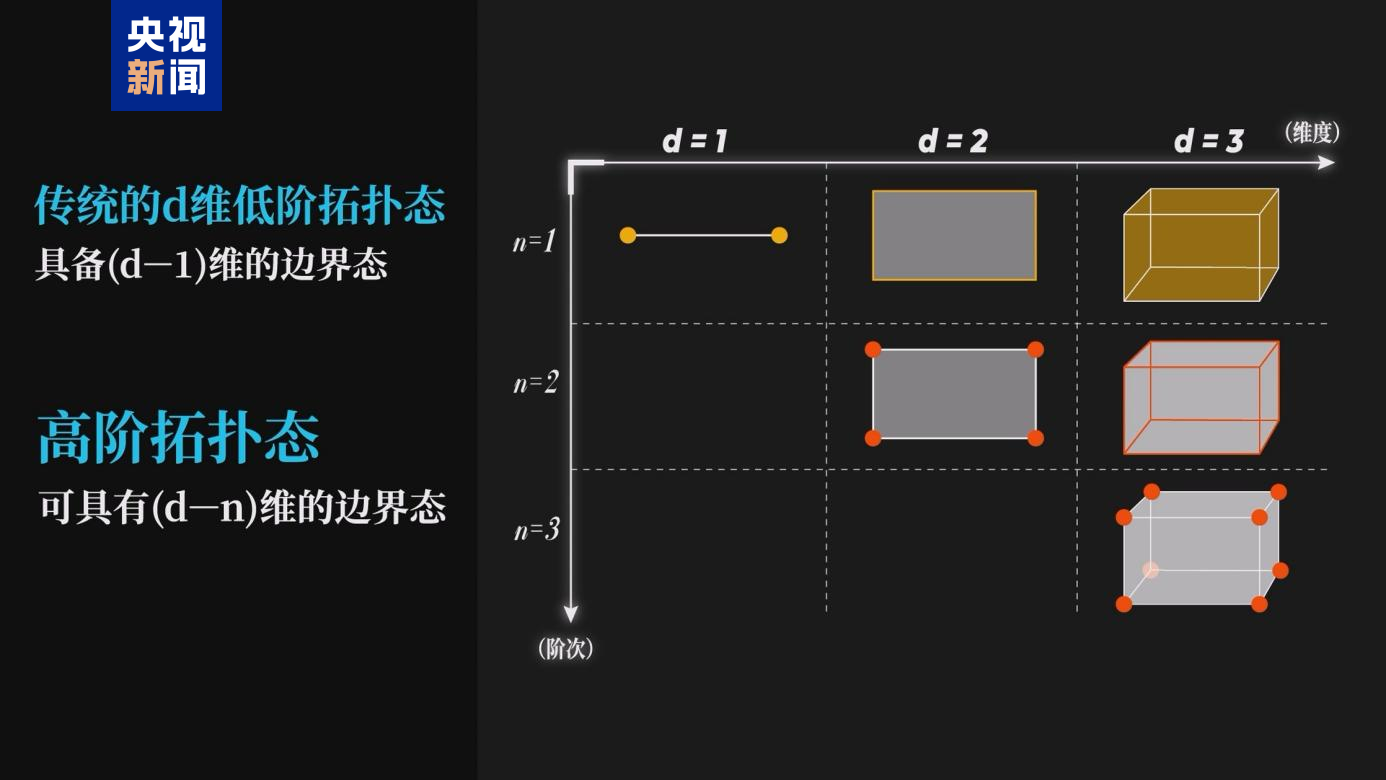
Topological phases have been an important research direction in condensed matter physics and quantum simulation in recent years. Unlike conventional topological phases, higher-order topological phases exhibit localized states at lower-dimensional boundaries, challenging the traditional bulk-boundary correspondence. Although higher-order topological phases have been experimentally realized in classical metamaterials, achieving them in quantum systems has remained a cutting-edge scientific challenge worldwide. Realizing higher-order topological phases not only helps reveal the quantum nature of topological states but also provides potential pathways for topological quantum computation based on non-Abelian statistics.
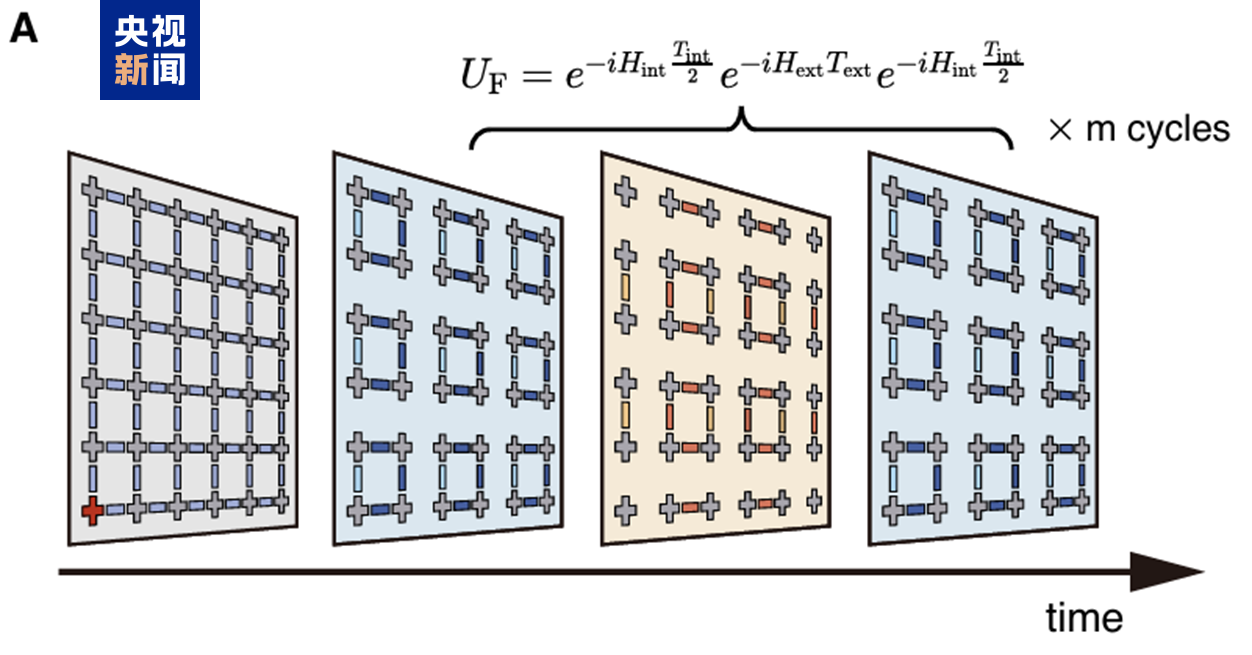
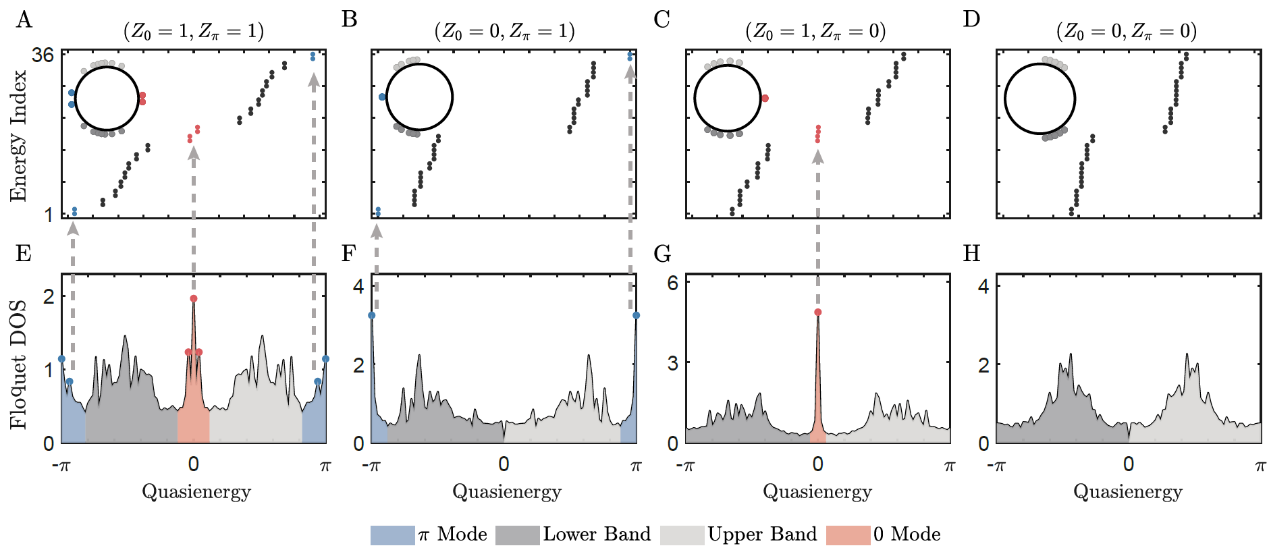
The research team leveraged the programmable capabilities of the “Zuchongzhi-2” superconducting quantum processor to achieve, for the first time in experiments, the quantum simulation and detection of both equilibrium and non-equilibrium second-order topological phases. Theoretically, the team proposed static and Floquet quantum circuit designs for higher-order topological phases, overcoming key challenges in constructing higher-order equilibrium and non-equilibrium topological Hamiltonians in two-dimensional superconducting qubit arrays, and developed a universal dynamical topological measurement framework. Experimentally, researchers established systematic processor optimization protocols and, through precise calibration, achieved dynamic control of qubit frequencies and coupling strengths. On a 6×6 qubit array, they successfully executed evolution operations spanning up to 50 Floquet periods, realizing four different types of non-equilibrium second-order topological phases for the first time, and systematically explored characteristics such as energy spectra, dynamical behaviors, and topological invariants of these phases.