Zhoushan is China’s first prefecture-level city established as an archipelago, consisting of 2,085 islands of various sizes, with a land area of only 1,440 square kilometers.
In the past, this “city of a thousand islands” was isolated at sea, with “no travel possible without boats,” severely limiting its development.
In September 1999, Zhoushan initiated a project to connect the islands to the mainland, initially on a small scale. It was not until January 2003, shortly after taking office as Zhejiang Provincial Party Secretary, that Xi Jinping conducted his first research trip to Zhoushan, marking the beginning of the largest island-to-land connection project in China’s history.
After a detailed analysis of Zhejiang and Zhoushan’s maritime advantages, Xi Jinping clearly stated, “This is a very important project. If the island-connecting bridge is built, it will fundamentally drive Zhoushan’s development.”
To the east of Zhejiang lies the sea, with a long coastline. Starting from Zhoushan, Xi Jinping spent over four months conducting field research, visiting 18 coastal counties (cities, districts) in succession.
In September 2004, Xi Jinping visited Zhoushan again for an inspection. He explicitly demanded that the island-connecting project be accelerated to achieve completion as soon as possible. He said, once completed, it would be like “a thousand miles in one day,” adding that the economic and social benefits it would bring could hardly be overstated.
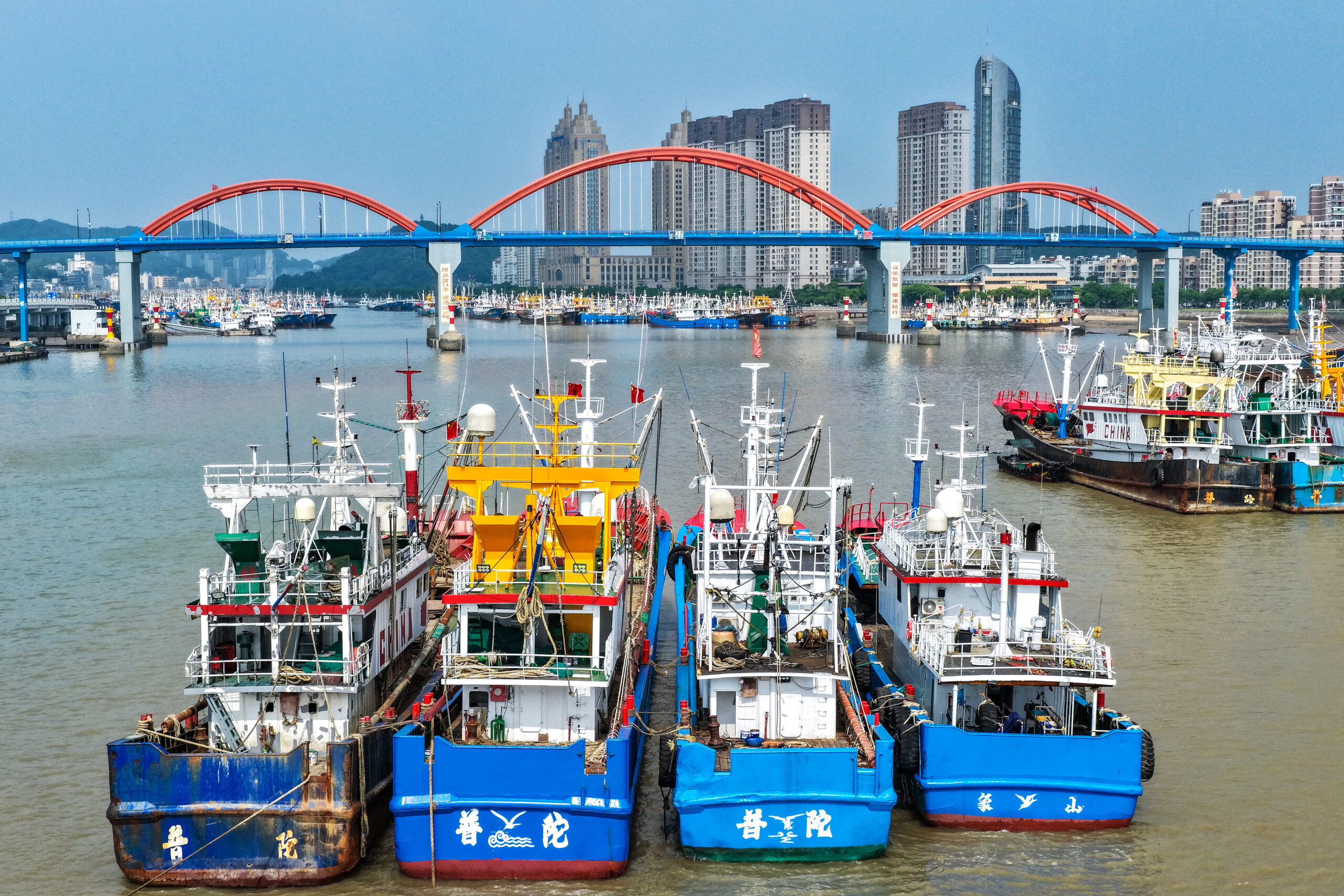
On May 28, 2026, in Zhoushan, Zhejiang, thousands of fishing boats are anchored in Shenjiamen Fishing Port, stretching in a continuous expanse.
During his tenure in Zhejiang, Xi Jinping visited Zhoushan 13 times for inspections and research, leaving his footprints across its many islands. He clearly stated, “In the new century and new stage, where is the further space for Zhejiang’s economic development? At sea!”
With Xi Jinping’s active promotion, the funding and national approval hurdles for the Zhoushan Cross-Sea Bridge were resolved one by one, accelerating the pace of the island-connection project.
On December 26, 2009, after a decade of construction, the Zhoushan Cross-Sea Bridge—the largest island-to-land connection project in China’s history—was officially opened to traffic. This bridge, spanning from the mainland across the sea, connects the four islands of Jintang, Cezi, Fuchi, and Lidiao, directly reaching Zhoushan’s main island.
Thus, the marine economy of Zhoushan, and even Zhejiang, entered a fast track of development.
Externally, the Zhoushan Cross-Sea Bridge has become a key transportation hub in the “3-hour tourism circle” connecting core Yangtze River Delta cities like Ningbo, Hangzhou, and Shanghai, enabling Zhoushan’s transformation from an “isolated island at sea” to a “maritime hub.” Internally, the full opening of the bridge has not only facilitated residents’ travel and significantly reduced corporate logistics costs but also provided crucial support for Zhoushan to secure major national strategies such as the national-level new area and free trade zone.
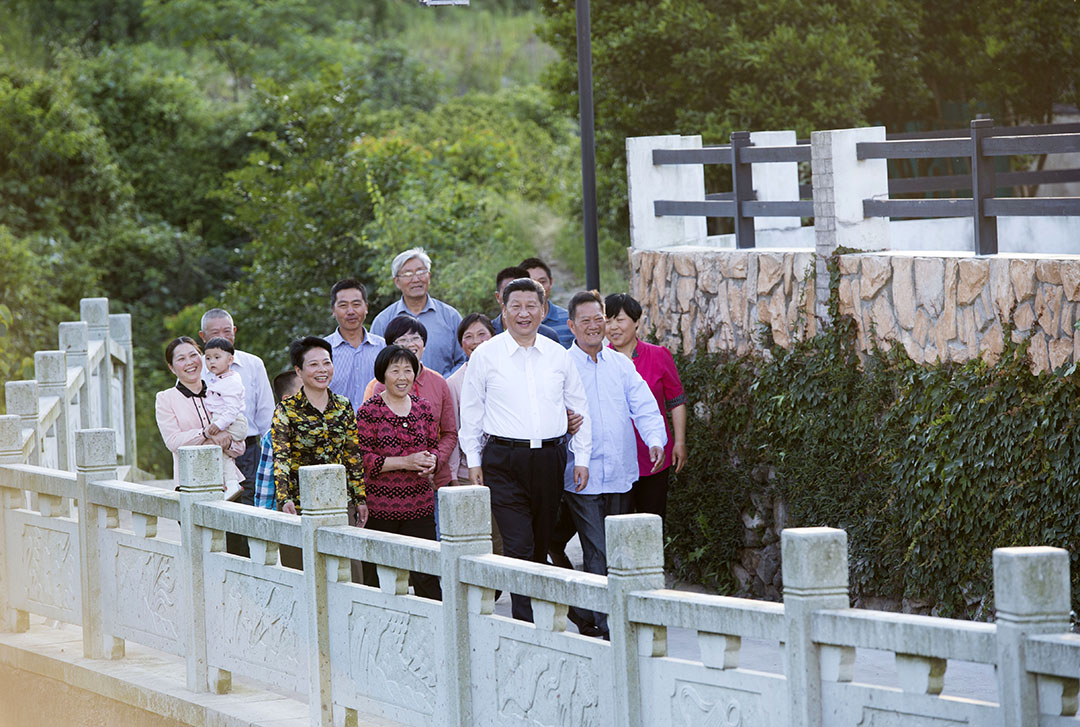
On May 25, 2015, during an inspection tour in Zhejiang, General Secretary Xi Jinping visited local residents in Dinghai District, Zhoushan.
Building one bridge activates an entire sea.
During his work in Zhejiang, Xi Jinping once admitted, “Developing the marine economy is something I have long dedicated myself to and explored.” Regarding ocean governance, he has a profound and grand strategic vision.
As early as during his work in Fujian, Xi Jinping creatively proposed the strategic concept of building a “Maritime Fuzhou,” becoming
<div class="my
Zhoushan
Zhoushan is an archipelago city in Zhejiang Province, China, known for its stunning islands and fishing industry. It is home to Mount Putuo, a sacred Buddhist site that has been a pilgrimage destination for over a thousand years. Historically, Zhoushan served as an important maritime trade hub and military outpost, particularly during the Ming and Qing dynasties.
Shenjiamen Fishing Port
Shenjiamen Fishing Port, located on Zhoushan Island in Zhejiang Province, China, is one of the country’s largest and most historic fishing ports. With a history dating back centuries, it has long served as a vital hub for the East China Sea fishing industry, particularly renowned for its abundant hauls of hairtail and mackerel. Today, it remains a bustling center for seafood trade and a popular tourist destination, where visitors can experience the vibrant maritime culture and enjoy fresh catches from the daily markets.
Zhoushan Cross-Sea Bridge
The Zhoushan Cross-Sea Bridge is a massive engineering project in China’s Zhejiang Province that connects the Zhoushan archipelago to the mainland. Completed in 2009 after a decade of construction, it consists of five major bridges and spans a total length of about 50 kilometers, making it one of the longest cross-sea bridge groups in the world. The bridge significantly improved transportation and economic development for the region, replacing the previous reliance on ferries.
Jintang
Jintang is a county-level city in Sichuan Province, China, known for its historical and cultural significance. Historically, it was an important transportation hub and trade center along the ancient Southern Silk Road, with a history dating back over 2,000 years. Today, Jintang is recognized for its well-preserved ancient architecture, such as the Jintang Confucian Temple, and its scenic landscapes along the Tuo River.
Cezi
Cezi is a historic island and fishing village located off the coast of Zhejiang Province, China, known for its scenic beauty and traditional maritime culture. It was once a strategic military outpost during the Ming and Qing dynasties, with remnants of ancient fortifications still visible. Today, Cezi is celebrated for its well-preserved stone houses, tranquil harbors, and as a gateway to the nearby Putuo Mountain.
Fuchi
Fuchi is a historic area in Fukuoka, Japan, known for its ancient burial mounds (kofun) from the Kofun period (3rd–7th centuries). The Fuchi Kofun cluster features keyhole-shaped tombs and artifacts that provide insight into early Japanese society and its connections with the Korean Peninsula. Today, it serves as an important archaeological site and cultural heritage destination.
Lidiao
Lidiao, also known as the “Lidiao Ruins” or “Lidiao Site,” is an ancient archaeological site located in South China, believed to date back to the Neolithic period. It is significant for its well-preserved rice remains and early agricultural evidence, indicating that rice cultivation may have originated in this region around 10,000 years ago. The site provides crucial insights into the early development of farming societies and the prehistoric cultures of southern China.
Dinghai District
Dinghai District is the historical and cultural heart of Zhoushan City in Zhejiang Province, China, situated on Zhoushan Island. It has a long maritime history, serving as a key military and trading port since ancient times, and was notably the site of the Battle of Dinghai during the First Opium War in 1840. Today, it preserves many historical sites, including ancient city walls and temples, while also functioning as a modern administrative and economic center.