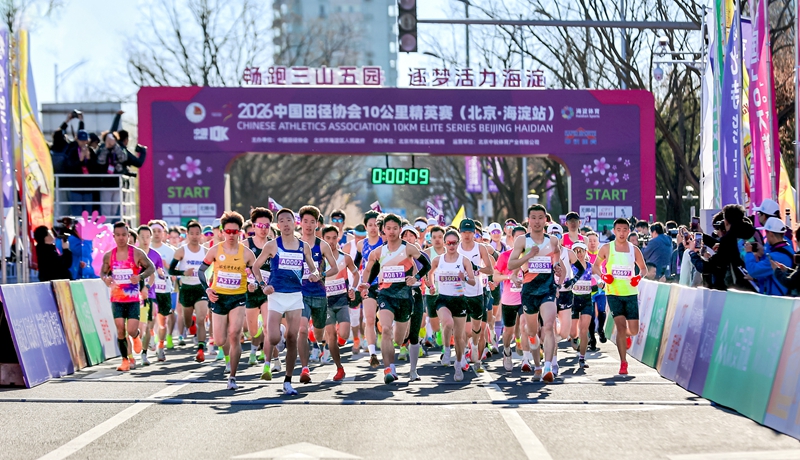
At 7:30 AM yesterday, the 2026 China Athletics Association 10K Elite Race (Beijing · Haidian Station) commenced. The event was designed to meet World Athletics label race standards, with the core theme “Run Freely Through the Three Hills and Five Gardens, Chase Dreams in Vibrant Haidian.” It featured two main categories: a 10K elite race and an approximately 5K fun run, attracting 6,000 runners to gather in Haidian.
The race route was meticulously designed to reflect Haidian’s three core characteristics: technological innovation, historical heritage, and ecological livability. It cleverly connected landmarks of innovation, classical gardens, and ecological corridors, creating a unique running path with “a different view at every step and a new theme every kilometer.” Runners started from the Zhongguancun National Independent Innovation Demonstration Zone Exhibition and Trading Center, immersing themselves in the modern vitality and innovative spirit of the tech park. They passed by the New Palace Gate of the Summer Palace, experiencing a collision of history and modernity. Running along Blue Indigo Factory North Road and the Jingmi Diversion Canal, they were accompanied by the poetic beauty of shimmering water and ecological landscapes.
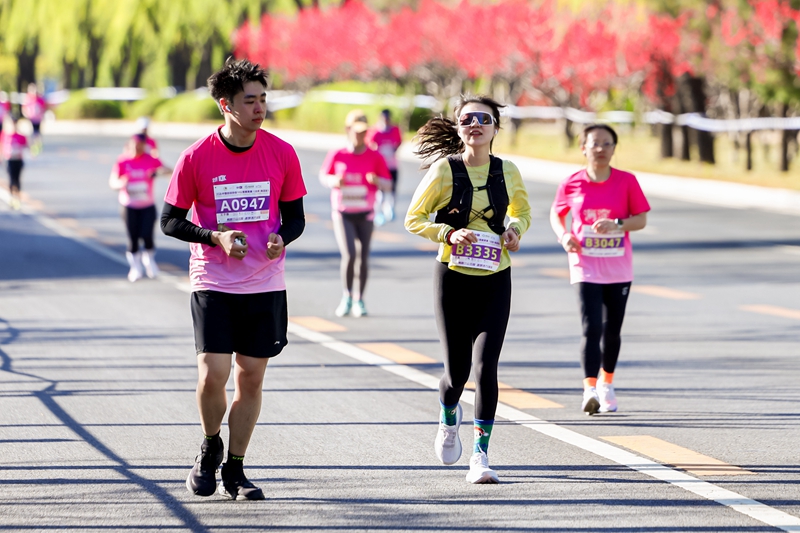
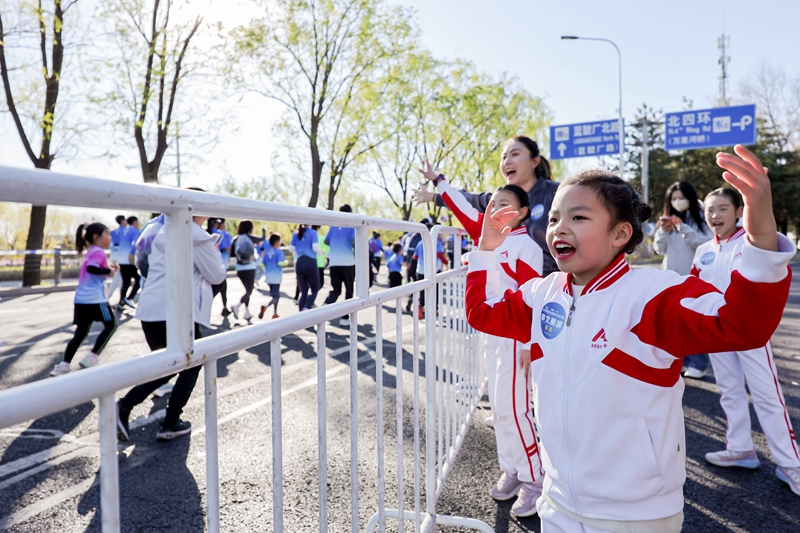
To allow runners to experience the event’s atmosphere and Haidian’s cultural vibrancy, the organizing committee set up over 10 public cultural performance points along the route. Programs such as waist drum dancing, softball, Chinese martial arts, cheerleading, dragon and lion dances, and tai chi with umbrellas were performed in succession, ensuring “cheers every kilometer and surprises throughout the journey.” Furthermore, the event specifically included a University Challenge within the 10K race, open to full-time university students nationwide. Customized bibs were provided for these participants, and a university cheer wall was set up. Rewards were given based on the University Challenge rankings after the race, widely encouraging young students to participate actively. This aimed to unite youthful energy through sports, highlight Haidian’s innovative vitality and talent advantages, and contribute to building a youth-friendly city.
The exclusive 49.5-meter post-finish experience condensed the essence of Haidian’s “technology + culture + ecology” character. In this dedicated channel, the organizing committee arranged warm services and highlight moments: in the Honor Passage area, university students formed a “Youth Relay” applause tunnel to cheer for the runners; a professional photography team provided finish line photo services for runners to download and share; the celebration and interaction area featured cultural performances with Haidian characteristics, alternating between folk music and Chinese drum performances, combining movement and stillness to create a lively atmosphere.
A small race bib also helped stimulate urban consumption. Haidian District innovatively created a “Bib Economy,” collaborating with 243 merchants and organizations including scenic spots, commercial districts, hotels, and cultural and sports venues to offer discounts. To extend the “Bib Economy” into diverse consumption scenarios, the organizing committee held a race carnival at the Century Golden Resources Mall from April 4th to 6th. It brought together over 30 brands as well as organizations including the District Youth League Committee, District Agriculture and Rural Affairs Bureau, and Haidian Culture and Tourism Group. Runners could enjoy dining and shopping discounts by showing their bibs, and interactive activities like “Bib Prize Draws” were set up on-site. This created a one-stop experience of “running + consumption + entertainment,” fostering a positive cycle where the event gathers commerce and commerce promotes the event.