Australian Youth Study Tour Visits Shanghai’s Putuo District, Experiencing the Integration of Technology, Innovation, and Culture
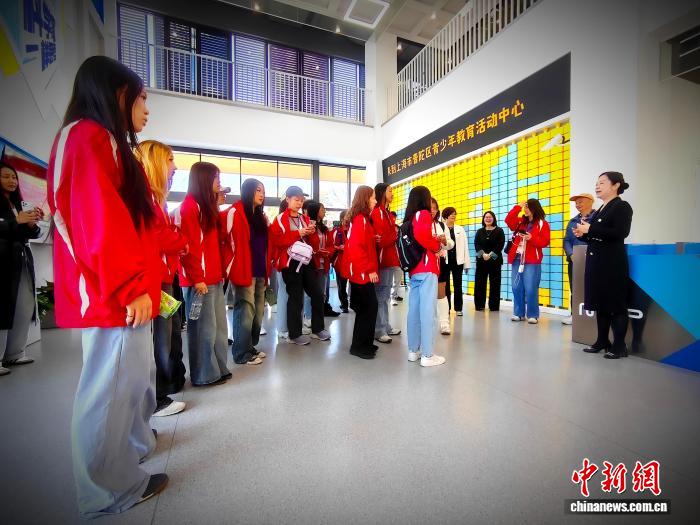
On April 8th, the fifth Australia-China International Youth “World Sees Shanghai” study tour, themed “Chinese Kinship, Gathering in Shanghai,” visited Shanghai’s Putuo District. The event aimed to build a platform for cultural exchange and mutual learning among Australian youth, allowing overseas teenagers to experience Shanghai’s development and the charm of Putuo up close, enhance friendship between Chinese and foreign youth, and promote the deepening of friendly people-to-people exchanges.
Led by the leader of the delegation, 34 Australian teenagers embarked on a day-long walk along the Suzhou Creek, immersing themselves in Putuo’s blend of profound history and modern technology, cultural heritage, and dual-innovation vitality. They praised Putuo’s characteristics of being a “science and innovation livable area, a cultural Putuo, and a vibrant Suzhou Creek.”
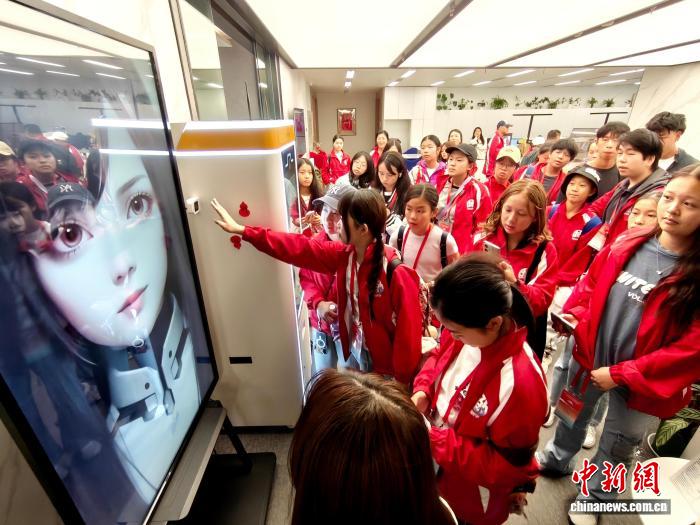
The study tour visited the Changfeng Center of the Putuo District Youth Activity Center, exploring its special functional exhibition areas and experiencing firsthand the district’s achievements in youth science innovation and aesthetic education practice. The members visited featured spaces such as the Water Perception Space, the Qizhi Interactive Hall, Perception World, the Engineering Lab, and the Creative Idea Lab. Through multimedia interaction, immersive experiences, and hands-on practice, they learned about water science, natural ecology, artificial intelligence, and mechanical construction, experiencing Shanghai’s high-quality extracurricular educational resources and the innovative educational philosophy of “learning through play, learning by doing, and learning through creation.”
The tour visited Boke Technology Group Co., Ltd., a company that integrates gaming with popular science, education, healthcare, public welfare, and art, cross-empowering traditional fields. The members toured the corporate exhibition hall and results display area. Subsequently, organized by the company, they participated in small-group game design creative workshop activities, engaging in brainstorming, collaborative interaction, and sharing presentations, creating a lively atmosphere.
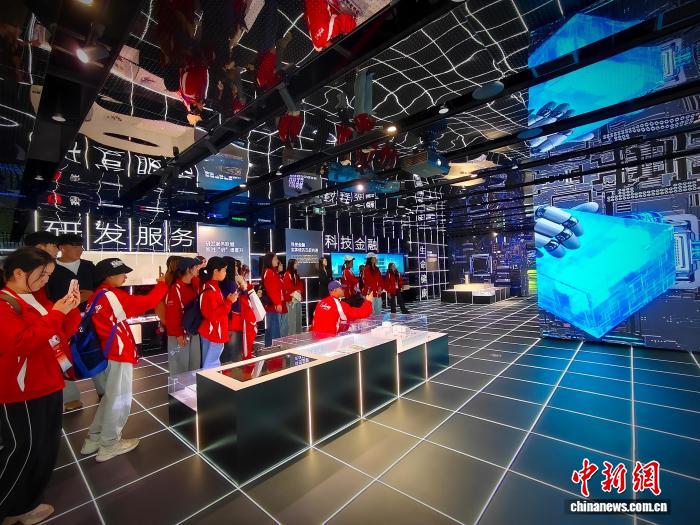
At the Haina Town Digital Innovation Center, after learning about this innovation hub integrating scientific research offices, exhibition and exchange spaces, digital public services, and event hosting, the study tour members praised its full-chain capability of “innovation sourcing + service incubation + exhibition and connection,” which showcases the regional science and innovation layout, industrial momentum, and governance innovation achievements. This further deepened their understanding of the “Digital Putuo” initiative.
The study tour members visited the Shanghai headquarters of Vmai, learning about the company’s innovative development and international operations. They toured the corporate brand display area, innovative business spaces, and corporate culture zones, listened to introductions about the company’s efforts in technological innovation, market expansion, and cross-border cooperation, and experienced up close the international vision and innovative spirit of a Shanghai-based enterprise. They gained insights into the development paths and sense of responsibility of Chinese companies in the context of globalization, further deepening their understanding of Shanghai’s open, inclusive, innovative, and enterprising urban character.
Event scene.
Measuring Putuo with their steps, feeling digital technology with their eyes, and touching the pulse of the Suzhou Creek with their hearts. The day’s visit was compact, substantial, and rich in content. The study tour members appreciated the unique charm of Putuo District as a vibrant urban area and innovation hub, genuinely feeling the pulse of Shanghai’s modernization and urban development.
Suzhou Creek
Suzhou Creek is a historically significant waterway flowing through Shanghai, originally serving as a vital transport route during the city’s early industrial growth in the 19th and early 20th centuries. Once heavily polluted, it underwent a major environmental restoration in the late 1990s and 2000s, transforming its banks into a popular public space with parks, art districts, and pedestrian walkways. Today, it stands as a symbol of Shanghai’s urban renewal, blending its industrial past with modern recreational and cultural life.
Changfeng Center of the Putuo District Youth Activity Center
The Changfeng Center of the Putuo District Youth Activity Center is a modern community facility in Shanghai, primarily serving as a hub for youth education, extracurricular activities, and cultural events. While the center itself does not have a long historical legacy, it is part of Putuo District’s ongoing development efforts to provide public recreational and educational spaces for younger generations in the rapidly growing city.
Water Perception Space
The Water Perception Space is a modern interactive exhibition and educational center in China, often associated with water conservation themes. It was established to enhance public awareness about water resources, typically utilizing technology and immersive displays to illustrate the importance and cycle of water. While specific founding dates vary by location, these spaces are a contemporary response to environmental concerns, aiming to connect visitors with the science and cultural significance of water.
Qizhi Interactive Hall
The Qizhi Interactive Hall is a modern educational and cultural facility located in China, dedicated to promoting science, technology, and innovation, often with a focus on engaging younger audiences through hands-on exhibits. While specific historical details are limited, it represents a contemporary initiative by institutions or local governments to foster public interest in STEM (Science, Technology, Engineering, and Mathematics) fields within a dynamic, interactive environment.
Perception World
“Perception World” is not a widely recognized historical or cultural site. It appears to be a modern, immersive art exhibition or digital experience, often focused on interactive light and sound installations. As a contemporary attraction, its “history” is typically brief, tied to its founding by creative studios or entertainment companies in the late 2010s or early 2020s.
Engineering Lab
An Engineering Lab is a practical workspace where students and professionals apply scientific principles to design, build, and test prototypes and systems. Historically, such labs evolved from simple workshops in the 19th century into advanced, technology-driven facilities central to innovation in fields like mechanical, electrical, and civil engineering. They serve as foundational environments for hands-on learning and technological development.
Creative Idea Lab
The Creative Idea Lab is a modern collaborative workspace or innovation hub designed to foster brainstorming and project development, typically within a corporate, academic, or community setting. While it doesn’t have a long historical legacy like ancient sites, its conceptual history is rooted in late 20th-century trends like the “skunkworks” model and the rise of open-plan tech incubators, which emphasize spontaneous collaboration and creative problem-solving. Its primary purpose is to provide a dynamic environment where teams can generate and prototype new ideas.
Haina Town Digital Innovation Center
The Haina Town Digital Innovation Center is a modern facility in Haina, Germany, established to foster technological advancement and economic growth in the region. It serves as a hub for startups, digital education, and collaborative innovation, reflecting the town’s historical transition from traditional industries toward a future-oriented digital economy.