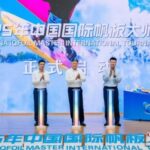
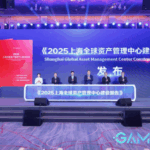
On May 18, a special press conference was held in Shanghai under the theme “Starting the ’15th Five-Year Plan’.” In the first quarter of this year, Shanghai’s GDP grew by 5.9%. To maintain this advantage, the city will focus on its mission to build the “five centers,” implementing economic work with greater intensity and more concrete measures to sustain the positive momentum of economic and social development.
Shanghai has become the first city in China to exceed 5 trillion yuan in total economic output, ranking among the top five global cities, with per capita GDP reaching $32,000. The scale of the three leading industries—integrated circuits, biomedicine, and artificial intelligence—has surpassed 2 trillion yuan, and the output value of strategic emerging industries in industrial sectors above a designated size has risen to 45% of total industrial output.
To achieve the goal of building a socialist modern international metropolis with global influence by 2035, the “15th Five-Year Plan” period represents a phase of comprehensive acceleration for Shanghai, as well as a critical period for transformation and upgrading.
Shanghai will continue to strengthen the resilience of economic development and promote industrial transformation and upgrading. Specifically, the city will foster innovation and upgrading in manufacturing, deepen the implementation of the “Shanghai Plan” for the three leading industries, accelerate the layout of emerging and future industries, strengthen and optimize niche sectors, and create a more competitive industrial ecosystem.
Shanghai will also steadily expand pioneering reforms and institutional openness, focusing on the Pudong leading area, the pilot free trade zone and Lingang new area, the Hongqiao international open hub, and the Eastern Hub international business cooperation zone, actively carrying out pilot initiatives and functional integration. It will further promote higher-quality integrated development in the Yangtze River Delta, jointly implementing a number of key cooperation projects.
Additionally, Shanghai is committed to continuously building a world-class business environment, using maximum sincerity, best services, and optimal conditions to attract enterprises and talent from both domestic and international sources, fully stimulating innovation and creativity, and consistently boosting market confidence and development expectations.
Shanghai
Shanghai is a major global financial hub and one of China’s largest cities, located on the eastern coast at the mouth of the Yangtze River. Its history as a prominent port and trading center began in the 19th century, particularly after the Treaty of Nanjing in 1842, when it became a key international settlement. Today, Shanghai is known for its striking blend of modern skyscrapers, such as the Bund and Pudong skyline, with historic areas like the Old Town and French Concession.
Pudong leading area
The Pudong Leading Area, located in Shanghai, China, is a major financial and economic hub that was developed as part of China’s reform and opening-up policies in the 1990s. Originally a rural and industrial area across the Huangpu River from Shanghai’s historic Bund, it was transformed into a modern global business district featuring landmarks like the Shanghai Tower and the Oriental Pearl Tower. Today, it serves as a symbol of China’s economic growth and innovation, hosting the Shanghai Stock Exchange and numerous multinational corporations.
pilot free trade zone
A pilot free trade zone (FTZ) is a specific geographic area within a country where special economic policies and regulations are tested to promote trade, investment, and economic liberalization. These zones are established by governments to experiment with market reforms, such as reduced tariffs and streamlined customs procedures, before potentially expanding them nationwide. In China, the first pilot FTZ was launched in Shanghai in 2013, serving as a key initiative to integrate with global trade practices and drive economic innovation.
Lingang new area
<div class
Shanghai
Shanghai is a major global financial hub and one of China’s largest cities, located on the eastern coast at the mouth of the Yangtze River. Its history as a prominent port city began in the 19th century, especially after the Treaty of Nanjing in 1842, which opened it to foreign trade and led to the establishment of international concessions. Today, Shanghai is known for its stunning modern skyline, including the iconic Bund and Pudong district, while still preserving historic areas like the Old City.
Pudong leading area
The Pudong Leading Area, located in Shanghai, China, is a modern financial and commercial hub that emerged from agricultural land in the early 1990s. Its development was a key part of China’s economic reforms, transforming the eastern bank of the Huangpu River into a global center for finance, trade, and technology. Today, it is home to iconic landmarks like the Shanghai Tower and the Oriental Pearl Tower, symbolizing China’s rapid modernization.
pilot free trade zone
A pilot free trade zone (FTZ) is a designated area within a country where special economic policies, such as reduced tariffs and streamlined regulations, are tested to promote trade and investment. These zones are typically established by governments to experiment with market reforms before implementing them nationwide, with China’s first FTZ launched in Shanghai in 2013. The concept has since expanded globally, aiming to boost economic growth, attract foreign capital, and serve as a model for broader liberalization.
Lingang new area
Lingang New Area is a modern urban development located in the southeastern part of Shanghai, China, near the East China Sea. Established in the early 2000s as part of the larger Shanghai Free-Trade Zone, it was designed to become a hub for advanced manufacturing, technology, and international trade. The area has since grown rapidly, featuring a planned city layout with residential, commercial, and industrial zones, including the famous Dishui Lake at its center.
Hongqiao international open hub
Hongqiao International Open Hub is a major economic and transportation zone in Shanghai, China, centered around the Hongqiao transportation hub, which integrates an airport, high-speed rail, and metro systems. Established as part of Shanghai’s strategy to boost international trade and regional integration, it has evolved into a key commercial district hosting the China International Import Expo. Its development reflects China’s efforts to create an open platform for global business and cross-border cooperation.
Eastern Hub international business cooperation zone
The Eastern Hub international business cooperation zone is a modern commercial and cultural district located in Shanghai, China, designed to foster global trade and cross-border partnerships. Established in the early 21st century, it emerged as a key initiative to integrate regional economic development with international business networks, drawing on Shanghai’s historic role as a major port and trading hub. The zone combines contemporary office spaces, exhibition centers, and cultural venues, reflecting the city’s ongoing evolution into a global financial and innovation center.
Yangtze River Delta
The Yangtze River Delta is a major economic and cultural region in eastern China, where the Yangtze River meets the East China Sea. Historically, it has been a hub of trade, agriculture, and civilization for over a thousand years, with cities like Shanghai, Nanjing, and Hangzhou playing key roles in Chinese history. Today, it is one of the world’s most dynamic urban and industrial clusters, known for its rapid development and rich cultural heritage.