2026 “Amazing Night Shanghai” Series Launches to Boost Nighttime Economy
The 2026 “Wonderful Night Shanghai” series of events will kick off on the evening of June 6. Before the official launch, we explored key innovative night economy scenarios and distinctive consumer formats this year, including the Intangible Cultural Heritage Creation Week, the Craft Beer Festival, and the Food Carnival.
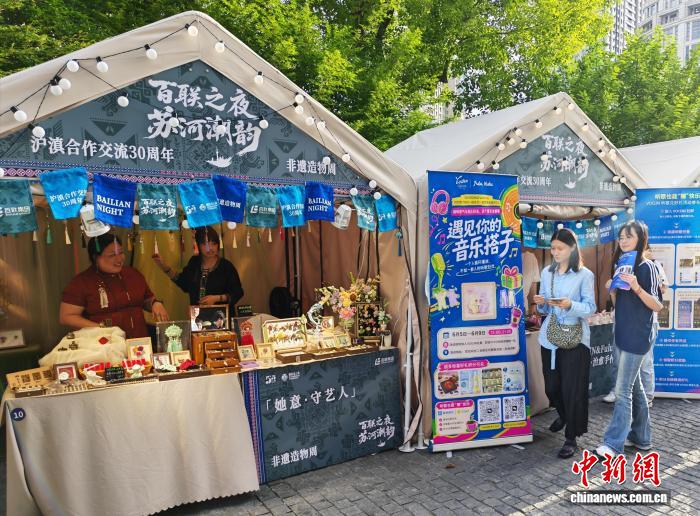
The “Bailian Night · Suhe Tide Charm” Intangible Cultural Heritage Creation Week officially opened on the banks of Suzhou Creek on June 5. The event brings together over 40 specialty stalls, embedding the cultural genes of Shanghai and Yunnan into the nighttime consumption space. Using Yunnan’s intangible cultural heritage systems of “gold, wood, earth, and cloth” as the narrative thread, it creates a new nighttime consumption scene combining “commerce + cultural tourism + food + intangible heritage + creative interaction.”
At the Intangible Cultural Heritage Creation Week event, performances such as the Bai ethnic “Chuichuiqiang” opera, a cappella, Yunnan indigenous drum dances, and Honghe Prefecture song-and-dance dramas complement the waterfront nightscape. This not only offers citizens and tourists a new option for nighttime outings but also explores new pathways for transforming cultural resources into consumption resources, injecting cultural depth and vitality into the development of the night economy.
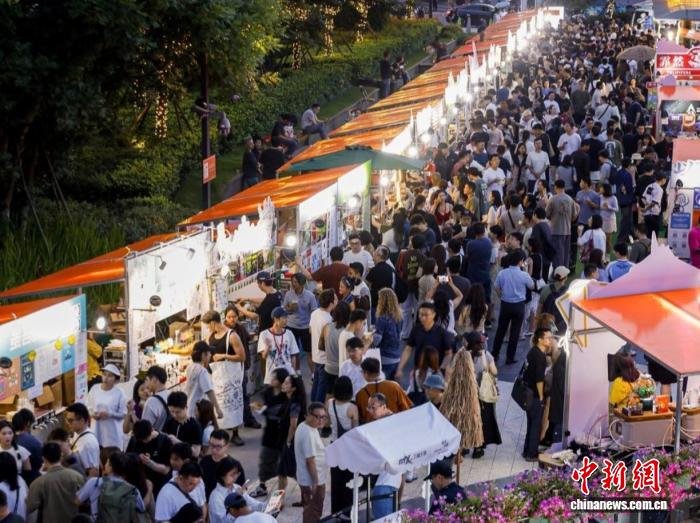
As one of the practical scenarios for the “night food + night entertainment” integration under this year’s “Wonderful Night Shanghai” series, the fourth Shanghai Craft Beer Festival has been fully upgraded in terms of lineup scale, interactive experiences, and cultural integration. Sixty-eight domestic and international craft beer brands gather here, covering a wide range of styles including German lagers, American IPAs, local fruit sours, barrel-aged beers, and barrel-aged stouts, showcasing the innovative vitality of the Chinese and global craft beer industry. Compared to previous editions, this year’s festival emphasizes experiential consumption and social attributes, creating an all-day immersive nightlife scene through a cross-border integration model of “craft beer + food + music + interaction.”
The beer festival also combines the pet economy with the night economy, offering outdoor consumption experiences that are more companionable, social, and youthful. This drives the night economy to extend from simple dining and entertainment to family-oriented, community-based, and emotionally valuable consumption.
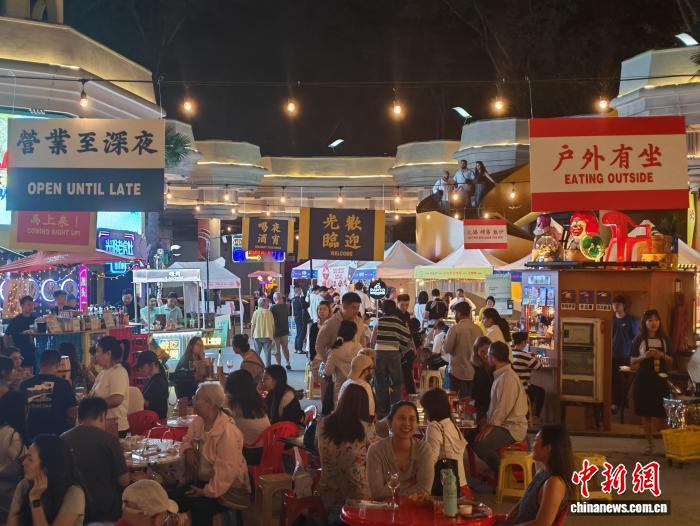
The “FEAST 2026 Food Carnival,” held at Shanghai’s trendy landmark FOUND158, is one of the representative international night food consumption scenarios in this “Wonderful Night Shanghai” series. It showcases the vibrant atmosphere and inclusiveness of Shanghai as a “24-hour vibrant city” to both domestic and international consumers.
This food carnival brings together well-known dining and creative beverage brands, offering limited-edition menus, specialty drinks, and pop-up stalls. Combined with interactive content such as DJ performances and blogger markets, it forms a full-chain nighttime consumption scenario of “dining consumption + social interaction + cultural experience.”
The 2026 “Wonderful Night Shanghai” series of events promotes deep integration of culture, commerce, tourism, sports, and exhibitions through rich nighttime consumption offerings, diverse scenarios, and international elements. Shanghai will continue to unleash the vitality of its night economy with a more open, diverse, and innovative expression of nightlife.
Suzhou Creek
Suzhou Creek is a 125-kilometer-long waterway in Shanghai, China, that historically served as a vital transportation route for goods and people, linking the city to its hinterlands. Once heavily polluted by industrial waste during the 20th century, it underwent extensive cleanup efforts in the 1990s and 2000s. Today, the creek is a revitalized urban landmark, lined with walking paths, art spaces, and historic architecture, reflecting Shanghai’s blend of industrial heritage and
Suzhou Creek
Suzhou Creek, also known as Wusong River, is a major waterway in Shanghai that has played a vital role in the city’s industrial and commercial development since the 19th century. Originally a key transportation route for goods and raw materials, its banks became lined with warehouses, factories, and mills during Shanghai’s rapid urbanization. In recent years, the creek has undergone significant revitalization, transforming its historic waterfront into a cultural and leisure corridor with parks, galleries, and preserved industrial architecture.
Bailian Night · Suhe Tide Charm
“Bailian Night · Suhe Tide Charm” is a cultural night tour experience in Shanghai that highlights the historic Suzhou Creek (Suhe) area. The site blends the area’s industrial heritage with modern artistic installations, offering visitors illuminated walks along the waterway. This nighttime attraction celebrates the transformation of Suhe Creek from a 19th-century commercial hub into a contemporary cultural and leisure district.
Intangible Cultural Heritage Creation Week
Intangible Cultural Heritage Creation Week is an annual event dedicated to promoting and preserving traditional crafts, performing arts, and oral traditions. It provides a platform for artisans and communities to showcase their skills, share knowledge, and inspire new generations to keep these cultural practices alive. The event highlights the importance of safeguarding living heritage, often featuring workshops, exhibitions, and performances that connect historical traditions with contemporary creativity.
Shanghai Craft Beer Festival
The Shanghai Craft Beer Festival is an annual event that celebrates the growing craft beer scene in China, first launched in 2012. Held in various locations across the city, it features dozens of local and international breweries, offering tastings, food pairings, and live music. The festival reflects Shanghai’s dynamic culture and the rapid expansion of the craft beer industry in the region over the past decade.
FEAST 2026 Food Carnival
The FEAST 2026 Food Carnival is a vibrant culinary festival that celebrates diverse global cuisines, bringing together local and international chefs, food vendors, and cultural performances. Originating as a small community event in the early 2000s, it has grown into a major annual attraction, showcasing the evolution of food trends and multicultural influences. The carnival also honors traditional cooking methods while embracing modern gastronomic innovations.
FOUND158
FOUND158 is a vibrant underground shopping and dining complex located in the heart of Shanghai, known for its unique blend of global cuisine and nightlife. Originally a car park beneath the bustling Jing’an Temple area, it was transformed in the 2010s into a trendy destination that retains a raw, industrial aesthetic. The site reflects Shanghai’s rapid urban evolution, repurposing a utilitarian space into a cultural hotspot that attracts both locals and international visitors.
German lagers
German lagers are a style of bottom-fermented beer that originated in Germany, with roots dating back to the 15th century when Bavarian brewers began storing beer in cool caves. The term “lager” comes from the German word “lagern,” meaning “to store,” and the development of refrigeration in the 19th century allowed for consistent production. Today, German lagers like Pilsner, Helles, and Märzen are celebrated worldwide for their crisp, clean flavors and adherence to the Reinheitsgebot (German Beer Purity Law) of 1516.
American IPAs
American IPAs, or India Pale Ales, are a bold, hop-forward beer style that evolved from 18th-century British pale ales, which were heavily hopped to survive the long sea voyage to India. In the late 20th century, American craft brewers revived and transformed the style by using native hops, resulting in intense citrus, pine, and floral flavors. Today, American IPAs are a cornerstone of the craft beer movement, known for their bitter, aromatic character and wide variety of substyles.