Over 200 students from China and other countries used cardboard and bamboo poles in Shanghai to explore a new definition of “home” in the AI era.
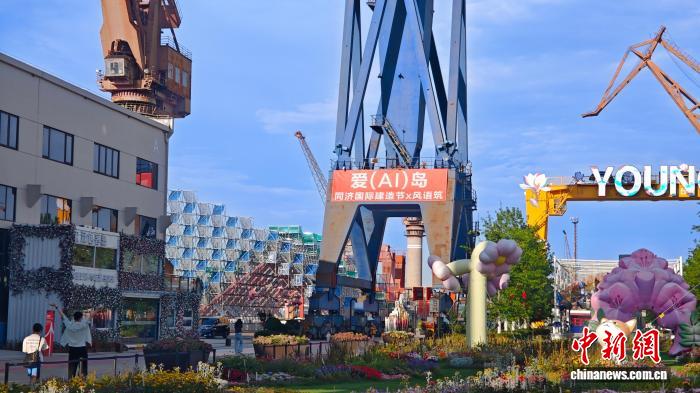
From June 6 to 7, the 2026 Tongji University International Construction Festival and “Fengyuzhu” Innovative Architectural Design and Construction Competition took place on Shanghai’s Fuxing Island, the Global Maker Island. Inside the old factory buildings at the Huangpu River dock, 33 works were built from scratch, arranged in a row, forming a temporary miniature human habitat city.
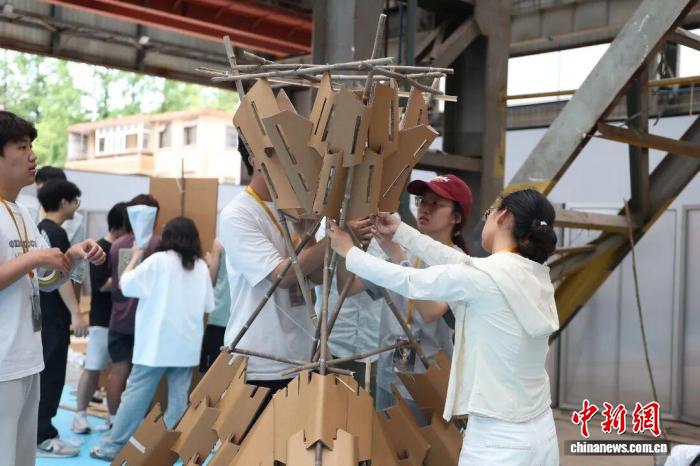
This was the first time in 18 years that the event was held outside the Tongji University campus. A total of 33 teams and 231 students and faculty from home and abroad participated, including 10 Tongji University teams, 18 teams from domestic architecture schools, 5 teams from European, American, and Asian international institutions, and a first-time international high school team. Centered on the theme “The Home You Define,” they used cardboard and bamboo poles to build their vision of “home” in the AI era within a limited space of 4 meters by 3 meters, completing the construction in 10 hours.
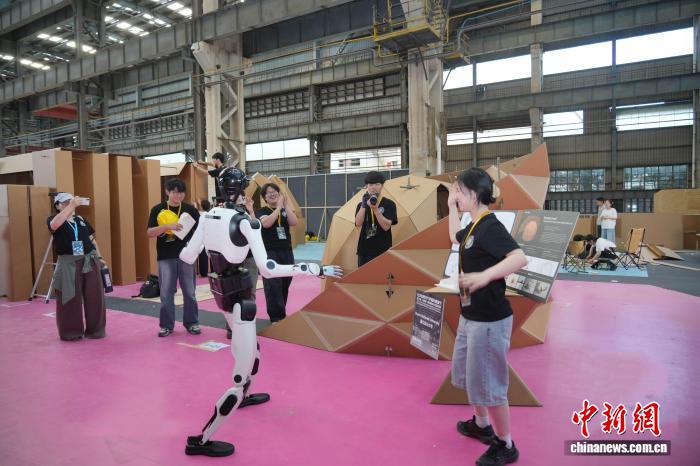
Over 200 Chinese and international students used cardboard and bamboo poles to interpret the theme “The Home You Define” in a century-old industrial space.
The theme of this year’s competition, “The Home You Define,” breaks away from traditional residential frameworks, looking back at ancestral homes and memory spaces while envisioning future living empowered by AI technology. It also incorporates natural biological nests into the creative scope, guiding participants to break conventional thinking and explore the diverse, changeable, and iterative contemporary meaning of “home.” The dock cranes and old factory buildings along the Huangpu River complemented the creative theme, creating a cross-temporal dialogue between the century-old industrial space and new-generation architectural concepts.
Scene at the construction festival.
The jury included heads of top domestic architecture schools, foreign professors, frontline architects, and experts from design institutes, who evaluated the works comprehensively based on material use, spatial creation, and theme expression. A total of 18 awards were set. All construction materials were fully recyclable, achieving zero construction waste throughout the process, in line with low-carbon green building principles.
From June 7 to June 30, all installations are open to the public for free, breaking the niche barriers of architecture and promoting architectural aesthetic education to the public.
This event was hosted by the College of Architecture and Urban Planning at Tongji University, co-hosted by Fengyuzhu, and supported by the Architects Association of Asia and others.
Shanghai’s Fuxing Island
Fuxing Island, located in the Huangpu River in Shanghai, is a small, tranquil island with a history dating back to the early 20th century when it was developed as a summer resort and recreation area for foreign expatriates. It features well-preserved European-style villas, gardens, and tree-lined avenues, offering a peaceful escape from the city’s urban bustle. Today, the island is a public park and cultural site, known for its scenic walking paths and historical architecture that reflect Shanghai’s colonial past.
Global Maker Island
Global Maker Island is a visionary concept for a self-sustaining
<
Tongji University
Tongji University, located in Shanghai, China, is a prestigious institution founded in 1907 by German doctor Erich Paulun. Originally named the German Medical School, it later expanded to include engineering and other disciplines, playing a key role in Sino-German academic exchange. Today, it is renowned for its strengths in architecture, engineering, and urban planning, and is consistently ranked among China’s top universities.
Fuxing Island
Fuxing Island, located in the Yangtze River near Shanghai, China, is known for its rich industrial history, having once hosted a major shipbuilding yard during the 20th century. In recent years, the island has been redeveloped into a cultural and creative hub, featuring art galleries, studios, and public parks that blend its industrial past with modern urban renewal. It now serves as a symbol of Shanghai’s transition from heavy industry to a center for innovation and culture.
Global Maker Island
Global Maker Island is a concept, not a physical location, representing a future-focused hub for innovation, design, and manufacturing. It envisions a community where creators, engineers, and entrepreneurs collaborate to turn ideas into tangible products using advanced technologies like 3D printing and robotics. While it doesn’t have a traditional history, it symbolizes the modern maker movement’s shift toward decentralized, open-source production and global collaboration.
Huangpu River
The Huangpu River is a 113-kilometer-long waterway flowing through Shanghai, serving as a vital artery for the city’s commerce and culture. Historically, it played a key role in Shanghai’s development as a major port during the 19th and 20th centuries, with its banks lined with iconic landmarks like the Bund and Pudong’s modern skyline. Today, it remains a symbol of Shanghai’s blend of historical heritage and rapid modernization.
Fengyuzhu
Fengyuzhu is a leading Chinese cultural and creative technology company, founded in Shanghai and known for its innovative use of digital media to create immersive, high-tech exhibitions and experiences. The company specializes in blending art, technology, and cultural heritage, often producing large-scale interactive shows for museums, theme parks, and public spaces. Through projects like the “Meet You” exhibition series, Fengyuzhu has gained recognition for transforming traditional storytelling with cutting-edge visual effects and multimedia installations.
College of Architecture and Urban Planning at Tongji University
The College of Architecture and Urban Planning at Tongji University in Shanghai is one of China’s most prestigious and influential schools in its field. Founded in 1952, it originated from the merger of several prominent architectural programs, and has since played a key role in shaping modern Chinese urban design and architectural education. The college is renowned for its innovative research, international collaborations, and its historic campus buildings that reflect a blend of Chinese and Western architectural styles.
Architects Association of Asia
The Architects Association of Asia (AAA) is a professional organization established to promote architectural excellence, collaboration, and sustainable development across the Asian continent. Founded in the mid-20th century, it serves as a unifying body for national architectural institutes, facilitating knowledge exchange and setting regional standards. The association plays a key role in addressing urban challenges and preserving cultural heritage through its conferences, awards, and advocacy efforts.