Four Thematic Exhibitions at Haidian Three Hills and Five Gardens Cultural Arts Center to Open on March 25
Culture and technology are converging! As the 2026 Zhongguancun Forum Annual Conference approaches, the Haidian Three Hills and Five Gardens Cultural and Arts Center will launch four major thematic exhibitions. These exhibitions include a physical exhibition tracing the development of civilization, a digital exhibition bringing cultural relics to life, and an experiential exhibition blending digital technology with art. The four thematic exhibitions will open to the public starting March 25.
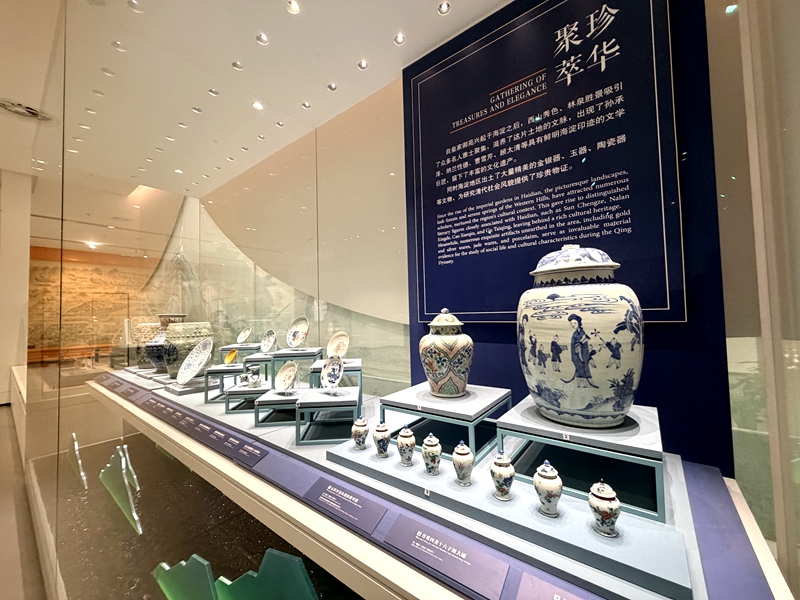
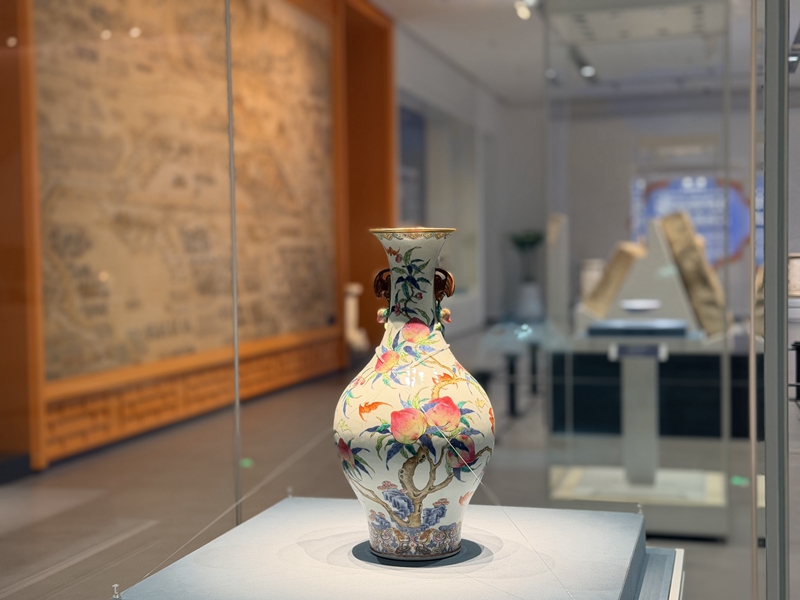
The permanent exhibition “Mountains, Waters, and the Connected City — Haidian Historical Cultural Relics Exhibition” focuses on artifacts unearthed in Haidian District, using the area’s unique landscape as a narrative thread. It systematically presents the development of civilization and multicultural integration in Haidian from the Neolithic Age to the Qing Dynasty through four sections. The exhibition features over 300 artifacts, including the first-class collection piece, the Tang Dynasty mural “Peonies and Wild Geese.” It integrates modern technological methods such as multimedia displays, MR immersive experiences, and AI digital guide avatars, offering a multi-dimensional interpretation of Haidian’s unique regional character—inclusive, grand, and innovative—from historical treasures to digital experiences.
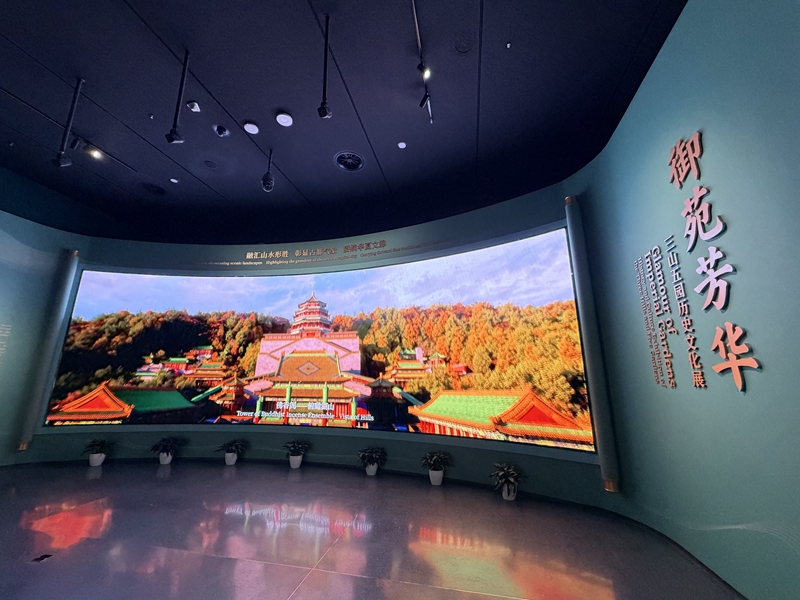
The long-term exhibition “Splendor of the Imperial Gardens — The Three Hills and Five Gardens Historical Culture Exhibition” systematically outlines the development of the Three Hills and Five Gardens, explaining their individual characteristics, functions, and underlying garden philosophies. It recounts the historical stories and profound cultural charm associated with them, showcasing their rebirth after two devastations, their transformation from imperial enclaves into public cultural spaces, and their global influence. Through cultural relics, multimedia displays, and digital assets, the exhibition achieves new heights in multiple dimensions, including academic depth, artistic effect, and technological empowerment, spanning cultural heritage protection, academic research, artifact display, and technological achievements.
The “Asia Digital Art Exhibition,” themed “The Human Use of Human Beings,” brings together over twenty digital art pieces from six countries and regions. Focusing on the transformation of human value and roles against the backdrop of artificial intelligence development, the exhibition presents visions of human-machine collaboration and future society through various forms such as brain-computer interfaces, visual imagery, interactive installations, AI systems, and mechanical devices. This exhibition will run until August 16 this year.
“Magnificent Vistas — An Immersive Experience of Grotto Art” focuses on five classic grottoes along the Silk Road, including the Kizil Caves and the Mogao Caves at Dunhuang. Supported by technologies like digital modeling and AI algorithms, it creates immersive imagery for contemporary artistic reinterpretation of grotto murals, statues, and stone inscriptions. The fusion of digital imagery and physical exhibits vividly presents each grotto’s unique artistic style and the essence of civilizational exchange, bringing cultural heritage to life. This exhibition aims to pass on grotto art and promote the creative transformation of China’s outstanding traditional culture. It will run until May 15.
Haidian Three Hills and Five Gardens Cultural and Arts Center
The Haidian Three Hills and Five Gardens Cultural and Arts Center is a modern cultural institution located in Beijing’s Haidian District, an area historically renowned as the site of the “Three Hills and Five Gardens”—a collection of Qing Dynasty imperial gardens and palaces. The center itself is a contemporary venue built to promote arts and culture, drawing inspiration from the region’s profound historical legacy as a former summer retreat for Chinese emperors. It serves as a hub for exhibitions, performances, and cultural exchange, connecting the area’s prestigious past with present-day artistic expression.
Zhongguancun Forum Annual Conference
The Zhongguancun Forum Annual Conference is a major international gathering held in Beijing’s Zhongguancun area—often called China’s “Silicon Valley”—to promote global scientific and technological innovation and cooperation. Established in 2007, the forum reflects China’s focus on advancing high-tech industries and has become a key platform for policymakers, scientists, and entrepreneurs to discuss cutting-edge trends and policies. It highlights both the historical transformation of Zhongguancun from an electronics market to a leading innovation hub and China’s contemporary drive in science and technology.
Mountains, Waters, and the Connected City — Haidian Historical Cultural Relics Exhibition
“Haidian Historical Cultural Relics Exhibition” showcases the rich cultural heritage of Beijing’s Haidian District, highlighting its historical integration of natural landscapes (“mountains and waters”) with scholarly and imperial institutions. The exhibition traces the area’s development from ancient times, emphasizing its role as a hub for classical gardens, prestigious academies, and later, modern universities and technological innovation. It presents how this unique environment fostered a continuous connection between nature, culture, and urban life throughout Chinese history.
Tang Dynasty mural “Peonies and Wild Geese”
The “Peonies and Wild Geese” is a celebrated mural from the Tang Dynasty (618-907 AD), discovered in the tomb of Princess Yongtai near Xi’an. It exemplifies the era’s artistic mastery, using vibrant mineral pigments to symbolize prosperity (peonies) and scholarly virtue (wild geese) within the aristocratic burial tradition. This artwork provides a direct window into the sophisticated aesthetics and spiritual beliefs of Tang elite culture.
Splendor of the Imperial Gardens — The Three Hills and Five Gardens Historical Culture Exhibition
“Splendor of the Imperial Gardens” is a cultural exhibition in Beijing focusing on the historic “Three Hills and Five Gardens,” a vast complex of imperial palaces and landscaped gardens built during the Qing Dynasty (18th-19th centuries). It showcases the area’s role as a political and cultural center outside the Forbidden City, highlighting its exquisite architecture and garden design. The exhibition also details its extensive damage during the 19th and 20th centuries and ongoing preservation efforts.
Three Hills and Five Gardens
“Three Hills and Five Gardens” (三山五园) refers to a historic ensemble of imperial gardens and palaces in the western suburbs of Beijing, China. Constructed primarily during the Qing Dynasty (18th-19th centuries), it served as a summer retreat and administrative center for emperors, blending classical Chinese garden design with grand architecture. The complex was severely damaged during the Second Opium War (1860) but several restored gardens, like the Summer Palace, remain major cultural landmarks today.
Kizil Caves
The Kizil Caves are a complex of Buddhist rock-cut cave temples located near Kucha on the ancient Silk Road in Xinjiang, China. Dating from the 3rd to 8th centuries CE, they are the earliest major Buddhist cave complex in China and feature a unique blend of Indian, Central Asian, and Iranian artistic influences in their famed wall paintings. Their history reflects the region’s role as a crucial crossroads for the transmission of Buddhism from India to East Asia.
Mogao Caves at Dunhuang
The Mogao Caves at Dunhuang are a UNESCO World Heritage site comprising hundreds of Buddhist cave temples carved into a cliff face along the ancient Silk Road. Their construction began in the 4th century AD and continued for over a millennium, serving as a major religious, cultural, and artistic hub. The caves are renowned for their exquisite murals, sculptures, and manuscripts, which provide an unparalleled historical record of medieval Central Asian life and Buddhist art.