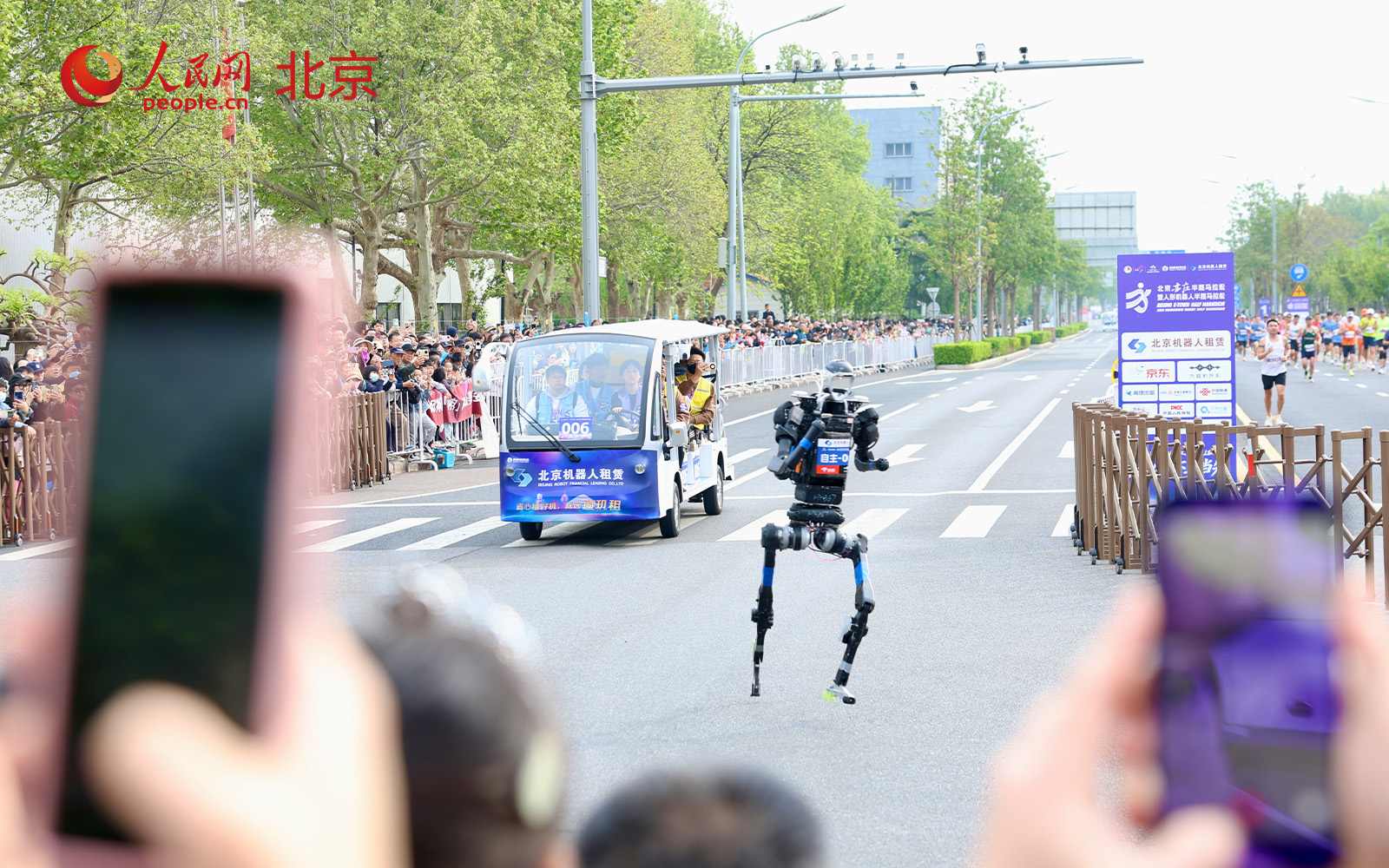
On April 19, the 2026 Beijing Yizhuang Half Marathon and Humanoid Robot Half Marathon was held in the Beijing Economic-Technological Development Area, with over 100 humanoid robot teams and 12,000 runners participating together. This edition marked the first large-scale application of autonomous navigation technology for humanoid robots, expanding the competition from testing movement capabilities to evaluating comprehensive technical abilities such as perception, decision-making, control, and endurance.
The 2026 Beijing Yizhuang Half Marathon and Humanoid Robot Half Marathon was held in the Beijing Economic-Technological Development Area.
At 7:30 a.m., the humanoid robots and runners started simultaneously, with the robots starting one by one at 30-second intervals. The scale of this event expanded nearly five times compared to the previous edition, with participants including companies, universities, and research institutes, as well as teams from Germany, France, Portugal, Brazil, and other countries. Autonomous navigation and remote control were the two main technical types in this competition, with autonomous navigation accounting for nearly 40% of entries.
After the competition, the “Flash” robot from the Great Sage team won the championship, while the Thunder Lightning team and the Spark Fire team took second and third place, respectively. In addition to speed awards, the event also set up completion awards, best endurance awards, best gait control awards, and best design awards to evaluate key technical directions such as energy management, gait control, and structural optimization.
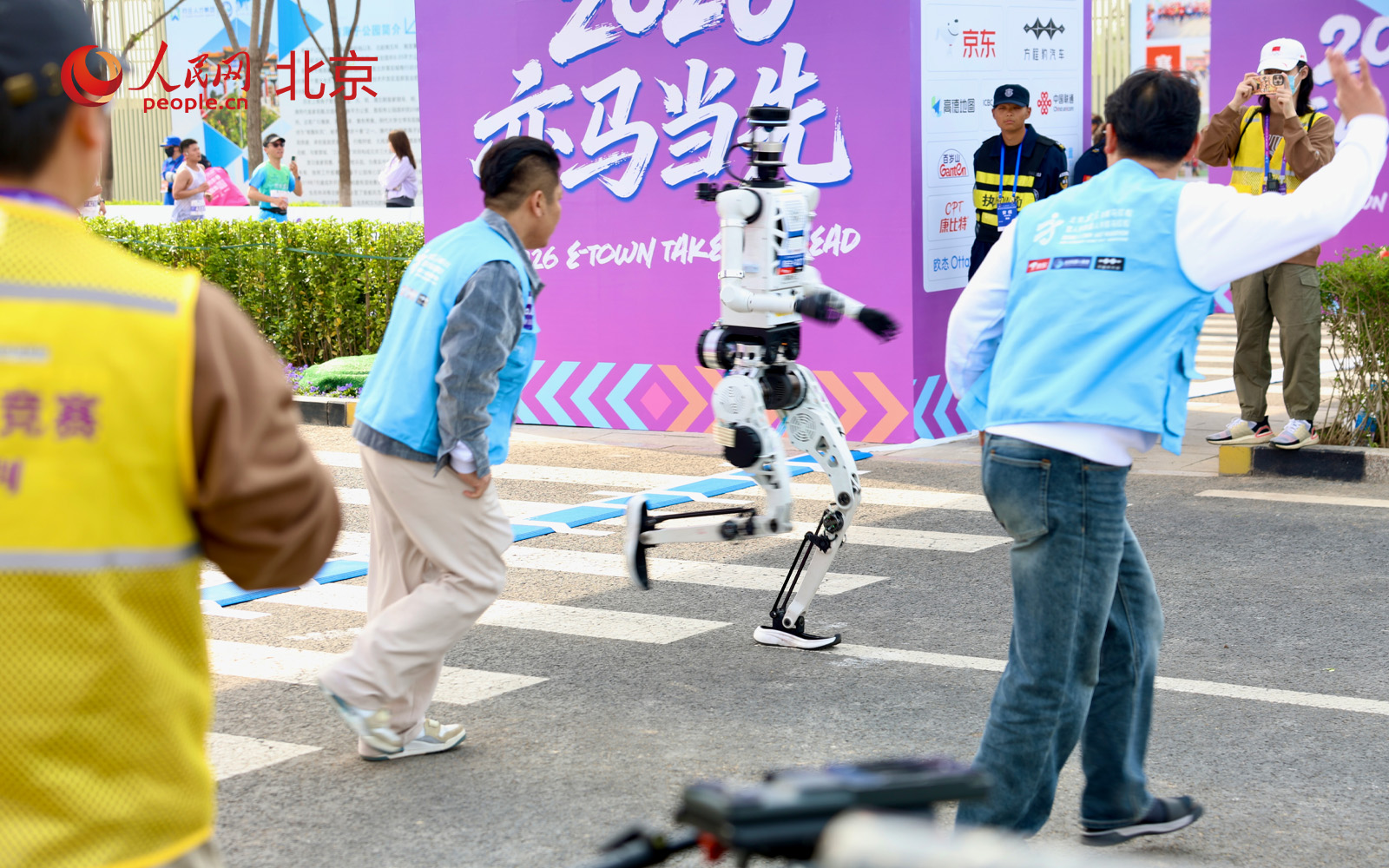
The 2026 Beijing Yizhuang Half Marathon and Humanoid Robot Half Marathon was held in the Beijing Economic-Technological Development Area.
Compared to the previous edition, this year’s event further emphasized autonomous orientation in its design. The autonomous navigation group and the remote control group competed together and were ranked uniformly, with the remote control group’s net time multiplied by a factor of 1.2, while the autonomous navigation group was limited to only four human-intervention scenarios. This rule setting shifted the focus from simply competing on speed to highlighting key capabilities such as autonomous navigation, environmental perception, and system coordination.
An engineer from Honor Terminal Co., Ltd. explained that the marathon track, with its long distance, open environment, and extended continuous operation, provides a testing environment close to real-world scenarios for humanoid robots. Capabilities such as motion control, autonomous navigation, endurance and heat dissipation, environmental adaptation, and system reliability can all be rigorously tested during the competition. Such events serve both as a showcase platform and a technical verification platform.
A relevant official from the Beijing Economic-Technological Development Area stated that the goal of hosting the competition is to promote the integration of technical verification, industrial collaboration, scenario implementation, and commercial application. The first edition in 2025 pushed the robot industry from technical verification to scenario implementation. In 2026, the event was further upgraded to build an innovation chain of “technical verification—industrial collaboration—scenario implementation—commercial empowerment.” The concurrently launched “Robot Warrior Challenge” focuses on emergency rescue and other directions, further expanding real-world application verification scenarios.
As the host location, Beijing Yizhuang has been continuously developing the embodied intelligence and robot industry in recent years. It has introduced special support policies, built developer communities, pilot platforms, and super factories, gathered over 300 embodied intelligence ecosystem companies, formed an industrial chain covering core components, complete machine manufacturing, system integration, and scenario solutions, and opened application scenarios in areas such as high-end manufacturing, medical care and elderly care, hotels and shopping malls, and landscaping and water services.
From “can it run” to “can it run autonomously,” the changes in the competition reflect shifts in humanoid robot technology routes and industry priorities. As testing scenarios become more open and evaluation standards become more comprehensive, the humanoid robot industry is accelerating its transition from laboratory verification to practical application.