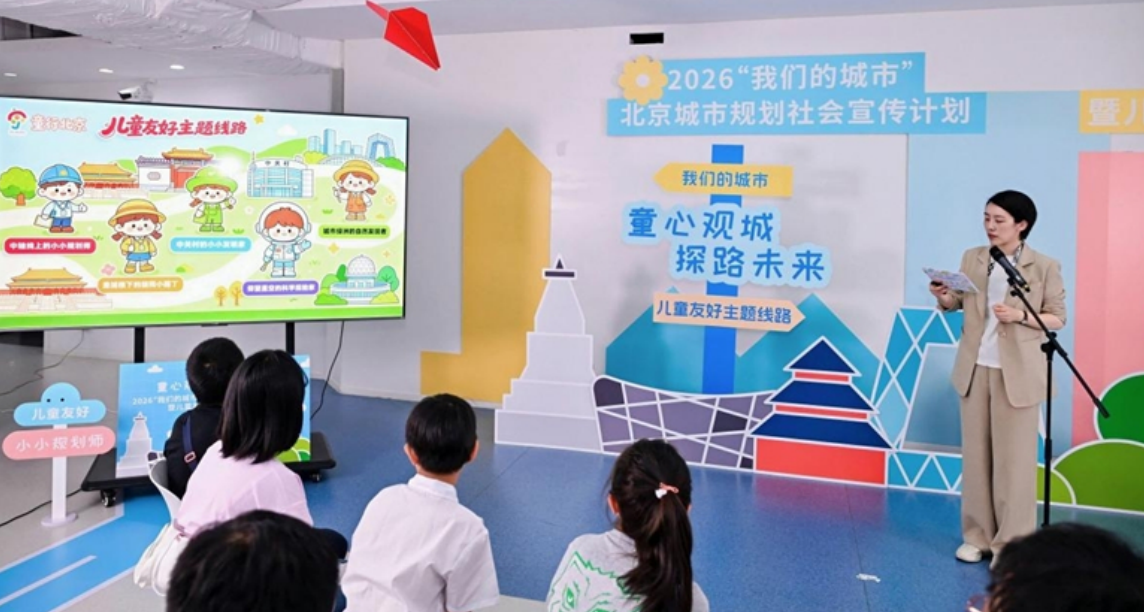
“Children’s Heart View of the City, Explore the Road to the Future — 2026 ‘Our City’ Beijing Urban Planning Social Promotion Plan and Child-Friendly Theme Route Release Conference” was held at the Beijing Planning Exhibition Hall, releasing 10 “Beijing Child-Friendly Theme Routes.”
The theme routes focus on cultural heritage, technological exploration, natural ecology, book reading, red education, sports and health, and rural pastoral themes, creating child-friendly scenes suitable for parent-child interaction and urban experience. Next, districts will also create district-level child-friendly theme routes, ultimately forming the “Beijing Child-Friendly Theme Route Exploration Guide” for release across the city.
The Chief Planner of the Beijing Municipal Commission of Planning and Natural Resources and President of the Beijing Urban Planning and Design Research Institute stated that since the commission launched the “Our City” urban planning promotion plan in 2019, the project has relied on the implementation of the overall urban plan, integrated the concept of child-friendly city construction, and combined professional forces, social co-creation resources, and physical spaces, gradually forming a work path of “empowering growth and empowering participation.” This year, Beijing enters a new stage of comprehensively promoting the construction of child-friendly cities, and in the future, it looks forward to joining hands with more social forces to help children participate in the planning and governance of the capital.
The Vice President of the Beijing Women’s Federation stated that Beijing regards child-friendly construction as an important benchmark for high-quality urban development and children’s participation as a vibrant force in urban governance. The release of child-friendly theme routes has positive significance for practicing the child-friendly concept, deepening the friendly city foundation, empowering children to participate in urban governance, and improving the governance structure of co-construction, co-governance, and sharing. It is hoped that children will observe the city with their eyes, discover beauty with their hearts, and suggest for the future with their childlike curiosity; it is also hoped that all sectors will work together to integrate the child-friendly concept throughout the entire process of planning, construction, and governance.
At the conference site, two groups of child representatives shared their field exploration experiences of the child-friendly theme routes, telling from a child’s perspective what they gained during their walks. The Deputy Dean of the School of Architecture at the Central Academy of Fine Arts and students from Beijing No.1 Experimental Primary School discussed the old city streets and the rebirth of the ancient capital. The children followed the theme routes into historical streets, cultural relics, alley micro-gardens, and daily life scenes, understanding urban memory through red footprints, experiencing spatial changes in old city renewal, reading Beijing’s warmth in everyday life, and discovering the close connection between urban planning and life during their walks.
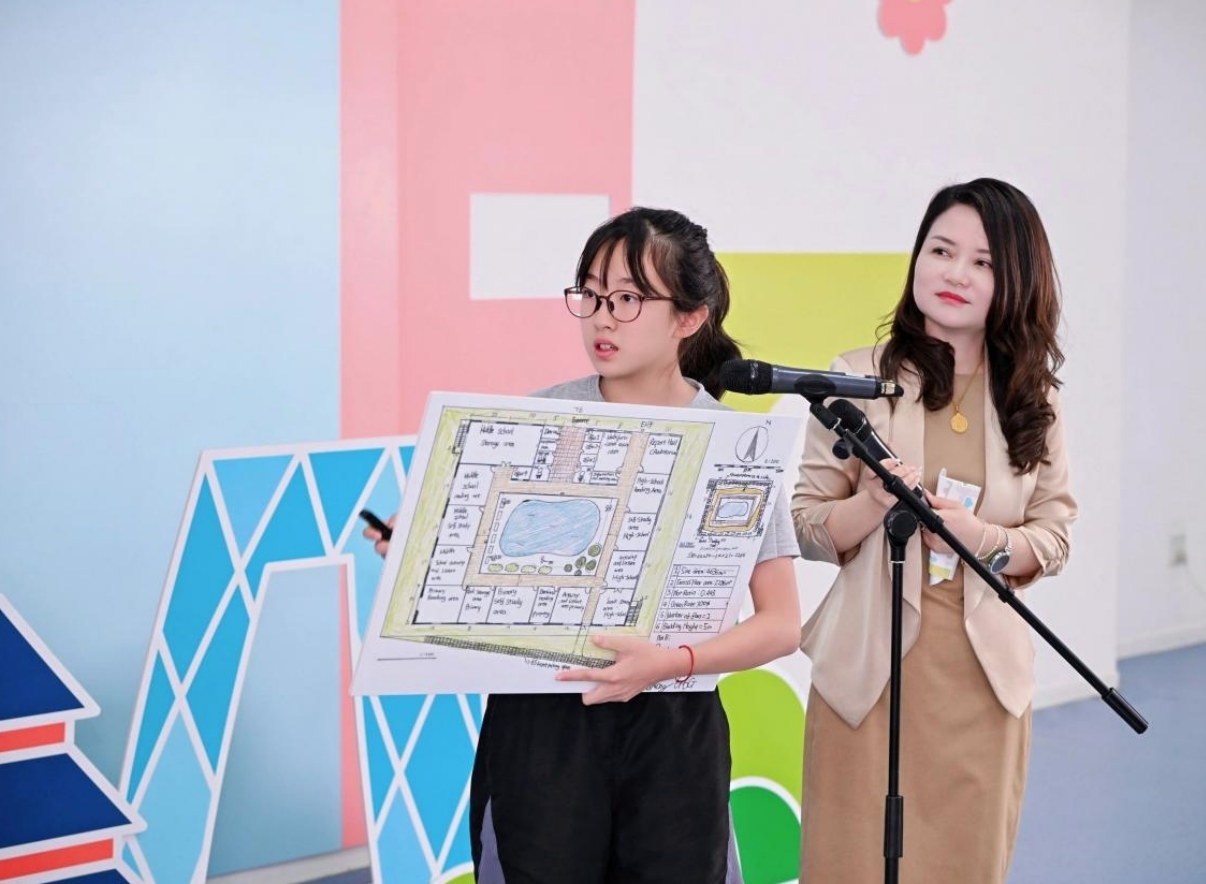
An Associate Professor at the School of Architecture and Urban Planning of Beijing University of Technology and a child advisor from Dashilan discussed alley walks and spatial creativity. The children observed alley textures, courtyard layouts, and neighborhood life in the Dashilan area, gained design inspiration from real urban spaces, and transformed their exploration experiences into design expressions of “courtyard-style libraries,” extending planning education from urban cognition to creative practice.
“Our City” collaborated with social co-creation partners to release 22 series of science popularization activities for 2026, focusing on four themes: urban exploration, urban history, urban architecture, and natural humanities, with many highlights.
Urban exploration activities rely on child-friendly theme routes, leading children into real neighborhoods to experience the vivid practice of urban planning and construction, and to contribute ideas for the construction of child-friendly cities; urban history activities focus on world heritage and Beijing’s cultural context, guiding children to understand urban history and enhance cultural confidence; urban architecture activities focus on traditional ancient buildings, architectural structures, and community spaces, cultivating children’s spatial awareness and planning consciousness; natural humanities activities start from urban green spaces, biodiversity, and historical cultural resources, helping children understand Beijing’s ecological foundation and humanistic value.
At the event, the “Stories of the City I Most Want to Know” — the theme direction for the “Our City” column in “Youth Science Illustrated” was released, along with the launch of the online interview program “Our City · Planning Talk.” Children wrote down topics they care about and city stories they most want to know on cards or provided feedback through an online mini-program. These real interests and concerns of the children will further be transformed into column topics, interview themes, and communication content, gradually forming a mechanism of “topic collection — content co-creation — continuous dissemination.”</