———“Ecological Ledger” Green Stories
|
Saihanba National Nature Reserve. ” data-toggle=”tooltip” src=”https://asiacity.news/wp-content/uploads/2026/06/49e3882e-44b4-4557-9138-bbe5b0ece84f.jpg”> |
|
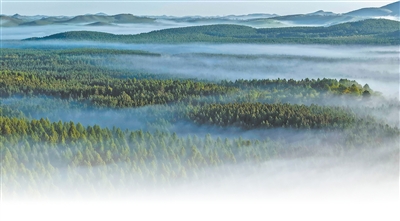
Saihanba National Nature Reserve. |
|
Image ① ” data-toggle=”tooltip” src=”https://asiacity.news/wp-content/uploads/2026/06/1aee554e-a283-4e5b-99b7-c74322df5f31.jpg”> |
|
Image ② ” data-toggle=”tooltip” src=”https://asiacity.news/wp-content/uploads/2026/06/2bff99a7-25c7-4487-9cf8-09b4fae625d1.jpg”> |
|
Image ③ ” data-toggle=”tooltip” src=”https://asiacity.news/wp-content/uploads/2026/06/9701492b-2fc7-4ce0-af7f-f6279f40f115.jpg”> |
|
Data sources: Ministry of Natural Resources, Ministry of Ecology and Environment, National Forestry and Grassland Administration, etc. ” data-toggle=”tooltip” src=”https://asiacity.news/wp-content/uploads/2026/06/847389d0-4b17-4e20-97a9-04cd9040f7f5.jpg”> |
June 5 is World Environment Day. This year, China’s theme for the day is “Comprehensive Green Transformation, Building a Beautiful China Together.” Across the vast landscape, comprehensive green transformation is advancing deeply and taking effect, with the whole nation participating and working together to build a beautiful China. This special report looks at how various regions, based on the present and with an eye on the long term, are accelerating comprehensive green transformation, pooling their efforts through small actions to build a beautiful China.
— Editor
Niwan Village, Longhu Mountain Scenic Area, Yingtan City, Jiangxi Province
An “Mountain Forest Ledger”: Developing the Understory Economy
In the Longhu Mountain Scenic Area of Yingtan, Jiangxi, the Luxi River winds its way. At the village committee meeting room in Niwan Village, Shangqing Town, the village’s two committees were holding a meeting with lively discussions. Kong Songhua, deputy secretary of the village party branch and a forest ranger, opened his notebook and jotted down the discussion points: strengthen protection of new bamboo shoots; with the current rainy season, monitor the growth of understory medicinal herbs…
This “mountain forest ledger” has been kept by Niwan Village for 15 notebooks (see Image ①), documenting the transformation since 1995.
In the 1980s and 1990s, the village had over 20,000 mu of mountain forests. “Back then, everyone was cutting trees to sell. A family could easily earn over a hundred yuan a day,” said Kong Songhua. The village set up a timber processing plant. Gradually, the trees dwindled, the forests thinned, and looking at the bare mountain slopes, everyone woke up as if from a dream.
Opening a red notebook, page twelve records an entry from February 27, 1997—the first village meeting after the Lunar New Year, with agenda item 8 being “Strengthening the management of closing hillsides for afforestation.”
In 2000, the state fully launched the Natural Forest Protection Project, and Niwan Village closed all its mountains for afforestation. The notebook records that at an expanded meeting, Kong Fanyin, former secretary of the village party branch, told the villagers present, “We won’t sell trees anymore. We need to find a new path.”
On