The remains of the 13th batch of Chinese People’s Volunteers martyrs in South Korea will return to China tomorrow.
A delegation formed by relevant departments departed for South Korea on April 19 to carry out the repatriation of the remains of Chinese People’s Volunteers soldiers who died in the Korean War. On April 22, they will escort the 13th batch of 12 remains and related artifacts back to China.
Since 2014, China and South Korea, following international law and humanitarian principles, have successfully handed over 12 batches of remains, totaling 1,011 soldiers, along with related artifacts.
Y-20B Makes First Trip to South Korea to Bring Back Volunteer Heroes
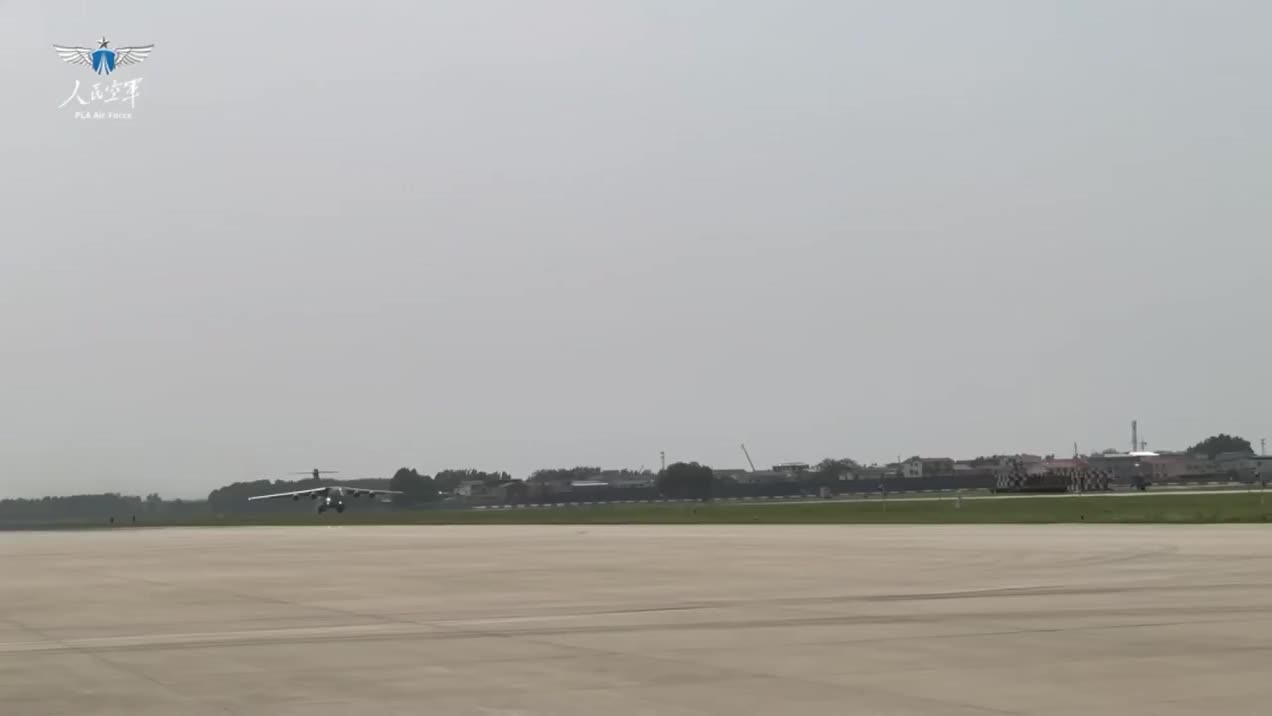
At around 1:00 PM on April 20, a Chinese Air Force Y-20B large military transport aircraft took off from an airport in central China, heading to South Korea for the sacred mission of bringing back the 13th batch of volunteer soldiers’ remains. This marks the first time the Y-20B has been used for such a mission. Developed from the Y-20A, the Y-20B is equipped with new domestically produced engines, offering longer range, greater payload capacity, and higher speed. After the Y-20B enters Chinese airspace on its return, the Chinese Air Force will dispatch four J-20 fighter jets to escort it.
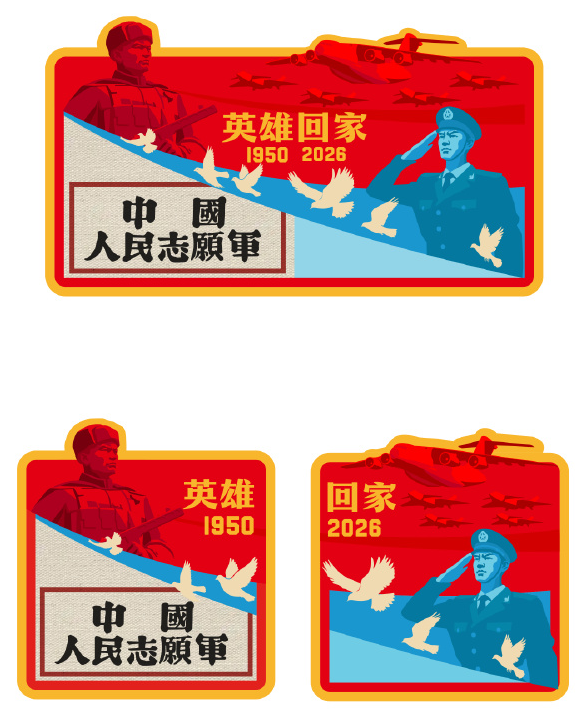
Air Force Releases Mission Emblem
The emblem for the 13th batch of volunteer soldiers’ remains repatriation mission features a sculpture of a volunteer soldier, a Chinese People’s Volunteers chest badge, a formation of a Y-20B and four J-20s, modern soldiers, and peace doves. It includes the phrases “Heroes 1950” and “Coming Home 2026,” symbolizing the return of heroes and the continuation of heritage, expressing heartfelt remembrance of history and respect for the fallen.
Sculpture of a volunteer soldier
The “Sculpture of a Volunteer Soldier” is a significant monument found in various locations, most notably in China and South Korea, commemorating civilians who took up arms during times of war. In China, it often honors the volunteer soldiers who fought in the Korean War (1950–1953), symbolizing patriotism and sacrifice. In South Korea, similar statues remember the civilian soldiers who defended their homeland during the Korean War, serving as a poignant reminder of the nation’s struggle and resilience.
Chinese People’s Volunteers chest badge
The Chinese People’s Volunteers chest badge was a military insignia worn by Chinese soldiers who fought in the Korean War (1950-1953) under the name “Chinese People’s Volunteers” (CPV). It served as a symbolic identifier, distinguishing these troops from regular People’s Liberation Army forces while emphasizing their voluntary mission to support North Korea. The badge remains a historic emblem of China’s involvement in the conflict and is now a collectible artifact representing that era.
Y-20B
The Y-20B is an advanced variant of China’s Y-20 “Kunpeng” heavy transport aircraft, developed by Xi’an Aircraft Industrial Corporation. Building on the original Y-20, which first flew in 2013 and entered service in 2016, the Y-20B features upgraded WS-20 turbofan engines for improved payload capacity and range. This modernization enhances China’s strategic airlift capabilities, supporting military logistics and humanitarian missions.
J-20
The Chengdu J-20 is a stealth, fifth-generation fighter aircraft developed by China’s Chengdu Aerospace Corporation, which first flew in 2011 and entered service with the People’s Liberation Army Air Force around 2017. It represents a major milestone in China’s military aviation, designed for air superiority with advanced avionics, supercruise capability, and low radar observability. The J-20’s development reflects China’s strategic shift toward modern, indigenous combat aircraft to challenge rivals like the U.S. F-22 and F-35.