
1/5
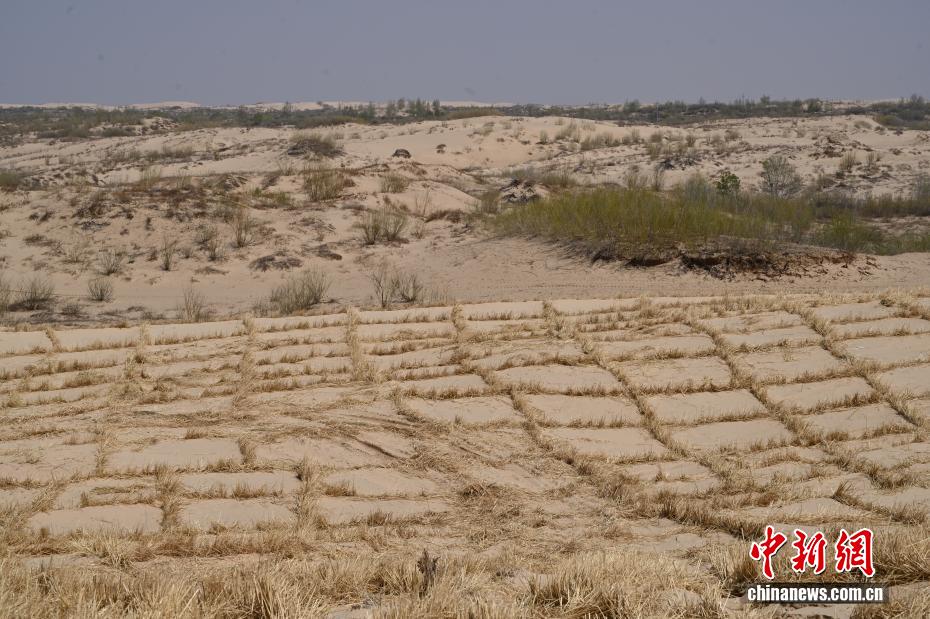
On April 23, within the comprehensive management project area of the Horqin Sandy Land in Guanghui Village, Weiliansu Township, Naiman Banner, Tongliao City, Inner Mongolia, continuous straw checkerboard barriers were laid across the desert. This project is located in the core area of the Horqin Sandy Land. The straw checkerboards are 3 meters in length and width, constructed from straw, with two Caragana seedlings planted in each grid. It is reported that the Horqin Sandy Land is the largest sandy land in China. In recent years, with sustained comprehensive management, the overall trend of the sandy land has been “expanding greenery and retreating sand.”
Horqin Sandy Land
Horqin Sandy Land, located in northeastern China’s Inner Mongolia region, is one of the country’s largest sandy areas, historically formed by desertification due to overgrazing and climate change. Once part of the vast Mongol grasslands, it has been the focus of large-scale ecological restoration projects since the late 20th century, including tree planting and grazing bans. Today, these efforts have significantly reduced desertification, transforming parts of the area into a model for combating land degradation.
Horqin Sandy Land
Horqin Sandy Land, located in Inner Mongolia, China, is one of the country’s largest sandy areas, formed largely due to historical overgrazing and deforestation. Once a fertile grassland, it began desertifying over centuries, accelerating in the 20th century. Today, it is a site of major ecological restoration efforts, including afforestation projects aimed at combating desertification.
Guanghui Village
Guanghui Village, located in Zhejiang Province, China, is a historic settlement known for its well-preserved Ming and Qing dynasty architecture. The village features traditional white-walled, grey-tiled homes, intricate wood carvings, and ancestral halls that reflect the region’s cultural heritage. Its history dates back over 700 years, with the village originally established by the descendants of a Song dynasty official.
Weiliansu Township
Weiliansu Township is a rural administrative division in China, known for its agricultural roots and traditional village life. Historically, the area has been shaped by centuries of farming practices and local cultural customs, though specific records of its early development are limited. Today, it represents a typical example of China’s evolving countryside, balancing heritage with modernization.
Naiman Banner
Naiman Banner is a county-level administrative division in Inner Mongolia, China, known for its rich Mongolian cultural heritage and history. Historically, it was part of the territory of the Naiman tribe, a Mongol group that played a role in the region’s pastoral and nomadic traditions. Today, it is recognized for its grasslands, agricultural activities, and efforts to preserve traditional Mongolian customs.
Tongliao City
Tongliao City, located in the Inner Mongolia Autonomous Region of China, is known as the “Hometown of the Horqin Prairie” and serves as a cultural and economic hub for the region. Historically, it was a key area for the Mongol tribes
Horqin Sandy Land
Horqin Sandy Land, located in Inner Mongolia, China, is one of the country’s largest sandy areas, covering about 50,000 square kilometers. Historically, it was once a fertile grassland and pasture for nomadic tribes, but over centuries of overgrazing, deforestation, and climate change, it became a degraded desertified region. In recent decades, large-scale ecological restoration projects have been implemented to combat desertification and restore the land.
Guanghui Village
Guanghui Village, located in the mountainous region of Yongtai County, Fujian Province, China, is a historic settlement renowned for its well-preserved traditional architecture and scenic natural surroundings. Its history dates back over a thousand years to the Tang Dynasty, when it was established by the Huang clan, who built distinctive residential buildings that blend defensive features with local cultural aesthetics. Today, the village is celebrated as a cultural heritage site, offering insight into ancient Chinese rural life and architectural styles.
Weiliansu Township
Weiliansu Township is a rural administrative division located in the Guangxi Zhuang Autonomous Region of China. Its history is closely tied to the region’s agricultural development and the cultural traditions of the Zhuang ethnic minority. The township is known for its scenic countryside and traditional customs, reflecting the enduring heritage of local communities.
Naiman Banner
Naiman Banner is a county-level administrative division in Inner Mongolia, China, historically known as a territory of the Mongol Naiman tribe, which played a significant role in the region’s pastoral culture and history. The area was established as a banner during the Qing Dynasty’s administrative reorganization of Mongolia, and it later became part of the modern Tongliao City. Today, it is known for its grasslands, traditional Mongolian customs, and agricultural activities, including the cultivation of grains and livestock.
Tongliao City
Tongliao City, located in Inner Mongolia, China, is historically significant as a cultural and economic hub for the Mongolian ethnic group. It was originally part of the ancient Mongolian tribal lands and later developed into a key railway junction during the early 20th century under the Qing Dynasty and subsequent periods. Today, it is known for its rich Mongolian heritage, including the Horqin Grassland and traditional festivals that celebrate nomadic culture.
Related news

Apple to introduce another major product in the headphone space: AirPods Studio
AirPods have become one of the best-selling digita...

Highlights of the Service Trade Fair: Gathering Ecosystem Strength to Create a Technology-Driven “Future Life Exhibition”
From September 10th to 14th, 2025, the China Inter...

Xi Jinping Outlines Future Industries at First Collective Study Session of Political Bureau in New Year
Politburo's First Collective Study Session of the ...

A heartfelt word warms the internet as Xinjiang guide Dili shows the transformation of the Tianshan Mountains’ natural barrier into a smooth passage.
Recently, Xinjiang tour guide Dili took Taiwanese ...
In April, the STAR Market saw a hot rally: 47 stocks hit new highs, with the optical communication sector standing out.
Recently, the STAR Market has continued to recover...