The Fourth Chongqing Urban Art Festival | Can New Energy Have the Poetry of Landscapes? Golden Image Award Winner Chu Weimin Shares Photography Insights
New energy facilities with steel bones and iron frames also contain the distant poetic charm of Chinese landscapes? On June 5, World Environment Day, a unique sharing session revealed the “Chinese romantic” style of new energy.
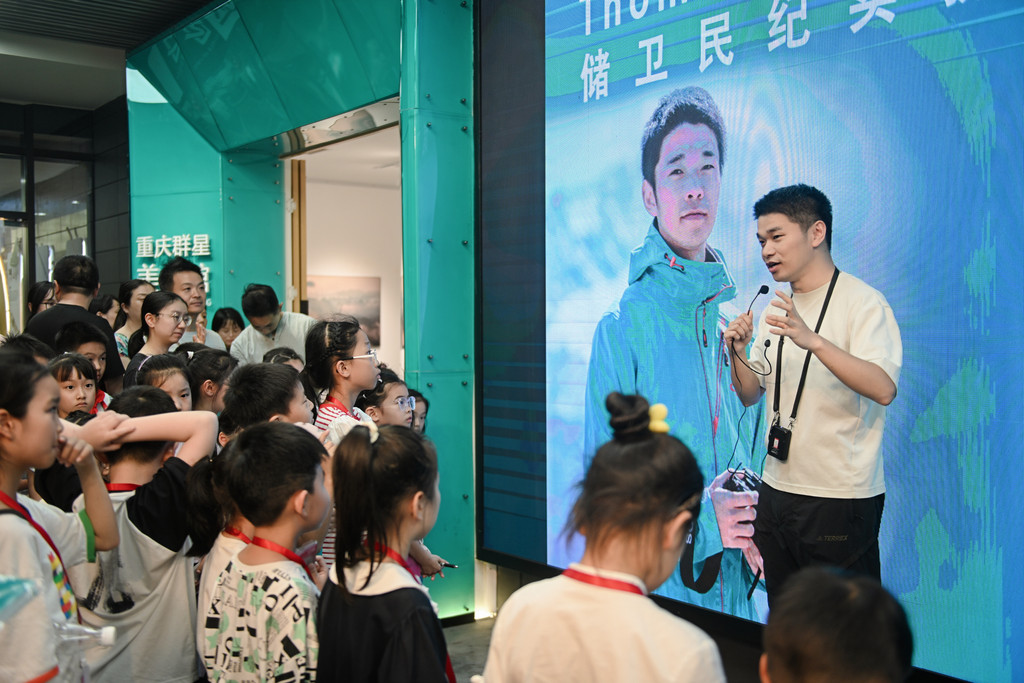
That evening, as part of the “Open June” Fourth Chongqing Urban Art Festival’s “Spark Plan” Youth Art Co-creation Month, a green future image exhibition aesthetic education public lecture—”Thomas Sees the World” Chu Weimin documentary photography sharing session—was held at the Chongqing Mass Art Center’s Qunxing Art Museum.
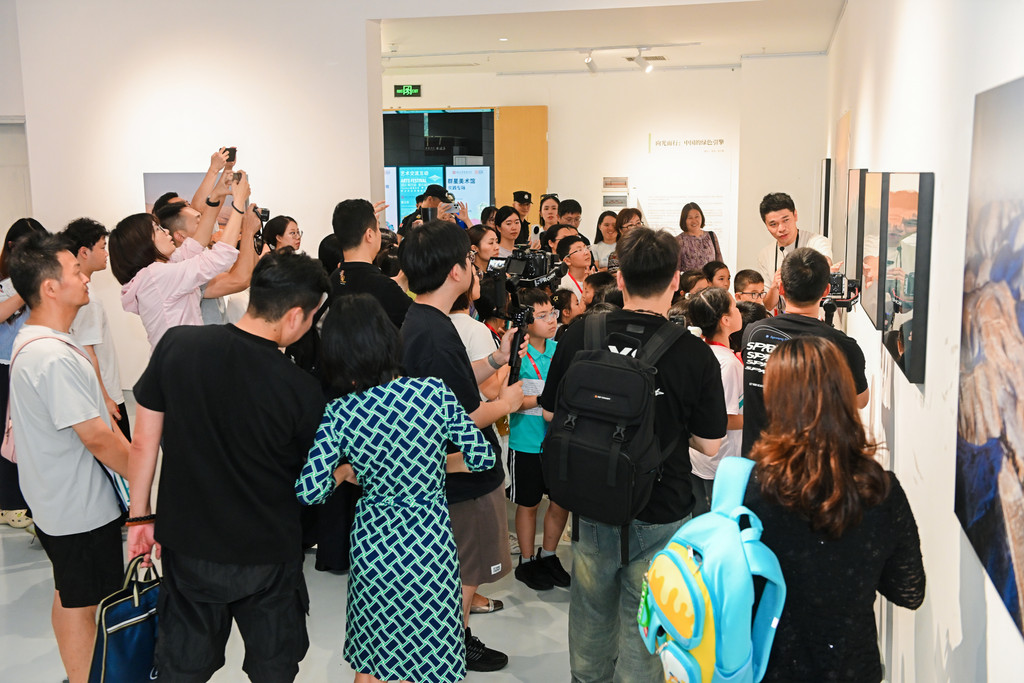
This sharing session broke the boundary between exhibition viewing and lectures, using a walk-and-talk guided tour to bring a new aesthetic education experience. The event specially invited Chongqing-born young photographer Chu Weimin to the “Green Future” Chinese New Energy Transition Image Survey themed photography exhibition. He led children, parents, and photography enthusiasts through the photographic works, deconstructing creative ideas up close, making profound documentary photography accessible to the public, showcasing the open and interconnected artistic atmosphere of the Chongqing Urban Art Festival.
Speaking of Chu Weimin, many photography enthusiasts admire him: a young post-90s engineer turned professional photographer, winner of the 2019 National Geographic Photography Competition global championship, the 2023 World Press Photo Award, the 2024 Hasselblad Masters Award, and the China Photography Golden Award, with his account “Thomas Sees the World” having over 5 million followers across platforms. Since 2020, he has focused his lens on the development trends of the times, deeply exploring the Chinese new energy transition image survey project. Over five years, he traveled across eastern and western regions including Shandong, Jiangsu, Zhejiang, Chongqing, Sichuan, Qinghai, and Xinjiang, using tens of thousands of frames to outline a panoramic view of China’s energy transformation.
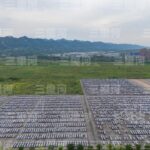
“Do you usually watch cartoons on TV? The TV needs electricity to turn on. Some traditional power generation methods harm Mother Earth, but new energy is more environmentally friendly.” Chu Weimin started by using simple questions to capture the children’s attention. As they entered the exhibition hall, they were surrounded by photographic works with a traditional Chinese painting aesthetic. The audience suddenly realized that in his work, cold photovoltaic panels and spinning wind turbines were no longer industrial facilities that disrupt nature, but new landscapes integrated into the mountains and waters, interpreting the beauty of coexistence between humans and nature.
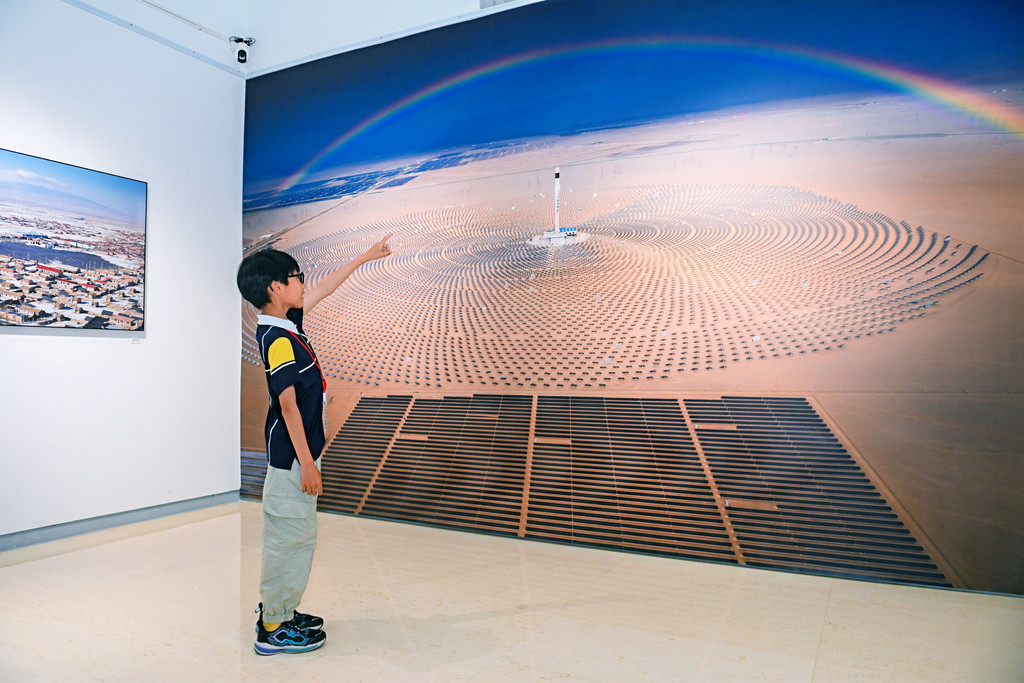
A young visitor appreciating “Rainbow Over the Solar Thermal Power Station”
Audiences of all ages followed Chu Weimin, stopping in front of each work to listen to the stories behind them: “Rainbow Over the Solar Thermal Power Station” was taken at the Gansu Shouhang Hi-Tech Dunhuang 100 MW molten salt tower solar thermal power plant. Chu Weimin had traveled to the site five or six times
Chongqing Mass Art Center’s Qunxing Art Museum
The Chongqing Mass Art Center’s Qunxing Art Museum is a prominent cultural venue in Chongqing, China, dedicated to promoting public art and community engagement. Originally established as part of the city’s mass art movement, the museum has evolved into a modern exhibition space that hosts a wide range of contemporary art shows, cultural events, and educational programs. Its history reflects Chongqing’s efforts to make art accessible to the public while preserving local cultural heritage.
Chongqing Urban Art Festival
The Chongqing Urban Art Festival is a vibrant cultural event that transforms the city’s public spaces into a canvas for contemporary art, blending local traditions with modern creativity. Originating in the early 2010s, the festival has grown to feature street art, installations, and performances, often highlighting the city’s unique mountainous landscape and industrial heritage. It serves as a platform for both Chinese and international artists to engage with the community and revitalize urban environments.
Shandong
Shandong is a coastal province in eastern China, known as the birthplace of Confucius and a cradle of ancient Chinese civilization. Its history dates back thousands of years, with significant cultural sites like Mount Tai, a sacred mountain long associated with imperial ceremonies, and Qufu, home to the Confucius Temple and family mansion. Today, Shandong blends its rich historical heritage with modern industry and agriculture.
Jiangsu
Jiangsu is a coastal province in eastern China known for its rich cultural heritage and economic significance. Historically, it was a key region during the Ming and Qing dynasties, with cities like Nanjing serving as imperial capitals and Suzhou renowned for its classical gardens and silk trade. Today, Jiangsu remains a vital hub for commerce, education, and tourism, blending ancient traditions with modern development.
Zhejiang
Zhejiang is a coastal province in eastern China known for its rich cultural heritage and natural beauty. Historically, it was a key center of the Song Dynasty’s economic and cultural prosperity, with cities like Hangzhou serving as the imperial capital. Today, it is famous for landmarks such as West Lake, the ancient water towns of Wuzhen and Xitang, and the scenic Mount Putuo.
Chongqing
Chongqing is a major city in southwestern China, known for its mountainous terrain and role as a key industrial and transportation hub. Historically, it served as the wartime capital of the Republic of China during the Second Sino-Japanese War (1937–1945) and later became a municipality directly under the central government in 1997. Today, it is famous for its spicy Sichuan cuisine, the Yangtze River cruise industry, and its striking modern skyline.
Sichuan
Sichuan, a province in southwestern China, is renowned for its rich cultural heritage and natural beauty, including the iconic Giant Panda sanctuaries and the spicy cuisine that bears its name. Historically, it was a key region along the ancient Shu Road and served as the capital of the Shu Han kingdom during the Three Kingdoms period (220–280 AD), with its history deeply intertwined with the development of Taoism and Buddhism. Today, it remains a vibrant hub for art, food, and tourism, attracting visitors to sites like the Leshan Giant Buddha and the Jiuzhaigou Valley.
Qinghai
Qinghai is a province in northwest China known for its stunning natural landscapes, including Qinghai Lake, the country’s largest saltwater lake. Historically, the region was a key part of the ancient Silk Road, serving as a crossroads for trade and cultural exchange between China, Tibet, and Central Asia. Today, it is celebrated for its Tibetan Buddhist heritage, diverse ethnic cultures, and ecological significance as the source of several major Asian rivers.