The Chongqing Municipal Education Commission has released the “Implementation Measures for the Enrollment of Ordinary Higher Education Institutions in Chongqing in 2026 (Draft for Comments)” (hereinafter referred to as the “Measures”), which specify detailed regulations for this year’s college entrance examination regarding registration conditions, voluntary application, admission, and special types of enrollment.
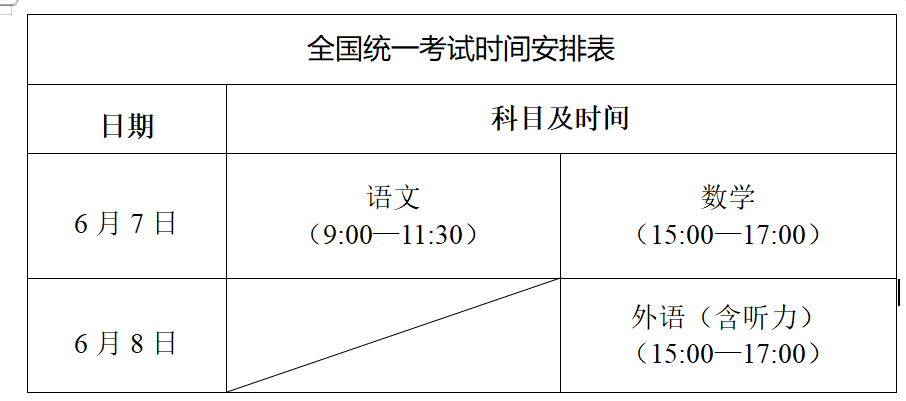
Exams Begin on June 7; Foreign Language Oral Test on June 10
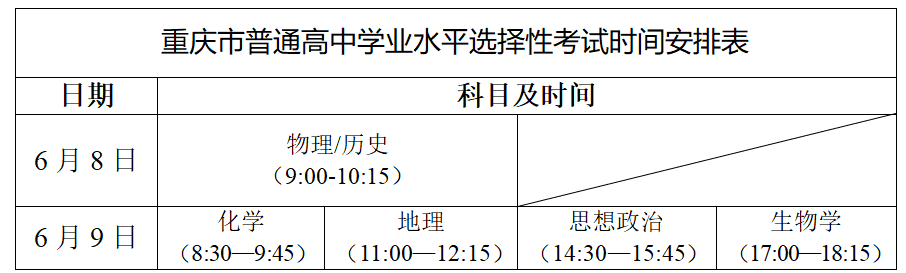
The unified college entrance examination in Chongqing adopts the “3+1+2” model. This consists of three nationally unified subjects: Chinese, Mathematics, and a Foreign Language, plus three subjects chosen by the student from the six subjects in the ordinary high school academic proficiency selective examination. Among these, Physics and History are the first-choice subjects, and candidates can and must choose one of them. The four subjects of Ideology and Politics, Geography, Chemistry, and Biology are the second-choice subjects, and candidates can and must choose two of them.
The nationally unified subject exams are scheduled for the entire day of June 7 and the afternoon of June 8. The ordinary high school academic proficiency selective subject exams are scheduled for the morning of June 8 and the entire day of June 9, with each exam lasting 75 minutes.
It is worth noting that candidates applying for foreign language majors should also take the foreign language oral test, which is scheduled for June 10.
Removal of Separate Registration Clause for Children of High-Level Talents; Adjustment and Cancellation of Special Enrollment Programs for Financially Disadvantaged Students
To ensure educational equity and following the principle of “advance notice of three years,” the “Measures” specify that starting from 2029, the separate registration condition clause for children of high-level talents will be abolished, and separate college entrance examination registration conditions will no longer be established for them.
The special enrollment programs for financially disadvantaged students are being adjusted and canceled. Based on adjustments in relevant municipal policy documents, the “Measures” clarify that starting from 2026, the city’s Rural Primary School Generalist Teacher Training Program and the Rural Order-Oriented Undergraduate Medical Student Free Training Program will no longer have separate admission plans for high school graduates from registered households with zero employment, households lifted out of poverty, and urban/rural low-income families.
After this adjustment, such candidates can still apply for targeted employment programs like “Generalist Teacher” or “Generalist Doctor” as ordinary candidates. Their chances of admission will not be reduced due to the cancellation of the special enrollment programs.
Multiple Bonus Points Take Only the Highest Single Item; Maximum Bonus is 20 Points
The “Measures” also clarify preferential admission policies. Candidates meeting any of the following conditions will have a certain number of points added to their total unified examination score for admission purposes. If a single candidate qualifies for multiple point bonuses, only the highest value will be applied; they cannot be combined:
Ex-servicemen and women who are self-employed; Returning overseas Chinese, children of overseas Chinese, children of returned overseas Chinese, etc., may have 5 points added for admission.
Ethnic minority candidates who have had a complete household registration and school registration for three years in Chongqing’s ethnic minority concentrated areas (including autonomous counties and ethnic townships) during high school and have actually