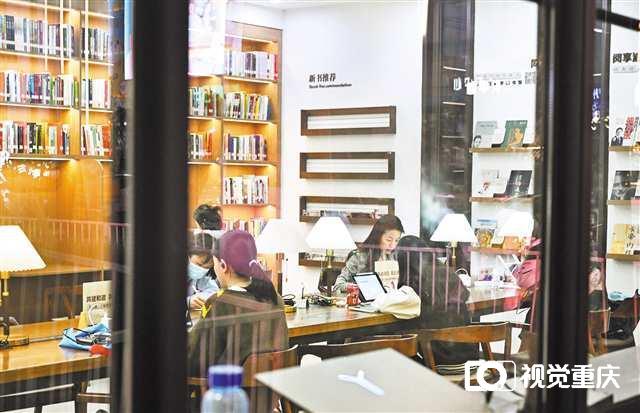
At 8 p.m. on April 22, the 24-hour city study at Yuxing Plaza in Liangjiang New Area was brightly lit. A young worker, just off duty, gently pushed open the glass door of the study, pulled a copy of “My Altay” from the shelf, and sat down at a table by the window. Absorbed in the beautiful prose, their mind wandered far away. At the next table, a student from a nearby neighborhood was focused on practice questions, the only sound being the scratch of pen on paper…
This scene is a microcosm of the popularity of free, 24-hour city studies among Chongqing residents. Their numbers continue to grow, weaving together with other new reading spaces to form a “8D Study” three-dimensional reading network that penetrates the fabric of this vertical city.
In February, the “National Reading Promotion Regulations” officially took effect, clearly stating the goal to “build a universal, inclusive, and efficient national reading promotion system,” providing direction for the development of urban reading spaces. As the “Bookish Chongqing” initiative deepens, various reading spaces are being upgraded. How can these spaces better meet the needs of citizens, shifting from “being built” to “being well-used,” so that the fragrance of books in “8D Studies” can nourish the public? Over the past few days, we have investigated this.
Rooted in Mountain City Characteristics
Building a Three-Dimensional Reading Network
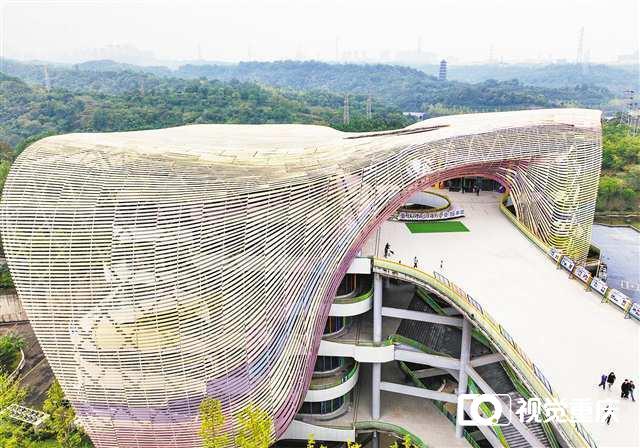
“Not only is the space large and the collection vast, but the air is fresh and the scenery beautiful. When I get tired of reading, I stand up and look into the distance—it’s incredibly comfortable!” On April 18, the new Chongqing Children’s Library welcomed many parents and children who had come specifically for the weekend. With a collection of over 815,000 documents and a capacity for up to 2,000 readers, it is a joyful haven for children to gain knowledge and nourish their souls.
As the main venue for national reading activities, public libraries are a crucial part of citizen participation in reading. In recent years, the upgrade and construction of public libraries in our city has progressed steadily. Taking the Chongqing Library as an example, through active exploration of cross-sector collaboration with various parts of society, it has successfully extended reading services to every corner of the city. It has built new reading spaces covering commercial complexes, tourist attractions, transportation hubs, and other diverse scenarios, forming an initial “8D Study” reading network that reaches many spaces.
“These new reading spaces have achieved extensive reach from the central urban area to remote regions, becoming important windows to showcase Chongqing’s cultural charm and enriching the reading experience for citizens and tourists,” according to a relevant official from Chongqing Library. Besides small self-service libraries like 24-hour city studies, more small but beautiful public reading spaces are constantly expanding the “boundaries” of reading and refreshing the reader experience.
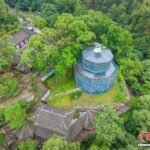
For example, the Lengshui · Fenggu Forest Book House, located in Lengshui Town, Shizhu Tujia Autonomous County, is a unique cultural landmark within a highway service area in