Beijing, April 23 – Title: Chongqing and Hainan Jointly Showcase Ethnic Culture, “Chongqing Sees Pomegranate Red” Blooms in Beijing
On April 23, the second phase of the 2026 Chinese Excellent Cultural Experience Project opened at the Chinese National Community Experience Hall in Beijing. This round of exhibitions is jointly hosted by Chongqing and Hainan, with the theme “Chongqing and Hainan, a Thousand Miles Apart, Share One Heart Across Mountains and Seas,” fully reflecting the deep bonds of brotherhood and mutual support within the Chinese national family.
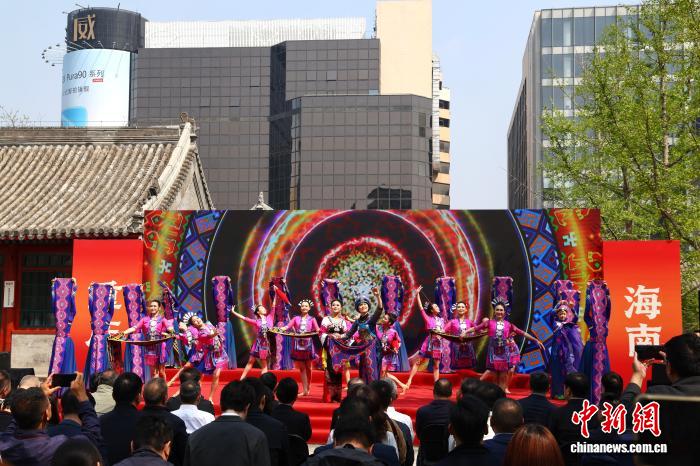
Joint Effort of Chongqing and Hainan, Drawing a Shared Circle
The Chinese National Community Experience Hall is the first national-level cultural exhibition and experience platform in China, centered on the core theme of forging a strong sense of community for the Chinese nation. It bears the important mission of telling the story of the Chinese national community, building a shared spiritual home for the Chinese nation, and promoting extensive exchanges, interactions, and integration among all ethnic groups.
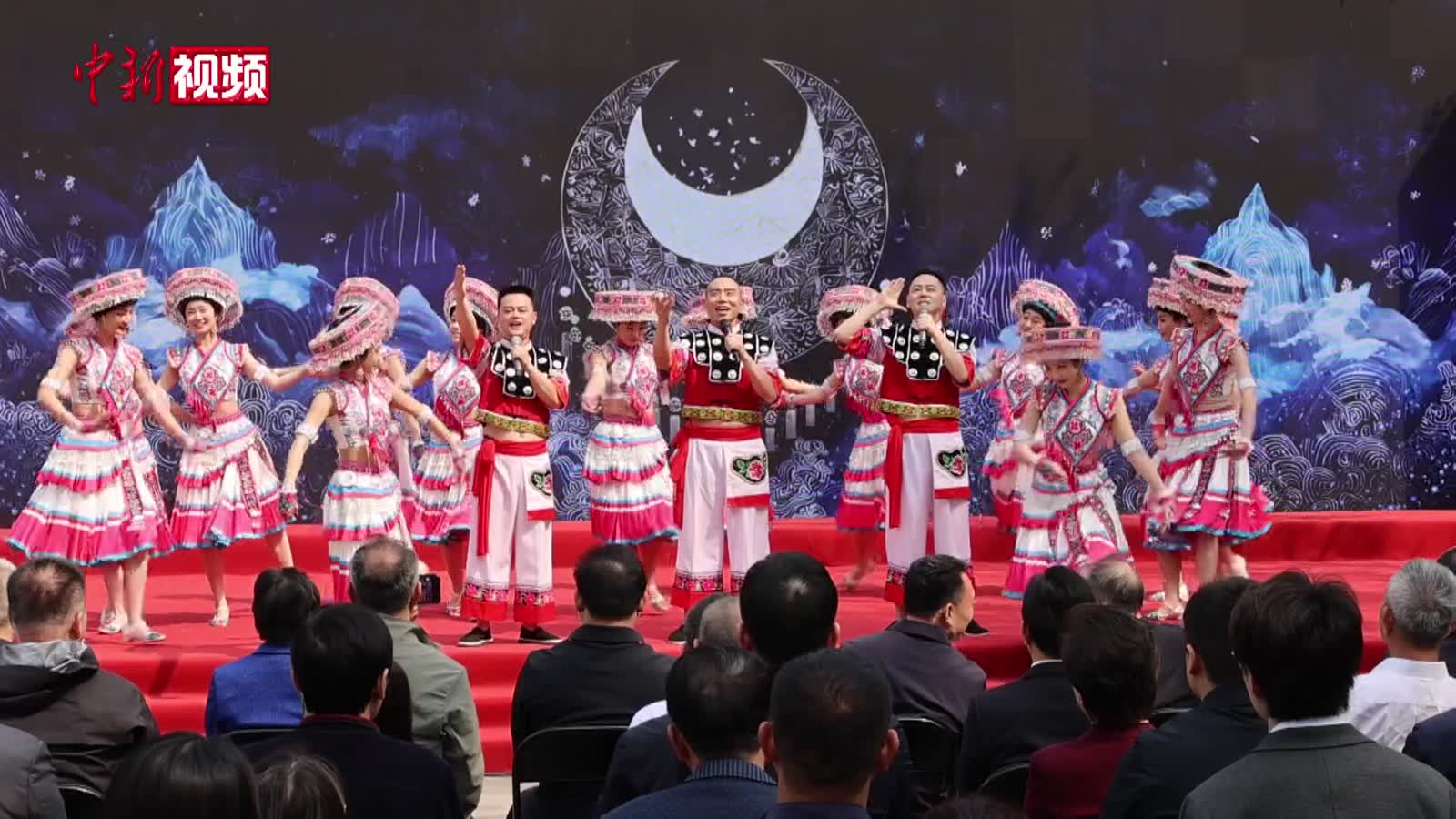
At the opening ceremony, Chongqing presented Miao dance “Jiao A Yi” and Sichuan opera stunts “Face Changing and Fire Spitting,” while Hainan showcased Li ethnic cultural performances. Together, they performed the co-created dance “Weaving Cards, Weaving Cards + Weaving the Moon,” using intangible cultural heritage brocade as a cultural bond to vividly interpret the profound meaning of the Chinese nation’s diversity in unity, where each beauty is unique and beauty is shared.
This joint exhibition is a wonderful dialogue between the ethnic cultures of Chongqing and Hainan, a mutual learning of their ethnic work experiences, and a vivid microcosm of how regions in the new era work together to promote the building of the Chinese national community.
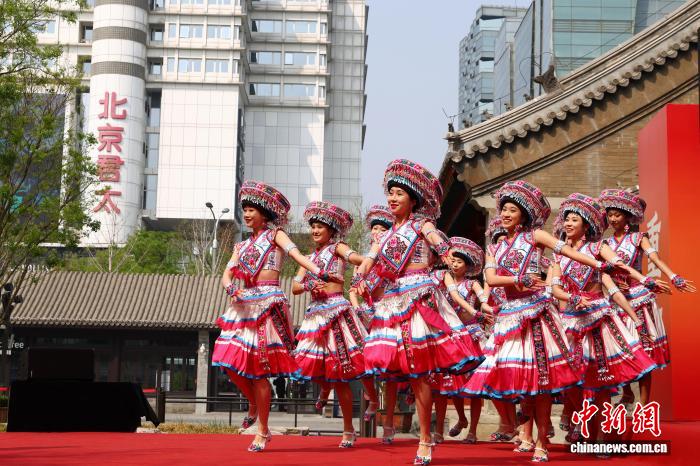
Pomegranate Flowers Bloom, Showing Family Unity
The Chongqing exhibition area, with the overall theme “Chongqing Sees Pomegranate Red, Building the Chinese Dream Together,” involves the joint participation of five ethnic autonomous counties: Qianjiang, Shizhu, Xiushan, Youyang, and Pengshui. The core concept of “all ethnic groups clinging together like pomegranate seeds” runs throughout the entire process. Through various forms such as static displays, dynamic performances, digital interactions, intangible cultural heritage experiences, and rotating county exhibitions, it comprehensively showcases Chongqing’s responsibility and practical achievements in advancing the building of the Chinese national community.
The exhibition is set up with six indoor halls and five outdoor display areas. Among the indoor halls, the “Pomegranate Flowers Bloom” hall focuses on the “Chongqing Sees Pomegranate Red” work brand, systematically presenting Chongqing’s practical results in ethnic work. The “Blood Integration” hall uses archaeological discoveries, historical artifacts, and major events to trace the history of exchanges, interactions, and integration in the Bayu region from prehistoric civilization to the modern revolution. The “Striving Forward” hall concentrates on showcasing Chongqing’s positioning as a “key strategic fulcrum for the development of Western China in the new era and a comprehensive hub for inland opening up,” empowering ethnic unity and progress through high-quality development, presenting a new look of thriving industries, beautiful ecology, and prosperous people.
The “Chongqing Sees Intangible Heritage” hall uses interactive experiences, audio-visual materials, and digital installations to showcase Chongqing’s intangible cultural heritage, allowing visitors to intuitively feel the charm of Bayu intangible heritage and enhance cultural identity. The “New Charm of Chongqing” hall uses large-screen images to present the cityscape of Chongqing and the new development of ethnic regions. The “Chongqing Gifts for All” hall innovatively adopts a rotating county exhibition model, combining “static displays with dynamic experiences” to create a flowing window of ethnic culture, showcasing the unique beauty and shared beauty of southeastern Chongqing.
The outdoor display areas are carefully designed with a theme image wall, a wall showcasing scenic spots of southeastern Chongqing, and a theme sculpture “Pomegranate Unity, Seeds Close Together,” organically integrating the “Pomegranate Red” main visual, the Three Gorges of the Yangtze River, Bayu landmarks, Xilan Kapu patterns, and ethnic unity slogans. During the exhibition period, Chong