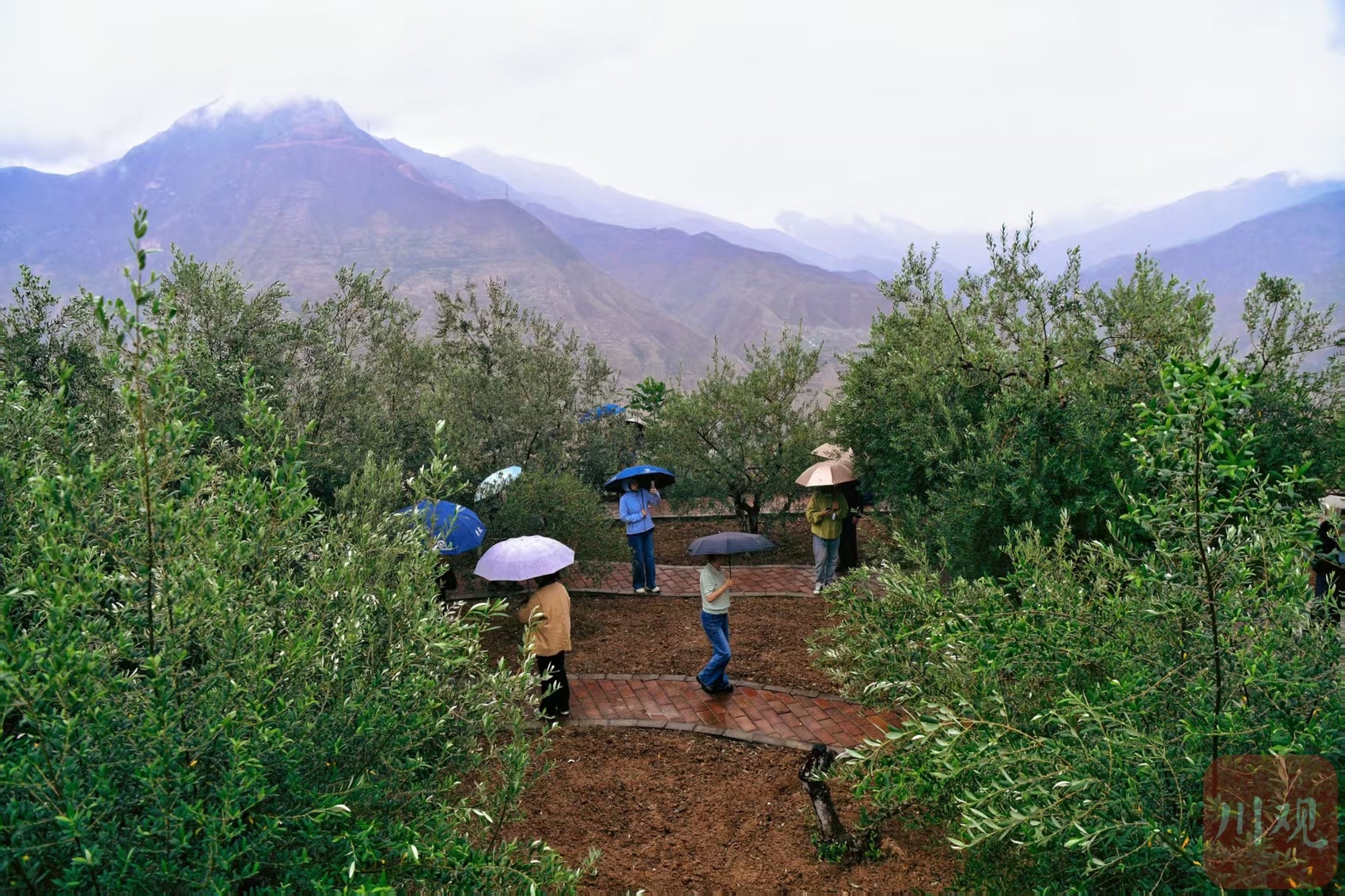
On June 7, a group participating in the “Beautiful China Tour: Exploring National Parks” gathered in Wudu District, Longnan City, for an olive oil tasting experience.
“First, warm it in your palm and shake it gently to release the aroma, then take it all in one sip, inhale through the gaps in your teeth, and finally feel the slight spiciness at the back of your throat,” explained a sales manager while demonstrating. The grassy aroma and peppery finish are hallmarks of high-quality extra virgin olive oil.
This city, once completely unrelated to olives, has become China’s largest olive oil production base after more than half a century of effort: with over 1.2 million mu (about 80,000 hectares) of olive groves, accounting for 68% of the national total, and olive oil production reaching 93% of the country’s output.
How did this “liquid gold,” originally from the Mediterranean, cross the ocean to take root in the mountains of northwest China?
Olive grove in Hejiaping Village, Juzhen Town
Located in the Golden Planting Belt at 33°N Latitude
Longnan’s olive planting area reaches 1.2 million mu
In 1964, Premier Zhou Enlai personally planted olive saplings gifted by Albania in Kunming, Yunnan. The olive branch, symbolizing peace and victory, began to take root and sprout on Chinese soil.
After extensive research and experiments by scientists, Gansu’s Longnan, located in the same golden planting belt at 33°N latitude as the Mediterranean region, was identified as the optimal area for olive cultivation in China.
In 1998, the World Olive Oil Distribution Map drawn by the International Olive Council included China for the first time, designating Wudu District as a prime olive-growing zone due to its unique climate.
In 2005, the former General Administration of Quality Supervision, Inspection and Quarantine approved “Wudu Olive” as a geographical indication product.
These two milestones marked the official end of China’s olive oil “trial planting” phase, paving the way for large-scale, high-quality development.
Olives have become a “tree of wealth” for Longnan. “Currently, the city’s olive planting area is 1.2 million mu, and per capita income from olive industry in the main production areas exceeds 4,500 yuan,” said a relevant official.

A company invites media reporters to taste olive oil
Products Exported Overseas
Domestic Market Share Exceeds 70%
A company founded in 1997 has witnessed nearly the entire development of Longnan’s olive industry.
The company, with annual sales exceeding 200 million yuan, produces olive oil products that hold over 70% of the domestic market share, with exports reaching countries and regions such as Italy and Spain.
Behind its global reach lies quality. The oil yield and nutrient content of olives follow two inversely related curves—as the fruit hangs longer on the tree, oil yield increases, but precious nutrients continue to deplete. “To produce the highest quality olive oil, you must precisely capture the ‘golden moment’ when both are perfectly balanced,” said a sales manager.
Each August, before large-scale harvesting, company staff pick a small batch of fruit for trial pressing and composition analysis. Through repeated data verification and practice, they can lock in the optimal pressing window from early September to early October—the “golden moment” referred to.
These perfectly timed olives can enter the pressing workshop within just four hours. The company has signed “contract farming” agreements with growers, scheduling harvests from low to high altitudes based on sales. This ensures efficient movement “from branch to bottle,” locking in the natural nutrients and flavor of the olive oil.
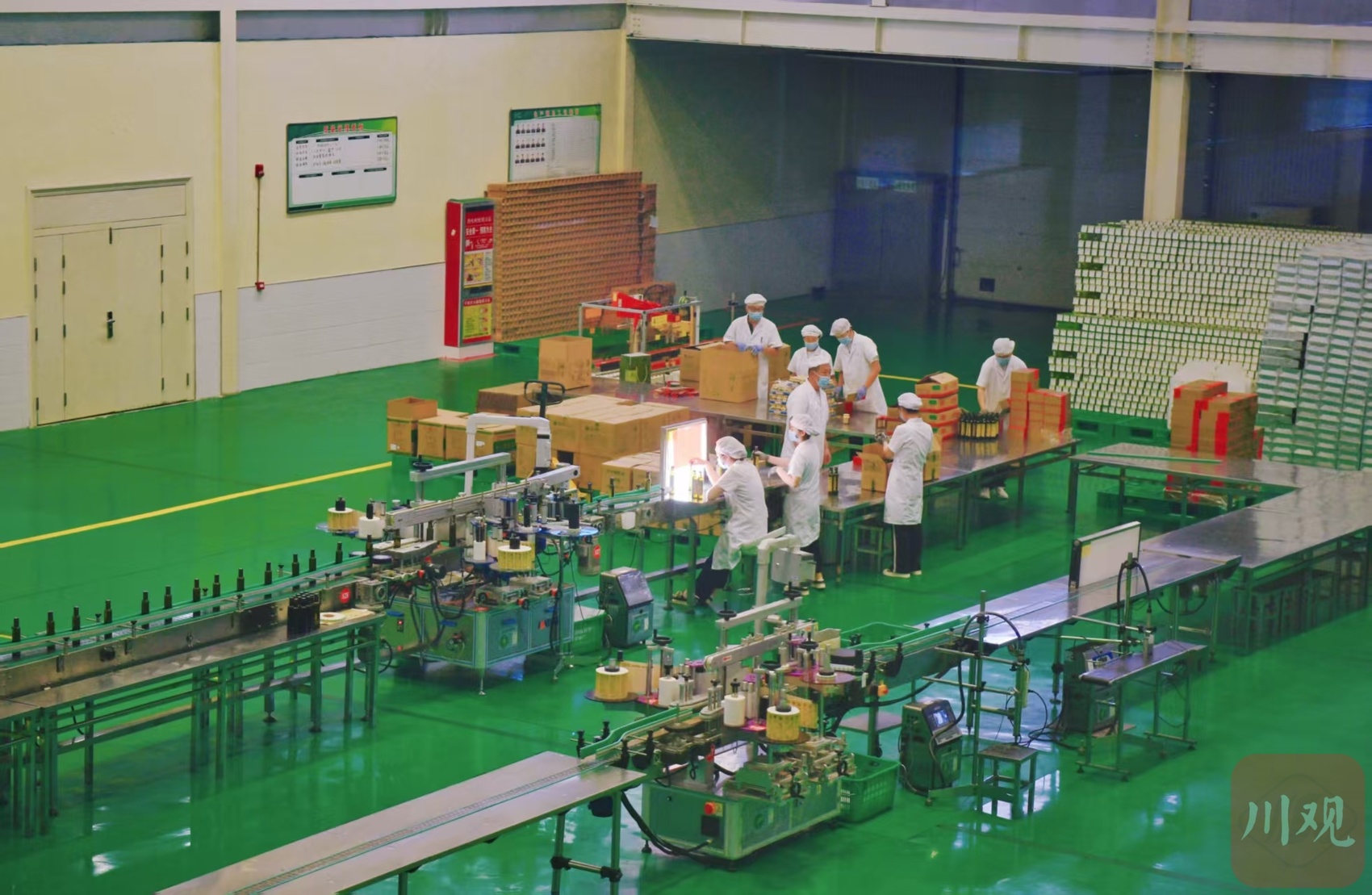
Production scene at a company