The Chengdu Municipal Education Examination Authority and the Chengdu Municipal Education Bureau have issued a notice regarding the work schedule for the 2026 citywide high school entrance examination and admissions. This year’s high school admissions policy remains largely stable, with optimizations and improvements based on actual conditions.
It is understood that this year, Chengdu is expected to add 14 new regular high schools to further alleviate the pressure on high school enrollment, with the supply rate of regular high school seats exceeding 70%. This will provide more opportunities for junior high graduates to attend regular high schools. At the same time, a diversified evaluation system is being established to create multiple growth pathways, breaking the “score-only” admission model and allowing more students to choose a suitable development path based on their interests and talents. These pathways include: parallel voluntary admission based on exam scores, school-recommended students, arts and sports specialty students, youth aviation classes, science and innovation classes, humanities experimental classes, strong foundation plan classes, football, basketball, and volleyball preparatory teams, comprehensive high schools, and vocational-general education integration, meeting the diverse learning and development needs of students with different potentials. Additionally, Chengdu will steadily promote the expansion and quality improvement of the “primary-junior-senior” 12-year and “junior-senior” 6-year integrated training programs.
Based on the actual operations of schools, the proportion of school-recommended students for some public regular high schools will be increased to 55%-65%. This supports the revitalization of county high schools and the development of new high schools, as well as supporting the expansion of capacity in high-quality public regular high schools. Private regular high schools can independently apply for a proportion of school-recommended quotas based on their actual operations, which will be implemented after approval from the educational authorities. In 2025, 32,600 students in Chengdu were admitted directly to high schools as regional school-recommended students without taking the entrance exam.
The integration of general and vocational education will be deepened, with mutual credit recognition and student status transfer, providing multiple opportunities for high school students to choose between regular high schools and vocational schools. Regular high school students can voluntarily apply to transfer to vocational schools before the end of the first semester of their second year, based on the enrollment brochures of vocational schools. After approval from both the transferring and receiving schools and review by the educational authorities, the student’s vocational school status will be registered. Vocational school students can apply to transfer to regular high schools before the start of the third year, subject to passing relevant tests and meeting requirements, and will then have their regular high school status registered.
In 2026, Chengdu will continue to strictly implement the Ministry of Education and Provincial Education Department’s requirements for “sunshine enrollment” and the “ten prohibitions” for enrollment in primary and secondary schools, ensuring fairness and justice in enrollment. All types of schools must strictly abide by enrollment discipline and standardize enrollment practices. The education department will not register student status for schools that violate enrollment regulations and will hold those schools accountable. The Municipal Education Bureau will continue to set up a supervision and complaint QR code to facilitate complaint channels.
Important Note: Parents and students should note that only admissions organized through the unified Chengdu High School Entrance Examination Admission Platform are valid; any promises of admission made by schools privately are invalid. Only admissions following the high school entrance examination admission policy can lead to student status registration; non-policy admissions cannot lead to regular high school student status registration.

Question 1: How is the 2026 high school entrance examination schedule arranged?
April: Physical education exam, physics and chemistry lab operation exams
Late May: Ethics and rule of law, history exams
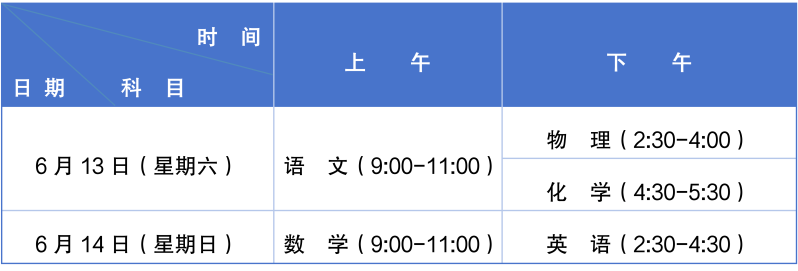
June: Chinese, mathematics, English, physics, and chemistry exams
Exam Subjects and Schedule (Beijing Time)
Question 2: How is the citywide high school admissions divided by region?
Admissions for regular high schools (