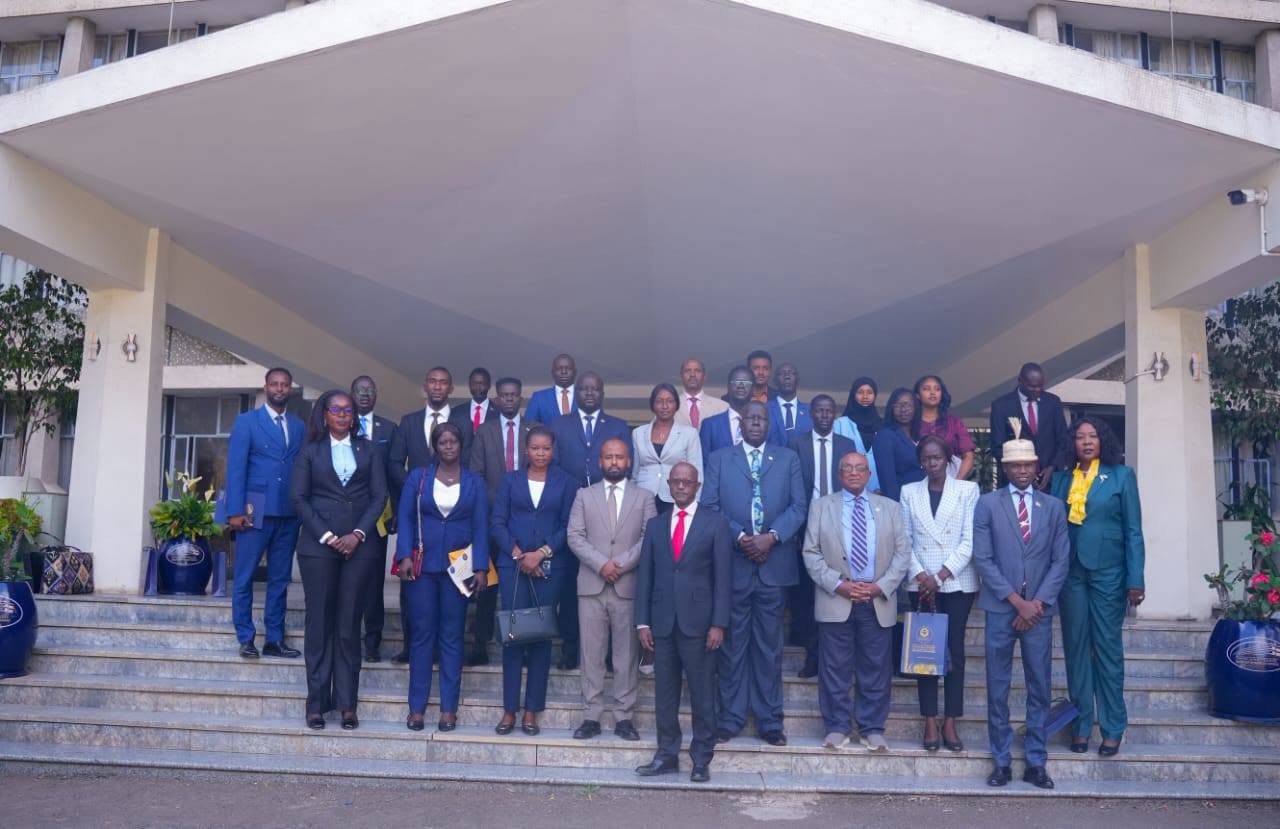
Ethiopia has successfully completed a five-day diplomatic training program for South Sudanese diplomats, reaffirming its commitment to enhancing regional cooperation and advancing diplomatic capabilities across Africa.
The third diplomatic training program, organized by the Institute of Foreign Affairs in collaboration with the Ministry of Foreign Affairs, was held in Addis Ababa from June 5 to 9, 2026.
This initiative brought together South Sudanese diplomats for in-depth discussions on key issues shaping the diplomatic and security landscape in Africa.
According to the Ministry of Foreign Affairs, this training reflects Ethiopia’s ongoing efforts to strengthen regional cooperation and develop diplomatic expertise throughout the continent.
The program covered a wide range of topics, including African unity, modern diplomacy and negotiation, water policy, transboundary resource management, peacekeeping, and conflict resolution.
The program was designed to enhance the professional capacities of South Sudanese diplomats and deepen bilateral cooperation between Ethiopia and South Sudan.
In his speech at the closing ceremony, the State Minister for Foreign Affairs emphasized the importance of this initiative in promoting professional exchange, mutual understanding, and strengthening relations between the two neighboring countries.
The Deputy Head of Mission at the South Sudanese Embassy in Ethiopia also praised the training, which equipped diplomats with practical skills and knowledge necessary to address emerging regional challenges and seize new opportunities.
Representing the participants, an ambassador expressed appreciation for the valuable insights gained during the program, particularly in the areas of peacebuilding, negotiation, development cooperation, and migration management.
The program concluded with a reaffirmation of the longstanding friendship between Ethiopia and South Sudan and their shared commitment to promoting peace, stability, and sustainable development in the Horn of Africa region.
Addis Ababa
Addis Ababa is the capital and largest city of Ethiopia, founded in 1886 by Emperor Menelik II. It became the nation’s capital in 1889 and has since grown into a major political and cultural hub in Africa. The city is known for its rich history, including being the site of the African Union’s headquarters and a center for Ethiopian Orthodox heritage.
Institute of Foreign Affairs
The Institute of Foreign Affairs (IFA) is a key diplomatic training and research institution in Ethiopia, established to enhance the country’s foreign policy expertise and international relations. Founded in 2015, it serves as a hub for training diplomats, conducting policy analysis, and fostering dialogue on global affairs. The institute plays a vital role in shaping Ethiopia’s engagement with the international community by promoting professionalism and strategic thinking in its foreign service.
Ministry of Foreign Affairs
The Ministry of Foreign Affairs is the government department responsible for a nation’s foreign policy and diplomatic relations. Its modern form emerged in the 17th and 18th centuries, evolving from earlier royal councils or secretariats that handled international correspondence and treaties. Today, it manages embassies, consulates, and international negotiations, representing the country’s interests abroad.
South Sudanese Embassy in Ethiopia
The South Sudanese Embassy in Ethiopia, located in Addis Ababa, serves as a key diplomatic mission for South Sudan, reflecting the strong bilateral ties between the two neighboring countries. Established following South Sudan’s independence in 2011, the embassy manages political, economic, and cultural relations, and plays a vital role in supporting South Sudanese citizens in Ethiopia, including refugees and diaspora communities. Its presence underscores Ethiopia’s historical role as a host to South Sudanese peace processes and humanitarian efforts.
<div class="my-4 p-4 rounded-lg shadow-md bg-blue-50 border-l-4
Institute of Foreign Affairs
The Institute of Foreign Affairs (IFA) is a key diplomatic training and research institution in Ethiopia, established in 2016 to enhance the country’s foreign policy capabilities. It serves as a center for training diplomats, conducting policy research, and fostering international dialogue. The institute plays a vital role in shaping Ethiopia’s global engagements and promoting its national interests abroad.
Ministry of Foreign Affairs
The Ministry of Foreign Affairs is a government building that serves as the central office for a nation’s diplomatic relations and international policy-making. Historically, such ministries have evolved from royal courts and chanceries, with many housed in grand, neoclassical structures built in the 19th and 20th centuries to reflect national authority. Today, it remains the key hub for embassies, treaties, and foreign negotiations.
South Sudanese Embassy in Ethiopia
The South Sudanese Embassy in Ethiopia, located in Addis Ababa, serves as a key diplomatic mission for South Sudan, established shortly after the country gained independence from Sudan in 2011. It represents South Sudan’s interests in Ethiopia, a host nation that played a significant role in the peace negotiations leading to South Sudan’s formation. The embassy facilitates bilateral relations, consular services, and cooperation on regional stability, reflecting the close ties between the two neighboring countries.
Addis Ababa
Addis Ababa, meaning “New Flower” in Amharic, is the capital and largest city of Ethiopia, founded in 1886 by Emperor Menelik II. It grew rapidly after becoming the nation’s permanent capital in the early 20th century and is known as the diplomatic hub of Africa, hosting the headquarters of the African Union. The city blends modern development with historic sites, such as the National Museum, which houses the famous fossil “Lucy,” and the Ethnological Museum, reflecting its rich cultural heritage.