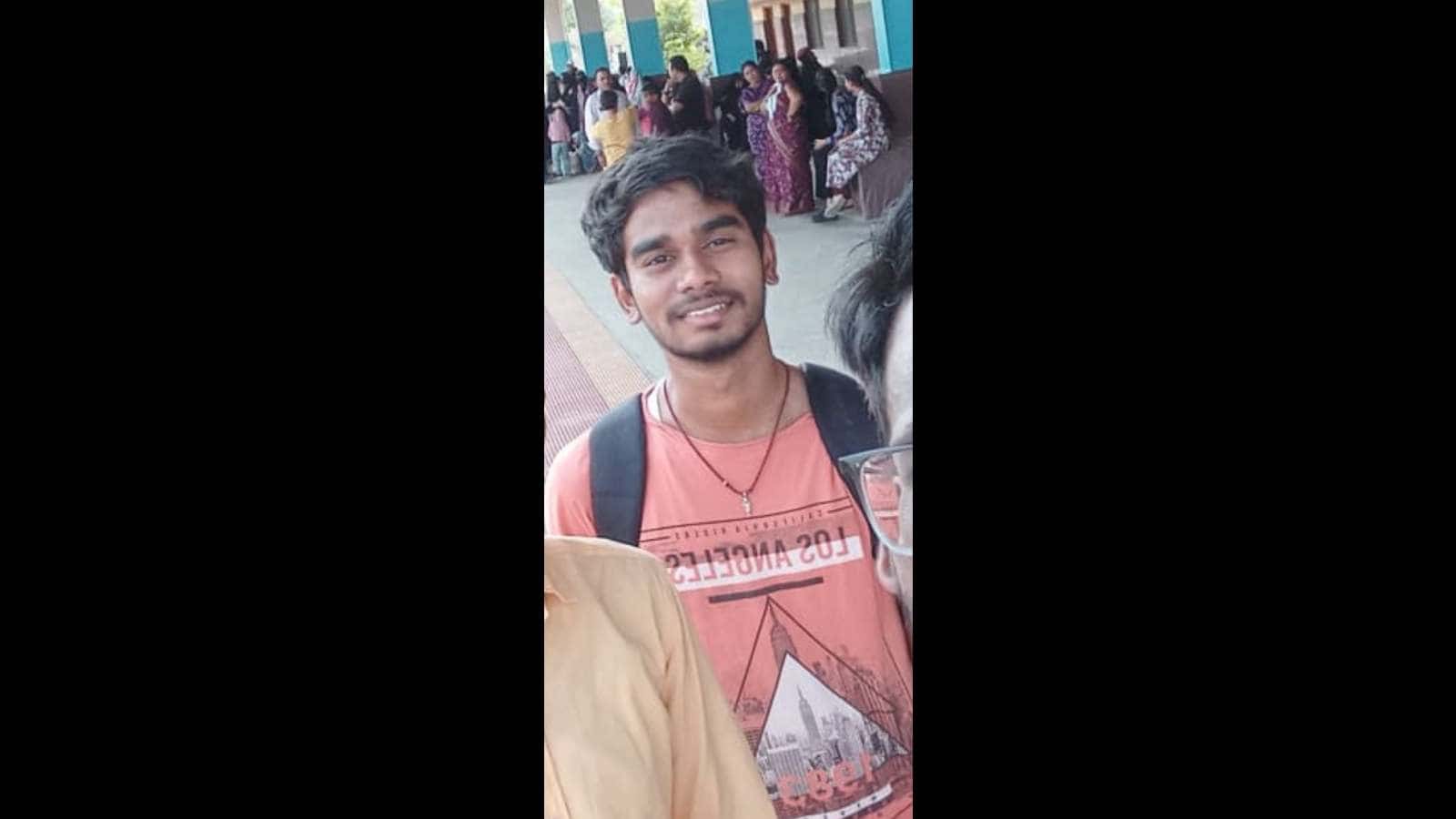
Hyderabad: A missing BTech student from Hyderabad who was found dead in a well in Andhra Pradesh’s Prakasam district was reportedly forced to apologize over a love letter he sent to a girl.
The deceased was identified as 21-year-old Ankam Rahul, a third-year BTech student who was staying in the hostel of an engineering college in Hyderabad.
Forced apology over love letter
According to police, Rahul had sent a WhatsApp message and written a love letter to a girl studying in his college.
Some of the girl’s friends allegedly pressured him to apologize for sending the message and warned that they would report his behavior to the college management if he failed to do so.
Police believe the pressure surrounding the incident drove Rahul to end his life.
However, Rahul’s parents have rejected the police version. They alleged that their son’s death was not a suicide and demanded an investigation into the case.
Student missing since May 27
According to Kacheguda police, Rahul went missing on May 27 after getting down from a friend’s two-wheeler at Kacheguda Tourist Hotel Chowrasta. He reportedly told his friend that he was going out before leaving the area.
Following a complaint lodged by his father, Ankam Rajeswar, police launched a search operation.
During the investigation, CCTV footage revealed that Rahul had boarded the Sabari Express after leaving Kacheguda.
Body found in Prakasam district
Police later found that an unidentified body had been recovered from a well within the limits of Singarayakonda Police Station in Prakasam district on May 30. Further verification confirmed that the body was Rahul’s.
Hyderabad
Hyderabad is a historic city in southern India, founded in 1591 by Muhammad Quli Qutb Shah of the Qutb Shahi dynasty. It is renowned for its rich cultural heritage, blending Indo-Islamic architecture with modern developments, and is famously home to landmarks like the Charminar and the Golconda Fort. Today, Hyderabad is a major hub for technology and pharmaceuticals, while still preserving its traditional cuisine and arts.
Prakasam district
Prakasam is a district in the Indian state of Andhra Pradesh, known for its historical and cultural significance. The region was named after the prominent freedom fighter Tanguturi Prakasam Pantulu and was formed in 1970 from parts of Guntur, Nellore, and Kurnool districts. It features ancient Buddhist sites like the caves at Guntupalli and the historic Kondavidu Fort, reflecting a rich heritage dating back to the Satavahana and Vijayanagara empires.
Kacheguda
Kacheguda is a historic neighborhood in Hyderabad, India, best known for the Kacheguda Railway Station, which was built in 1916 and is a prime example of the distinctive “Kacheguda style” of architecture blending Indian and European influences. The area developed as a key railway hub during the Nizam era, connecting Hyderabad with major cities and contributing to the region’s economic growth. Today, it remains a bustling commercial and residential district, preserving its colonial-era charm and architectural heritage.
<h3 class="text-lg font-semibold mb-2 text-blue-800
Hyderabad
Hyderabad is a major city in southern India, known for its rich history as the capital of the Nizams, who ruled the princely state of Hyderabad for over two centuries. Founded in 1591 by Muhammad Quli Qutb Shah, the city is famous for its iconic Charminar and blend of Indo-Islamic architecture. Today, it is a bustling tech hub, often called “Cyberabad,” while still preserving its cultural heritage through landmarks like the Golconda Fort and traditional Hyderabadi cuisine.
Prakasam district
Prakasam is a district in the Indian state of Andhra Pradesh, named after the prominent freedom fighter and former Chief Minister of Andhra, Tanguturi Prakasam Pantulu. The region has a rich history, with the town of Ongole serving as its administrative headquarters and being famous for the Ongole breed of cattle. Historically, the area was part of the ancient Vijayanagara Empire and later came under British rule, playing a role in India’s independence movement.
Kacheguda
Kacheguda is a historic neighborhood in Hyderabad, India, best known for its railway station, Kacheguda Railway Station, which was built in 1916 in a distinctive blend of Rajasthani and Mughal architectural styles. The station was constructed by the Nizam of Hyderabad to serve as a major railway hub, connecting the princely state to the rest of India. Today, Kacheguda remains a bustling area, preserving its colonial-era charm alongside modern urban life.
Charminar
Charminar is a historic mosque and monument located in Hyderabad, India, built in 1591 by Sultan Muhammad Quli Qutb Shah to commemorate the founding of the city and the end of a plague. Its iconic four minarets, each 56 meters tall, give the structure its name, meaning “Four Minarets” in Urdu. Today, it remains a vibrant symbol of Hyderabad’s heritage, surrounded by bustling markets and cultural activity.
Golconda Fort
Golconda Fort is a historic citadel and fortified city located in Hyderabad, India, renowned for its majestic architecture and once being the capital of the Qutb Shahi dynasty from the 16th to the 17th century. Originally built as a mud fort by the Kakatiya dynasty in the 13th century, it later became famous as a center for diamond trade, including the legendary Koh-i-Noor diamond. The fort is celebrated for its advanced acoustic system, ingenious water supply, and stunning ruins that reflect a blend of Hindu and Islamic architectural styles.
Guntupalli caves
The Guntupalli caves are a group of ancient rock-cut Buddhist monuments located in the Indian state of Andhra Pradesh, dating back to the 2nd century BCE. They feature a large chaitya (prayer hall) with a stunning horseshoe-shaped entrance and a stupa, along with several viharas (monasteries), reflecting the region’s rich Buddhist heritage. The site was likely an important monastic center during the Satavahana period, showcasing early Indian rock-cut architecture.
Kondavidu Fort
Kondavidu Fort is a historic hill fortress located in the Guntur district of Andhra Pradesh, India, built during the 10th century under the Reddy dynasty and later expanded by the Vijayanagara Empire. It served as a strategic stronghold for various rulers, including the Qutb Shahis, and features impressive ruins such as temples, granaries, and gateways carved into the rocky terrain. The fort is known for its scenic views and the nearby Kondavidu Caves, which are associated with Buddhist heritage.
Kacheguda Railway Station
Kacheguda Railway Station, located in Hyderabad, India, is a historic railway station built in 1916 during the reign of the Nizam of Hyderabad. Designed by British architect Vincent Esch, it showcases a blend of Indo-Saracenic and Gothic architectural styles. Today, it serves as a major railway junction and is recognized as a heritage structure, reflecting the region’s colonial-era railway history.